
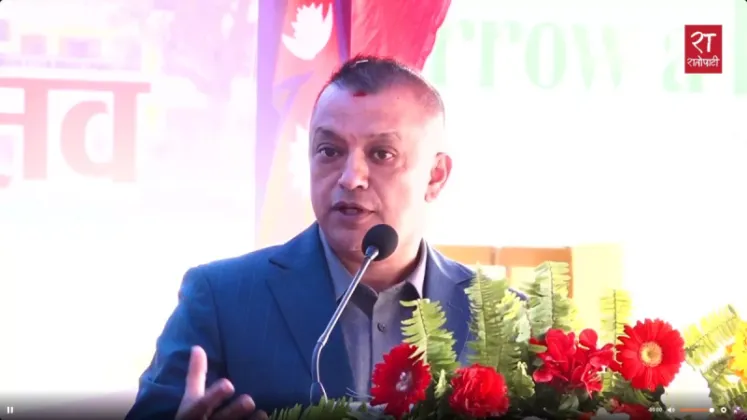
Nepali Congress President Gagan Kumar Thapa on Friday demanded that Nepal's government immediately stop the police from entering newsrooms and detaining journalists, calling the practice unlawful and warning that it mirrors the coercive methods of the country's royal era. In a statement issued on Friday, Thapa criticised a pattern in which journalists are taken into custody and then released only when public pressure builds, saying the manner of the arrests carries unmistakable echoes of Nepal's autocratic past.
"A style that reminded us of the autocracy of the imperial era"
According to a report published by Ratopati, Thapa said the way journalists are being arrested has "reminded us of the autocracy of the imperial era." The Nepali Congress president reserved his sharpest criticism for the practice of police teams entering media houses and newsrooms to detain working journalists, describing it as a method associated not with a democratic state but with authoritarian rule.
Central to Thapa's complaint is the sequence of these operations: journalists are arrested, held, and then set free only after public pressure mounts. In his assessment, that cycle of detention and pressured release says less about law enforcement and more about an instinct to silence the press first and justify the action later. Such conduct, he argued, has no place in a system that claims to function under the rule of law.
The comparison Thapa drew is a pointed one. The royal era, a period remembered in Nepal for direct monarchical rule and severe restrictions on the press and political dissent, remains one of the most sensitive reference points in the country's democratic politics. By invoking it, the senior Congress leader is effectively telling the government that its treatment of the media now resembles the very autocracy that Nepalis fought to leave behind.
Demands and a direct warning to the government
Thapa's statement sets out clear demands, and the party has backed them with a warning. As reported by Pradeshkhabar and Global Aawaj, the Nepali Congress has called on the government to:
- Immediately stop the police from entering newsrooms and media houses
- End the detention of journalists outright
- Stop the practice of releasing arrested journalists only after public pressure forces it
- Halt all forms of harassment directed at members of the press
Beyond the demands themselves, the party issued a direct caution: the government must halt the detention and harassment of journalists. The wording of the warning signals that the Nepali Congress intends to treat the treatment of the press as a matter of political accountability, not merely a law-and-order question to be managed quietly.
"Against the law": the party's legal argument
At the core of the statement is the argument that the raids, arrests and harassment of journalists are, in Thapa's words, against the law. The contention matters because it reframes the debate: the issue, in the party's telling, is not whether individual journalists may ever be subject to legal process, but whether the state may bypass lawful procedure altogether by sending police into newsrooms and holding members of the press until public anger forces their release.
Thapa's position, as reflected in the statement, is that no democratic government can claim legality for such methods. Arrests conducted in this fashion, he argued, are inconsistent with the legal order itself, and the harassment that accompanies them compounds the violation. By insisting on lawfulness, the party has placed the burden on the government to explain, in legal terms, the basis for operations the Nepali Congress describes as flatly unlawful.
What the escalation signals for press freedom
The confrontation between the Nepali Congress and the government over the treatment of journalists underscores how charged the question of media freedom has become. The specifics described in the statement, including police entering newsrooms, journalists being detained and releases granted only under public pressure, outline a pattern that the party says cannot be reconciled with democratic governance.
The royal-era framing gives that argument additional force. For a party defined in part by its historical opposition to royal autocracy, drawing a line from today's police conduct to the practices of the autocratic past functions both as a legal criticism and a political indictment. Thapa's message, in effect, is that the government is replaying methods that Nepal's democratic movement believed had been consigned to history.
For now, the Nepali Congress has made its demands unambiguous and its warning explicit: the detention and harassment of journalists must stop, and police must stay out of the country's newsrooms. Whether the government responds by ending the operations that provoked the statement, and by accounting for the arrests that have already taken place, will determine whether the standoff deepens or resolves.


