
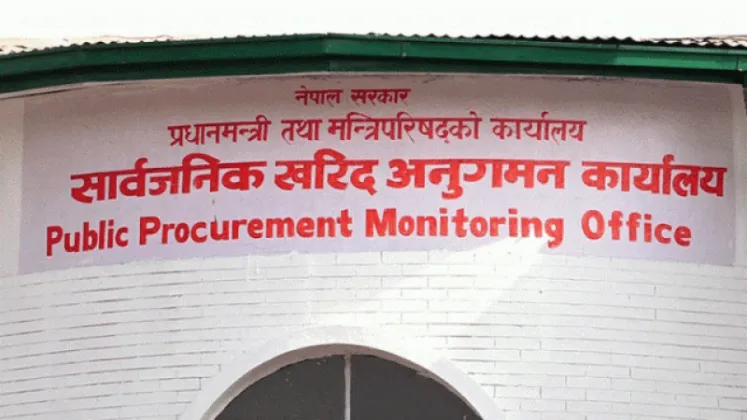
Kathmandu, October 30, 2026 - The Public Procurement Monitoring Office has blacklisted 120 firms and companies since March 27, citing failures to comply with public procurement laws and procedures or to fulfill contractual responsibilities. The office, which operates under the Office of the Prime Minister and Council of Ministers, said the action is part of efforts to make public procurement transparent, accountable and reliable.
The announcement identifies two broad grounds for the blacklisting: non-compliance with procurement rules and procedures, and failure to carry out contractual obligations. It does not, in the information available for this report, provide a breakdown of how many firms were listed for each reason. The total covers firms and companies blacklisted during the period beginning March 27 and was announced in Kathmandu on October 30.
Reasons for the blacklisting
The office’s statement places the action within the enforcement of public procurement laws and procedures. These rules govern how public bodies conduct procurement, while contracts set out responsibilities that parties are expected to meet. The office cited failures in either area as grounds for blacklisting the affected firms and companies.
The announcement does not describe the specific conduct attributed to each firm, identify particular contracts, or give details of individual cases. It therefore provides an overall figure and general reasons for the action rather than a case-by-case account. No names, contract values or separate totals for different types of procurement are included in the information provided here.
That distinction matters because the reported figure covers 120 separate firms and companies, while the reasons cited are stated in broad terms. The office’s announcement establishes the scale of the action and its stated basis, but does not allow the circumstances of any one company to be assessed from the total alone.
Office links action to procurement integrity
The Public Procurement Monitoring Office said its action is intended to help make public procurement transparent, accountable and reliable. Its position connects enforcement with the standards the office says it seeks to uphold across procurement processes. The announcement presents blacklisting as part of that wider effort, rather than as an isolated count of companies affected.
The office operates under the Office of the Prime Minister and Council of Ministers. Its role in monitoring public procurement places the announcement within the government’s oversight framework for procurement laws, procedures and contractual responsibilities. The statement does not set out additional policy measures or explain whether the office plans further blacklisting actions.
Transparency and accountability are central to the purpose the office attributed to the action. In practical terms, the reported blacklisting makes clear that the office has taken formal action against a group of firms and companies over procurement-related compliance or performance concerns. However, the announcement, as reported, does not specify what consequences apply to each listed entity or how long any listing will remain in effect.
What the announcement establishes
The central facts are the number of firms and companies affected, the period covered and the reasons cited. The office reported 120 blacklisted entities since March 27, based on alleged failures to follow public procurement laws and procedures or to fulfill contractual responsibilities. The announcement was made in Kathmandu on October 30, 2026.
The figure offers a cumulative account of the office’s action over that period, but it does not, on its own, show whether blacklisting increased or decreased compared with an earlier period. Nor does the information provided specify the sectors involved, the authorities that awarded the contracts, or whether any affected firm has challenged a decision. Those details would be needed to describe the individual cases or assess the broader pattern behind the total.
For now, the office’s stated message is that compliance with procurement rules and the fulfillment of contractual duties are central to its effort to improve public procurement. Its announcement puts 120 firms and companies under that enforcement action, while leaving the particulars of the cases and any further steps unelaborated.


