
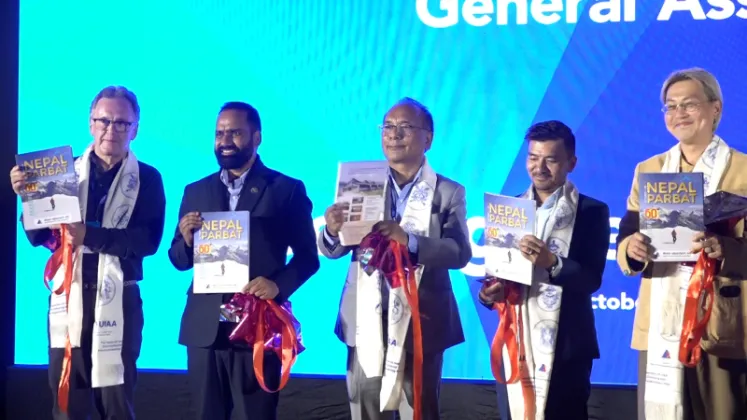
Nepal has proposed that six additional mountains above 8,000 metres receive international recognition at the general assembly of the International Mountaineering and Climbing Federation (UIAA), which opened on Thursday evening in Kathmandu. Hosted by the Nepal Mountaineering Association (NMA), the two-day gathering has brought representatives from 45 countries across five continents to Nepal. The proposal places the status of the six peaks before an international mountaineering forum, but the information available does not identify the mountains or say whether the assembly has approved the request.
Proposal presented at Kathmandu assembly
The proposal was made at the UIAA general assembly, an international meeting focused on mountaineering and climbing. Nepal is seeking recognition for six more peaks that rise above 8,000 metres, adding to the group of high-altitude mountains whose international status the country wants acknowledged. The assembly’s opening on Thursday evening began a two-day programme in Kathmandu, with the NMA serving as host.
The proposal is a request for international recognition, not confirmation that recognition has already been granted. No decision, vote or timetable for a decision was included in the information provided. The names of the six peaks and details of the case put forward for each mountain were also not specified. Those details will be important for understanding the scope of the proposal and how it may be considered by the federation.
The distinction between a proposal and an outcome is central to the development. Nepal has brought the matter to the assembly, where representatives from around the world are gathered, but the available account does not state what action the UIAA or its members will take. It therefore remains unclear whether the request will be discussed, referred for further consideration or decided during the two-day event.
International gathering brings 45 countries to Nepal
Representatives from 45 countries spanning five continents have arrived in Nepal to participate in the assembly. Their presence gives the meeting an international reach, while Kathmandu provides the setting for Nepal’s request to be presented to the mountaineering and climbing community represented at the event. The NMA is hosting the gathering, linking the proposal with Nepal’s role in convening the international meeting.
The assembly’s format offers a forum for the proposal to be raised among delegates from many countries. However, the attendance figure alone does not establish how the participants will respond or whether all delegates are involved in decisions on peak recognition. No individual reactions, statements of support or opposition, or voting arrangements were reported in the information provided.
Key details about the six peaks remain unknown
The proposal concerns six additional peaks above 8,000 metres, but no names, locations or other identifying information were given. Nor were details provided about the evidence or criteria Nepal has presented in support of recognition. Without those particulars, it is not possible to assess how the six mountains relate to one another or what specific basis has been put forward for their recognition.
The available information also does not explain what international recognition would mean in practical terms for the peaks, mountaineers or Nepal. The request’s immediate significance is that Nepal has placed the issue before an international federation’s general assembly while representatives from 45 countries are in Kathmandu. Any further implications will depend on the proposal’s details and the assembly’s response, neither of which has been reported.
For now, the confirmed development is the proposal itself: Nepal is seeking international recognition for six more mountains above 8,000 metres. The two-day UIAA general assembly, hosted by the NMA and opened on Thursday evening, is the setting for that request. Whether the gathering reaches a decision, and which peaks are included, remain unanswered in the information available.


