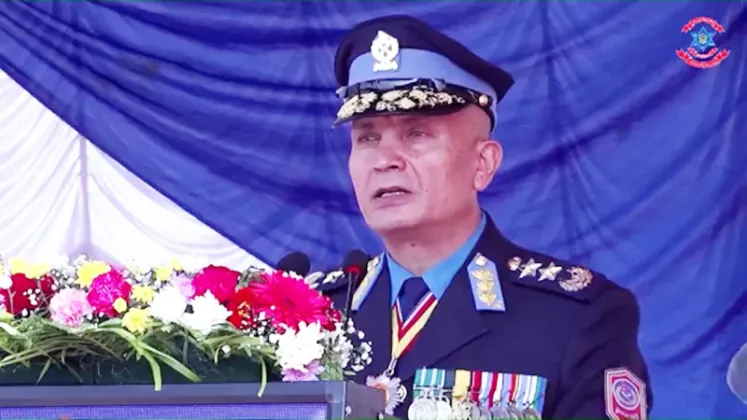
Inspector General of Police Dan Bahadur Karki said on Monday that the real strength of Nepal Police lies not only in the authority granted by law but also in the trust of citizens, addressing the graduation ceremony of the 184th batch of basic inspector training in Kathmandu. He urged the organisation to become more technology-friendly, transparent and fully professional, and said modern technology and artificial intelligence are needed to respond to challenges including cyber crime, transnational crime and disaster management.
Public trust as a foundation of policing
Karki’s remarks placed citizen confidence alongside legal authority as a central measure of the police force’s strength. The message to the graduating inspectors was that police power is not defined solely by the legal mandate to enforce the law: the relationship between the organisation and the public also matters. Trust, in this view, is a source of institutional strength that police must seek to earn through their conduct and professional work.
The emphasis on public confidence came as Karki called for a transparent and fully professional police organisation. His comments linked the public-facing responsibilities of police with the standards expected of the institution. Transparency and professionalism, he stressed, should be part of how Nepal Police carries out its work, alongside its formal authority under the law.
The remarks were made at the graduation of the 184th batch of basic inspector trainees in Kathmandu. The event marked the completion of the batch’s basic inspector training and provided the setting for Karki to address the new graduates on the demands facing the organisation. His focus on trust, institutional standards and new forms of crime set out a broad message for police personnel entering the service.
Technology and changing security challenges
Karki pointed to cyber crime, transnational crime and disaster management as challenges that require modern technology and artificial intelligence. The issues he identified range from crimes involving digital systems to offences that cross national borders, as well as the demands of responding to disasters. He said the police organisation needs to adapt to these challenges through the use of modern tools.
His call for a technology-friendly police force reflected the need, in his view, to prepare the organisation for these areas of work. Cyber crime and transnational crime present challenges that extend beyond conventional policing, while disaster management also requires police to be prepared for complex situations. Karki’s remarks did not set out specific technologies or programmes, but stressed the importance of modern technology and AI in meeting these demands.
A professional and transparent organisation
The IGP’s priorities brought together institutional conduct and operational readiness. A police force that is transparent and professional must also be equipped to address the challenges Karki identified, while maintaining the trust of the citizens it serves. His message to the graduating inspectors connected these expectations: legal authority alone is not enough, and the organisation must also be responsive to changing security needs and mindful of its relationship with the public.
Karki’s comments at the ceremony underline the standards he wants Nepal Police to pursue: stronger public trust, greater transparency, full professionalism and a readiness to use modern technology, including artificial intelligence, against emerging challenges. The account of his remarks was reported by Ratopati and News of Nepal.