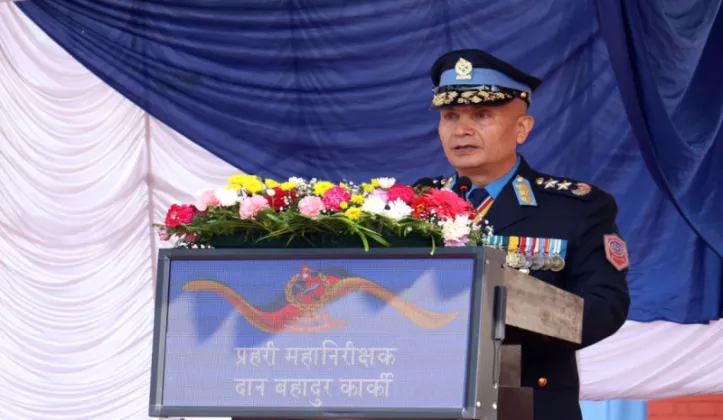
Inspector General of Nepal Police Dan Bahadur Karki told trainee police inspectors not to abuse their office during a basic training programme for the 184th group at the National Police Academy in Maharajgunj, Kathmandu. He said police personnel are public servants entrusted with duties toward the people and warned that personal interests, undue influence and misuse of official authority could defame the police organisation. Karki urged the officers to remain alert to these risks and to protect their professional dignity and integrity.
A warning about public responsibility
Karki's message placed public service at the centre of the inspectors' responsibilities. Police personnel, he said, hold their positions to carry out duties toward the people. That responsibility, in his remarks, is incompatible with using official authority to serve private interests or allowing outside influence to shape how the office is used.
The warning addressed several related risks rather than a single type of misconduct. Karki referred to personal interests, undue influence and misuse of authority as conduct that could harm the organisation's standing. By identifying these concerns together, he urged the trainees to remain alert to the ways an officer's private considerations or the improper use of position could conflict with their professional role.
Integrity and the reputation of the force
Karki warned that such conduct would not remain a matter affecting only an individual officer. He said it could defame the police organisation, linking the behaviour of personnel with the reputation of the institution they serve. His remarks therefore framed professional integrity as both an individual obligation and a responsibility to the police organisation.
He urged the trainees not to compromise on professional dignity and integrity. The appeal was direct: officers should be vigilant about personal interests and undue influence, and should not misuse the authority attached to their posts. Karki's warning underscored that the power of an official position must be exercised in keeping with the duties entrusted to police personnel, rather than used for purposes that could damage the force's name.
Message to the 184th group of inspectors
The remarks came during a basic training programme for the 184th group of police inspectors at the National Police Academy in Maharajgunj. Karki addressed officers at a point when they were undergoing training for police service, using the occasion to underline standards he said they should uphold in carrying out their responsibilities.
His message focused on conduct and professional standards: serving the public, resisting undue influence, avoiding personal-interest-driven use of office, and maintaining dignity and integrity. He asked officers to stay alert to the possibility of abuse and made clear that official authority should not be treated as a means to advance private interests. The warning connected those standards to the reputation of the Nepal Police as an organisation.
Karki's remarks offered the trainees a concise measure of the responsibility attached to police office. Personnel are entrusted with duties toward the people, he said, and must not compromise their professional integrity or misuse their authority. He cautioned that conduct driven by personal interests or undue influence could bring disrepute to the organisation, urging the inspectors to carry that warning into their service.