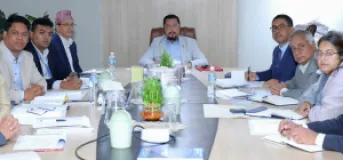
KATHMANDU - The Department of Customs and the Civil Aviation Authority of Nepal (CAAN) on Wednesday signed an agreement in Kathmandu to move the recommendation and approval process for the import and export of aircraft and their spare parts online, bringing the entire workflow under the National Single Window (NNSW) system. The deal, reached at the initiative of Minister for Culture, Tourism and Civil Aviation Khadka Raj Paudel 'Ganesh', is aimed at making the procedure smoother for the airlines, traders and other stakeholders who depend on it, as reported by RatoPati and Khabarhub.
From Manual Approvals to a Digital Platform
Until now, the recommendation and approval process for aircraft and spare parts import-export has sat outside a unified digital system, requiring applicants to deal with the customs department and the aviation regulator through separate channels. Under the new agreement, both institutions will process their respective recommendations and approvals through the NNSW platform, placing the full import-export chain for aviation goods on a single electronic track.
The signing, which took place in the capital on Wednesday, formalises the commitment of the two agencies to operate through the shared system. By linking customs administration with aviation regulation on one platform, the authorities intend to remove a layer of administrative friction from the movement of aircraft and aircraft parts across Nepal's borders.
Key elements of the agreement
- Parties involved: The Department of Customs and the Civil Aviation Authority of Nepal (CAAN)
- Scope: The recommendation and approval process for the import and export of aircraft and their spare parts
- Platform: The National Single Window (NNSW) system
- Objective: To make the import-export process smoother
- Initiative: Driven by Minister for Culture, Tourism and Civil Aviation Khadka Raj Paudel 'Ganesh'
How the National Single Window Works
The NNSW is a trade facilitation platform that allows businesses to submit applications and documents to government agencies through a single online entry point rather than approaching each office in person. In the case of aircraft and spare parts, this means requests for import or export recommendations, along with the approvals that follow, can be lodged, tracked and processed electronically within the same system.
Single window systems of this kind are built around a simple principle: a trader submits the required information once, and the agencies involved in clearing the consignment access and act on it through the shared platform. For Nepal, applying that principle to the aviation sector connects two regulators whose sign-offs are both essential before aircraft or parts can move in or out of the country.
The practical stakes are high for operators. Aircraft maintenance is time-sensitive, and airlines rely on the steady availability of spare parts to keep their fleets airworthy and their flight schedules intact. Moving the recommendation and approval process online is expected to make the flow of these consignments smoother, easing the administrative burden that accompanied the earlier, offline procedure.
A Reform Pushed from the Tourism Ministry
The agreement came together at the initiative of Minister Khadka Raj Paudel 'Ganesh', who heads the Ministry of Culture, Tourism and Civil Aviation, the body responsible for overseeing Nepal's civil aviation sector. CAAN, as the national aviation regulator, and the Department of Customs, which administers clearance procedures for goods entering and leaving the country, are the two agencies whose workflows the deal connects.
That ministerial backing is significant for implementation. Because the arrangement requires both customs officials and aviation regulators to shift their day-to-day procedures onto the NNSW, support from the leadership of the tourism and aviation ministry gives the reform the institutional weight needed to move forward.
What It Means for Airlines and Traders
For airlines, maintenance providers and parts suppliers, the shift promises a more predictable and less cumbersome process when bringing aircraft or components into Nepal or exporting them. Rather than navigating separate recommendation and approval requirements with each agency, stakeholders will interact with a single digital system, in line with the stated goal of smoothing the process.
The move also aligns the aviation sector with wider efforts to digitise trade procedures. Single window platforms have become the standard mechanism governments use to cut paperwork and speed up clearance, and bringing aircraft and spare parts within the NNSW extends that approach to a category of goods where timing is especially critical.
With the agreement signed in Kathmandu on Wednesday, attention now turns to implementation, as the Department of Customs and CAAN integrate their recommendation and approval workflows into the National Single Window. For an aviation industry that depends on the swift and reliable movement of aircraft and parts, the online transition marks a meaningful administrative step forward.