
The Government of Nepal has rolled out an action plan worth Rs 739.99 million to protect women, children, adolescent girls and other vulnerable groups affected by disaster along the Bhotekoshi and Kaligandaki corridors. The plan was announced in Kathmandu on November 3 by the Ministry of Women, Children, Gender and Sexual Minorities and Social Security, which said the intervention will run from immediate rescue operations through to the rehabilitation of affected communities.
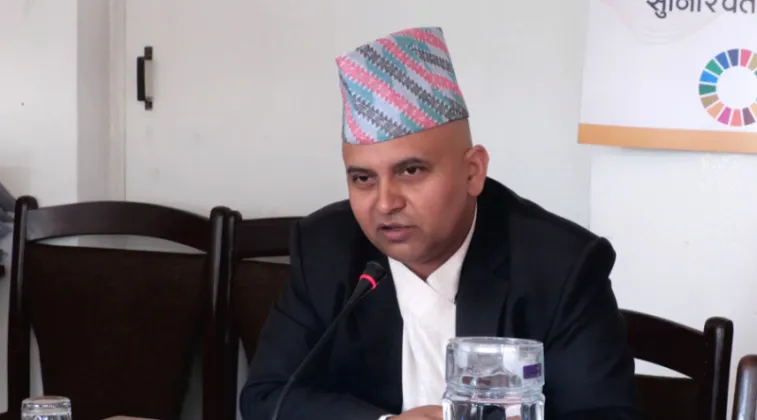
Krishna Bahadur Raut, secretary at the Ministry of Women, Children, Gender and Sexual Minorities and Social Security, said the action plan covers immediate rescue, protection and rehabilitation following the disaster. As reported by Onlinekhabar, the plan is built around the groups that typically face the greatest risks and the slowest recovery when disaster strikes communities in Nepal's hill and mountain regions.
A three-phase response: rescue, protection and rehabilitation
The ministry has structured the Rs 739.99 million plan around three connected phases, each addressing a different stage of the disaster response. According to Raut, the plan covers the full arc from the first hours of an emergency to the long work of rebuilding.
The three phases at a glance
- Immediate rescue: The first priority is reaching people affected by the disaster and moving them to safety as quickly as possible, a critical step in river-valley terrain where access can be cut off without warning.
- Protection: The second phase focuses on the safety, dignity and wellbeing of women, children, adolescent girls and other vulnerable groups once they have been brought out of immediate danger.
- Rehabilitation: The final component aims to help affected families restore their lives and livelihoods once the emergency phase has passed.
By packaging these stages into a single action plan with a dedicated budget, the government intends to ensure that support continues beyond the emergency phase and into longer-term recovery, so that vulnerable households are not left to cope on their own once initial relief efforts wind down.
Reaching communities along two vital corridors
The Bhotekoshi and Kaligandaki corridors are among Nepal's important transport lifelines, threading through river valleys in the country's hill and mountain belt. Settlements along these routes depend on them for trade, travel and access to services such as schools and health facilities. When disaster strikes in this terrain, damage is rarely confined to a single village: road blockages can sever entire stretches of corridor, cutting communities off from markets and essential services at precisely the moment they need them most.
Framing the action plan around these two corridors signals an approach that treats the affected areas as connected landscapes of need rather than isolated disaster sites. For residents of the Bhotekoshi and Kaligandaki valleys, the practical test will be how quickly the plan's three phases translate into visible support on the ground.
Placing vulnerable groups at the centre
The plan's beneficiaries are defined not by geography alone but by vulnerability. Women, children and adolescent girls are named as priority groups, alongside other vulnerable populations in the disaster-affected corridors. This focus reflects a widely recognised reality of disaster response: these groups often face the greatest hardship in the aftermath of a calamity, from disrupted schooling and health services to safety risks while displaced from their homes.
Specifically, the action plan is aimed at:
- Women affected by the disaster in the two corridors
- Children, whose education and wellbeing can be disrupted long after the initial event
- Adolescent girls, who face distinct protection needs in the wake of a disaster
- Other vulnerable groups living in the affected communities
The Ministry of Women, Children, Gender and Sexual Minorities and Social Security is the government body mandated to safeguard the rights and welfare of these populations, making it the natural lead for an action plan of this kind. Raut's announcement places the ministry's protection mandate at the centre of the disaster response along the two corridors.
The road ahead
With the plan now public, attention turns to implementation. The Rs 739.99 million budget is meant to fund rescue, protection and rehabilitation activities along the Bhotekoshi and Kaligandaki corridors, in line with the ministry's stated aim of protecting those least able to protect themselves as affected communities move from emergency to recovery.
For the women, children, adolescent girls and other vulnerable residents of the two corridors, the action plan announced in Kathmandu on November 3 represents a formal commitment of resources and attention. How effectively that commitment is delivered in the weeks and months ahead will shape the pace and quality of recovery for communities still grappling with the aftermath of disaster.


