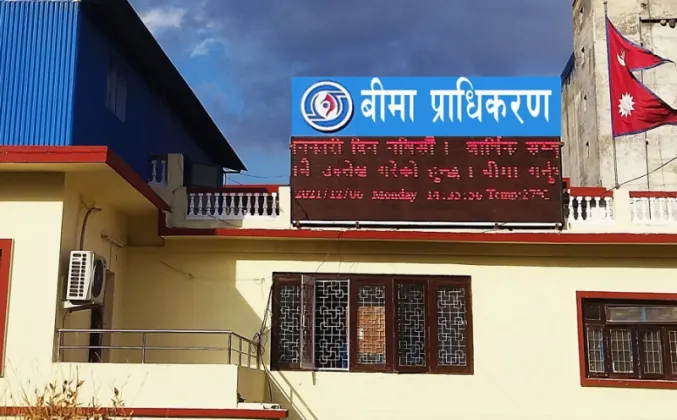
The Nepal Insurance Authority has issued an eight-point directive to life insurance companies to simplify the settlement of claims for families affected by the Rasuwa flood of Bhadra 10 (August 26). Under the arrangement, the families of insured persons who went missing in the flood will not need a death registration certificate to file insurance claims, removing one of the most difficult bureaucratic hurdles that disaster-hit households typically face. The directive, issued by the country's insurance regulator, is intended to provide relief to the affected families, according to reports published by RatoPati and Gorkhapatra Online.
Why the death registration rule became a hurdle
In ordinary circumstances, a life insurance claim can only be settled once the nominee or beneficiary submits formal proof that the insured person has died. The document most widely accepted for this purpose is the death registration certificate, and insurers are generally unable to release the sum assured without it.
That standard requirement, straightforward in normal times, turns into a painful paradox in the aftermath of a disaster such as the Rasuwa flood. When a person is swept away by floodwaters and the body is not recovered, the family cannot register the death, because there is no body to register. At the same time, they cannot claim the insurance payout, because they cannot produce the registration the insurer asks for. Families in such situations have historically been forced to wait through lengthy procedures before a missing person can be formally declared dead and a claim can move forward.
The Nepal Insurance Authority's directive directly addresses that deadlock for the Rasuwa flood. By making clear that a death registration will not be required for the claims of persons missing in the flood, the regulator has effectively allowed families to pursue their claims on the basis of the insured person's missing status alone.
Inside the eight-point directive
The directive comprises eight points and has been issued to life insurance companies across the country. Among its key reported provisions are the following:
- Simplified claims for flood victims: Life insurance companies have been instructed to ease the payment of claims for those affected by the Rasuwa flood of Bhadra 10.
- No death registration required: For insured persons who went missing in the flood, their families will not need to obtain or submit a death registration certificate in order to claim the policy benefits.
- A relief-oriented purpose: The authority has framed the package as a measure intended to provide relief to the flood-affected families, rather than as a routine regulatory update.
Because the instruction has been issued centrally by the regulator rather than left to the discretion of individual companies, the same relaxation is expected to apply uniformly, regardless of which life insurance company holds the policy of the missing person. That uniformity matters in a disaster situation, where affected families are often dealing with multiple institutions at once and are in no position to negotiate procedural differences between insurers.
Relief for families caught between grief and paperwork
For the households of the missing, the practical effect of the directive could be significant. The period after a flood is typically consumed by searches, shelter arrangements and deep uncertainty, and the prospect of a prolonged insurance dispute adds a further layer of stress. In past disaster situations, documentation requirements of this kind have left families waiting a long time before they could recover the money their relatives had paid into their policies.
By removing that requirement at the outset, the Nepal Insurance Authority has sought to ensure that the insurance system responds to the realities of the flood rather than to the letter of standard procedure. The directive acknowledges that a family whose insured member is missing in a flood cannot realistically be expected to produce a death certificate, and it places the responsibility for a humane and practical settlement on the insurers instead.
The intervention also reflects the role the authority plays in the sector. As the body responsible for overseeing the insurance industry, the Nepal Insurance Authority routinely issues binding directives to insurers, and disaster-related relaxations of documentation requirements fall squarely within that mandate.
What affected families can do next
With the directive in force, families of insured persons who went missing in the Rasuwa flood can approach their respective life insurance companies to initiate claims under the relaxed requirement. The expectation is that insurers will process such claims without insisting on a death registration certificate, in line with the authority's eight-point instruction.
For a district still counting the cost of the flood, the measure offers a degree of certainty in an otherwise uncertain period. Families who had feared that insurance payouts would remain locked behind paperwork now have a clear, regulator-backed path to claim the benefits their missing relatives were owed.
Further details of the directive have been reported by RatoPati and Gorkhapatra Online.