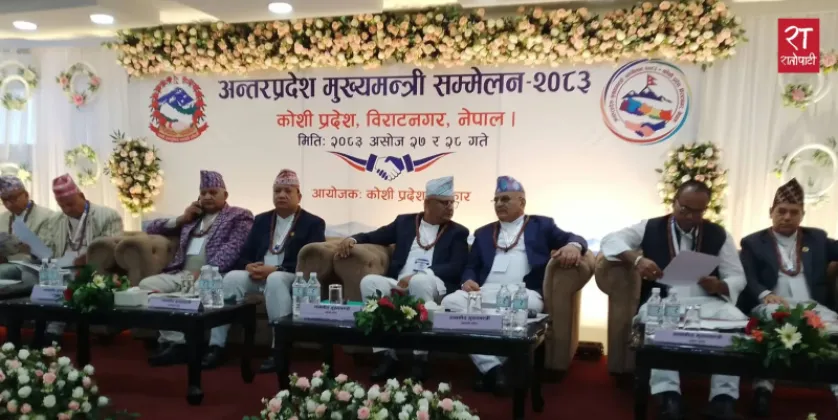
Chief ministers from Nepal’s provinces said in Biratnagar that the federal government’s centralisation of power has weakened the provincial structure, restricted provincial autonomy and hindered development, according to statements reported on October 13 and 14, 2026. They criticised the federal government for impeding development at the provincial level.
Criticism of centralised power
The chief ministers’ central concern was the distribution of power between the federal government and the provinces. They said that decisions and authority concentrated at the federal level have made it difficult for the provincial structure to function as intended. Their remarks framed centralisation not simply as an administrative issue, but as a barrier to provincial autonomy and progress.
They argued that the effects are visible in the provinces’ ability to pursue development. The leaders said federal government actions were obstructing provincial development, linking the concentration of power with constraints on provincial work. The statements did not, in the information available, identify particular projects or policy decisions as examples.
Provincial autonomy and development
The criticism highlights the relationship the chief ministers drew between autonomy and development: provinces need meaningful authority to carry out their responsibilities, they said, while federal centralisation is limiting that ability. Their assessment was that the provincial structure has been crippled by the concentration of power, leaving provincial development hindered.
The remarks, made in Biratnagar and reported on October 13 and 14, put the federal-provincial balance at the centre of the leaders’ concerns. The chief ministers’ comments focused on the impact they said centralisation has had on provincial institutions and development, rather than on specific measures or proposed changes.
The statements amount to a criticism of the federal government’s approach to power-sharing. The chief ministers called attention to the gap between the existence of a provincial structure and the autonomy they said provinces need to advance development. Their comments underline that, in their view, the concentration of authority at the centre is preventing provinces from exercising sufficient control over their own development priorities.