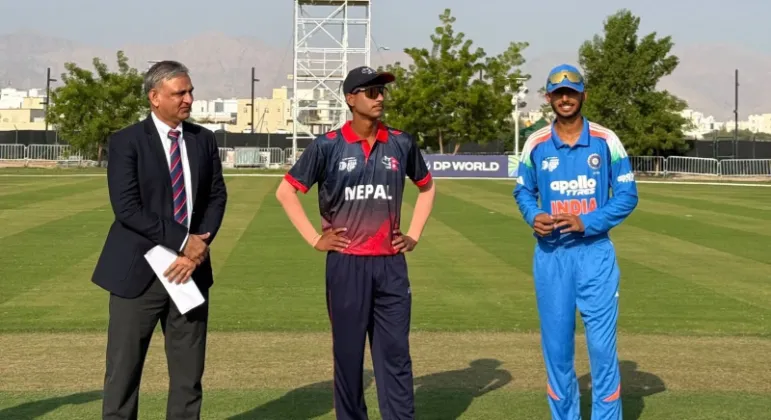
Nepal have been put in to bat after losing the toss in their U-19 Asia Cup match against India, with play getting underway on Friday, November 6, 2026. India won the toss and chose to bowl first, handing Nepal's batters the responsibility of setting the tone in one of the most closely followed youth fixtures on the Asian cricket calendar. With the decision taken out of their hands, Nepal's top order must now build an innings against one of the region's most formidable under-19 attacks and post a total their bowlers can defend.
India win the toss and opt to field
The toss proved decisive in shaping the opening phase of the contest. India called correctly and immediately chose to send Nepal in to bat, a decision consistent with the preference many limited-overs captains show for chasing, where a target in hand allows the batting side to structure its pursuit ball by ball. Bowling first also offers the fielding side the chance to make early inroads while the surface is at its freshest.
For Nepal, the outcome of the toss removes any element of choice. Rather than deciding the order of play on their own terms, they have been assigned the harder-looking half of the job: bat first, set a target without knowing what a par score might be, and then defend it later in the day. Details of the toss and the start of play were reported by Nepal Views and Nepal Lead, both of which are carrying coverage of the fixture.
There is, however, a potential flip side to India's choice. A side that bats first and survives the new ball can convert the apparent advantage of winning the toss into a commanding total, leaving the chasing team to negotiate mounting pressure with every dot ball. Much will depend on whether Nepal can get through the opening burst and make the decision look a costly one.
The task facing Nepal's batters
Batting first against India places a distinct set of demands on Nepal's batting lineup. The new ball will pose the immediate test, and how the openers negotiate the opening spell could shape the course of the entire innings. Early wickets would hand India the momentum and expose Nepal's middle order to immediate pressure, while a solid opening stand would allow the innings to be built on Nepal's own terms.
What the innings will require
- A watchful start: seeing off the new ball and avoiding self-inflicted damage in the powerplay overs.
- Partnerships through the middle overs: rotating the strike and denying the bowling side a run of wickets as the field spreads.
- Wickets in hand for the finish: keeping batters in reserve so the final ten overs can be used for acceleration.
- A total worth defending: leaving the bowlers with a score that gives them a genuine chance of protecting it.
None of these objectives comes easily against an Indian side whose youth setup is among the most resourced in world cricket. Matches at this level, however, are often decided by temperament as much as talent, and Nepal's innings will be measured not only in the runs it produces but in the discipline and patience with which they are accumulated.
Why this fixture carries weight
Encounters between Nepal and India at the under-19 level carry significance well beyond the result on the day. For Nepal's young players, the match represents a rare opportunity to test themselves against peers from one of cricket's most competitive development pipelines, and strong individual performances at this stage of a career can accelerate the path toward senior cricket and wider recognition. Games between the two neighbors also consistently attract keen interest among Nepali supporters, for whom fixtures against India rank among the most eagerly anticipated on any schedule.
The U-19 Asia Cup itself functions as a proving ground for the next generation of Asian cricketers, bringing together the region's under-19 sides in a competitive environment that closely mirrors international cricket. Results against higher-profile opposition can reshape perceptions of an emerging program. For Nepal, whose senior team has grown considerably in stature through its results in associate cricket in recent years, the under-19 side's showing against India offers a measure of the talent pipeline that could carry the national team forward in the years ahead.
For India, matches of this nature serve a different purpose: extending the depth of a system that regularly produces players ready for the highest level, and reinforcing the standards expected of every side that wears the national colors at any age group.
What to watch as the day progresses
With Nepal batting first, the early exchanges will be examined closely on both sides. How the openers handle the new ball, whether Nepal can reach a stable platform by the halfway point of the innings, and how aggressively the lower order can accelerate in the closing overs will together determine the size of the target India are set.
The second half of the match will bring its own pressures. Defending a total demands early breakthroughs and sustained pressure through the middle overs, and Nepal's bowlers will be aware that a score short of par could be chased down with relative comfort. A total above the expected rate, on the other hand, would allow them to attack with the confidence of runs behind them.
Further updates on the score and the direction of the match will follow as play develops through the day.