
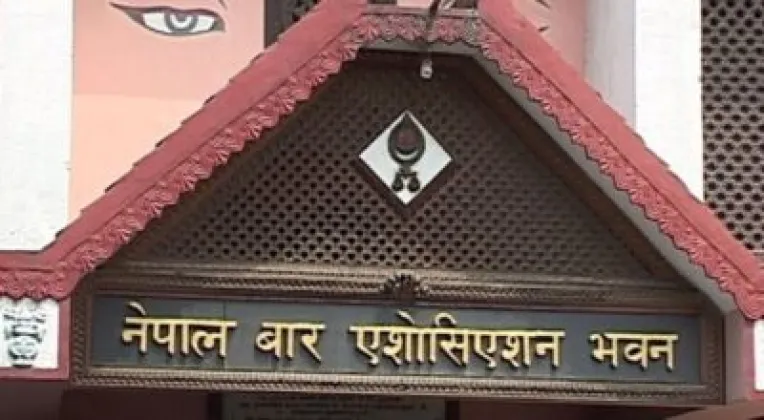
The Nepal Bar Association (NBA), the umbrella professional body of Nepali lawyers, has formed a committee to study the questions and comments raised in recent times regarding the courts and the overall justice sector. The panel will be coordinated by former association president Chandeshwar Shrestha, according to reports published by Khabarhub, Gorkhapatra Online and Pradesh Khabar.
The move gives institutional shape to the association's response to a period in which matters concerning the judiciary and the wider justice system have attracted pointed questions and public commentary. Instead of issuing a brief statement, the NBA has handed the task to a dedicated body of senior lawyers drawn from among its past office-bearers.
A panel of former office-bearers
The committee announced by the association brings together lawyers who have previously occupied some of its most senior elected positions. Coordination has been entrusted to Chandeshwar Shrestha, who has earlier served as president of the Nepal Bar Association. He is joined by members whose experience spans the apex court bar and the association's central leadership.
- Purnaman Shakya, former president of the Supreme Court Bar Association, as member
- Usha Malla Pathak, former vice-president of the Nepal Bar Association, as member
- Surendra Kumar Mahato, former vice-president of the Nepal Bar Association, as member
- Chandra Prasad Kafle, former member of the association, as member
- Baburam Aryal, central member of the association, as member-secretary
The profile of the panel underlines the weight the association appears to be placing on the exercise. Shakya's background lies with the Supreme Court Bar Association, the professional body of advocates who practice before the country's apex court. Pathak and Mahato have each held the post of vice-president in the Nepal Bar Association, the second-highest elected office in the organization. Kafle has earlier served as a member of the association, while Aryal, a current central member, takes on the duties of member-secretary, a role that typically involves coordinating the panel's meetings and records. Together, the six names form a group whose working lives have been closely tied to the courts and the legal profession the committee is set to examine.
The mandate: courts and the wider justice sector
The task set before the committee is to study the questions and comments that have been raised recently regarding the courts and the overall justice sector. The wording of the remit is notably broad. By referring not only to the courts but to the justice sector as a whole, the association has framed the study to take in the full sweep of a system in which the judiciary sits at the center, supported by the lawyers who argue before it and by the wider institutional arrangements through which justice is delivered.
From district courts to the Supreme Court
Nepal's judiciary operates through a tiered structure, with district courts handling the bulk of cases at the grassroots, High Courts above them, and the Supreme Court at the apex as the court of final resort. Questions and comments directed at this structure, and at the justice sector more generally, form the material the committee has been constituted to examine. The reports announcing the panel's formation did not specify a timeline for the study, the method it will follow, or how the association intends to act on its findings.
The bar's voice in judicial debates
The Nepal Bar Association functions as the national organization of Nepali lawyers and stands among the country's most prominent professional bodies. Bar associations of this kind serve as the organized voice of the legal profession on matters touching the rule of law, the independence of the judiciary and the administration of justice. When questions arise about the courts, the bar is among the first constituencies called upon to respond, since its members appear before the benches under discussion and work within the justice system day to day.
The decision to constitute a committee rather than respond through an immediate statement suggests the association wants its position to rest on a studied assessment. Study committees are a familiar device for professional bodies weighing in on complex questions, allowing differing views within the profession to be examined before a position is adopted. The choice of a former president as coordinator, and of former vice-presidents and a former Supreme Court Bar Association president as members, points to an exercise designed to carry authority within the profession. It also places the work in the hands of lawyers familiar with how the association has previously engaged with issues concerning the courts.
What comes next
At this stage, the committee's next steps remain to be seen. The reports announcing its formation did not indicate when the panel will begin its work, when it is expected to conclude, or whether it will submit recommendations to the association's leadership. What is clear is the remit: to study the questions and comments raised recently about the courts and the overall justice sector, under the coordination of a former president and with the participation of some of the association's most experienced former office-bearers.
For lawyers, court observers and the wider public following discussions about the justice system, the committee's formation marks the point at which the Nepal Bar Association has moved the conversation from commentary toward formal study. The panel's findings, whenever they are made public, will be closely read within a profession whose daily work is bound up with the very institutions the committee has been asked to examine.


