
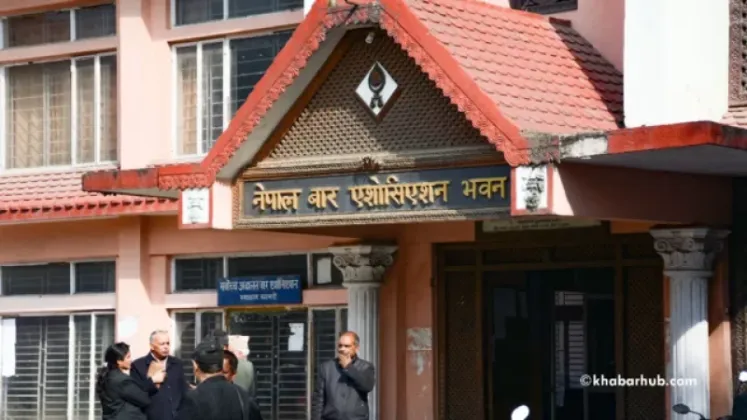
The Nepal Bar Association (NBA) has formed a committee to study the issues raised over the judiciary in recent days, with the panel announced in Kathmandu on November 3. The committee will be coordinated by Chandeshwor Shrestha, a former president of the NBA, and brings together several senior figures from Nepal's legal community, including a former president of the Supreme Court Bar Association and two former vice presidents of the association itself. The move gives the country's lawyers' body a formal mechanism to examine the concerns that have surfaced around the judiciary, although the announcement, reported by Khabarhub, focused on the panel's composition and mandate rather than on how its work will unfold.
A Committee Built on Bar Experience
The make-up of the committee underlines the weight the NBA has placed on the assignment. Coordination rests with Shrestha, who has previously led the association and now returns to head a panel tasked with studying one of the most sensitive subjects in Nepal's public life, the state of its judiciary.
He is joined by members drawn from the senior ranks of the bar. Those named in the announcement include:
- Chandeshwor Shrestha, former president of the Nepal Bar Association, serving as coordinator
- Purnaman Shakya, former president of the Supreme Court Bar Association
- Usha Malla Pathak, former vice president of the Nepal Bar Association
- Surendra Kumar Mahato, former vice president of the Nepal Bar Association
The association noted that these individuals are among others on the committee, indicating that the full membership extends beyond the four names highlighted in the November 3 announcement.
A Blend of Institutional Backgrounds
The panel combines experience from two of the country's principal bar bodies. Shakya's background is with the Supreme Court Bar Association, the organization of advocates who practice before the country's highest court, while Shrestha, Pathak and Mahato have all held senior positions within the NBA itself.
That blend is relevant to a committee whose task is to study issues around the judiciary. It pairs familiarity with legal practice at the top court with the leadership experience of the association that represents lawyers across Nepal, and it places the study in the hands of figures who have previously carried institutional responsibility within the profession.
The Mandate: Issues Raised in Recent Days
According to the announcement, the committee's purpose is to study the issues that have been raised over the judiciary in recent days. The wording places the emphasis on recent concerns rather than an open-ended review, and the NBA did not, in the announcement as reported, itemize which specific questions the panel will take up.
What is clear is the process the association has chosen. Rather than limiting itself to a statement, the NBA has constituted a group with named personnel, coordinated by a former president and staffed by former office bearers. That structure suggests the association intends its engagement with the subject to be organized rather than episodic.
The timing, too, is anchored by the announcement itself. The decision was made public in Kathmandu on November 3, giving the committee its formal start under the association's banner and establishing the reference point for any subsequent statements from the NBA about the panel's work.
Why the Bar's Move Draws Attention
The NBA is the professional association representing Nepal's lawyers, and its positions on matters touching the justice system carry weight within the legal community and in public debate. Study committees of this kind are a familiar tool for professional bodies: they allow an association to review concerns and form an institutional view through a defined group rather than through ad hoc comment.
By turning to former presidents and vice presidents, the NBA has drawn on figures who have previously overseen the association's engagement with the courts and the wider legal system. The presence of a former Supreme Court Bar Association president adds a further link to the bar that argues cases before the country's highest court.
For the judiciary, the committee's formation adds another organized voice to the ongoing discussion of its functioning. The announcement, however, stops short of describing what the panel may conclude or how any findings would be presented, leaving those questions open as the committee gets underway.
Details Still to Come
As of the November 3 announcement, several practical aspects of the committee's work had not been made public. These include:
- The complete list of members serving under coordinator Chandeshwor Shrestha
- The committee's working procedure and method of study
- Any timetable for its deliberations or the expected form of its findings
Until the NBA shares further information, the known particulars of the panel remain its mandate, its coordinator and its senior membership. For a legal community watching how concerns over the judiciary are examined, the composition announced in Kathmandu on November 3 is the first, and so far the clearest, indication of the seriousness with which the association is approaching the task. The NBA has not said when additional details about the committee will be released.


