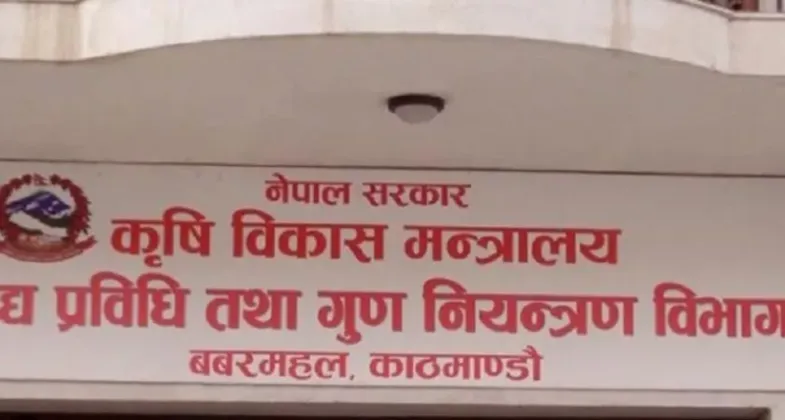
The Department of Food Technology and Quality Control on Monday banned the production, storage and sale of non-edible fat used for worship under the name ghee, saying the product is being made to resemble edible ghee and sold to consumers in Kathmandu. The department’s public notice requires labels to state clearly that the substance is not for eating, distinguishing it from ghee intended for consumption.
Ban targets the use of the name ghee
The department said the oily substance is used in religious practices including puja, hom, havan and lighting lamps. Although it is meant for these non-food purposes, the department said it is being produced to look like edible ghee and marketed to consumers as ghee. The notice prohibits producing, storing or selling it under that name.
The restriction addresses both the product’s presentation and the way it is identified to buyers. The notice does not describe a ban on the use of the substance for worship. Instead, it bars its production, storage and sale as ghee and requires a clear warning on the label that it is not for consumption. That distinction is central to the department’s direction: a product intended for religious use must not be presented in a way that could lead consumers to mistake it for edible ghee.
Labels must warn consumers
Under the notice, packaging or product labels must clearly state that the fat is not for eating. The requirement is intended to make the product’s intended use apparent to people who encounter it for sale. By specifying that the warning must appear on the label, the department has made consumer information a key part of its announcement, alongside the prohibition on production, storage and sale under the name ghee.
The department’s concern, as set out in the notice, is that the non-edible substance is made to resemble edible ghee. The appearance and naming of a product can make it difficult for consumers to distinguish what is intended for food from what is intended for a religious purpose. A clear label stating that the product is not for consumption is therefore required to communicate the distinction directly, rather than leaving buyers to infer its purpose from its appearance or where it is sold.
The notice also places the labeling direction alongside the ban on handling the substance as ghee. In practical terms, the department’s announcement addresses how the product is made, kept and offered for sale, as well as how it is described to consumers. The product may be used for worship and related practices, but, according to the notice, it cannot be produced, stored or sold under the name ghee as though it were edible.
Department seeks to distinguish food from ritual-use products
The department’s announcement draws a clear line between edible ghee and the oily substance used in religious rituals. Edible ghee is a food product; the substance described in the notice is intended for puja, hom, havan and lamp lighting. The department said the problem arises when the latter is made to resemble the former and sold using the name ghee. Its order requires both a change in how the product is sold and a clear statement on its label about its non-edible status.
For consumers, the notice’s most direct instruction is to read the label and look for a clear declaration that the product is not for eating. The department has not, in the information provided, specified additional labeling wording, a deadline for compliance or penalties for violations. Its public notice nevertheless makes clear that non-edible fat intended for worship cannot be presented and sold as edible ghee, and that the product’s label must communicate its intended non-food use.
The ban was announced in Kathmandu on Monday. It covers production, storage and sale of the worship-use substance under the name ghee, while requiring labels to warn consumers that it is not for consumption. The department’s notice is aimed at preventing confusion between a ritual-use product and edible ghee by requiring the product’s non-food status to be made explicit.