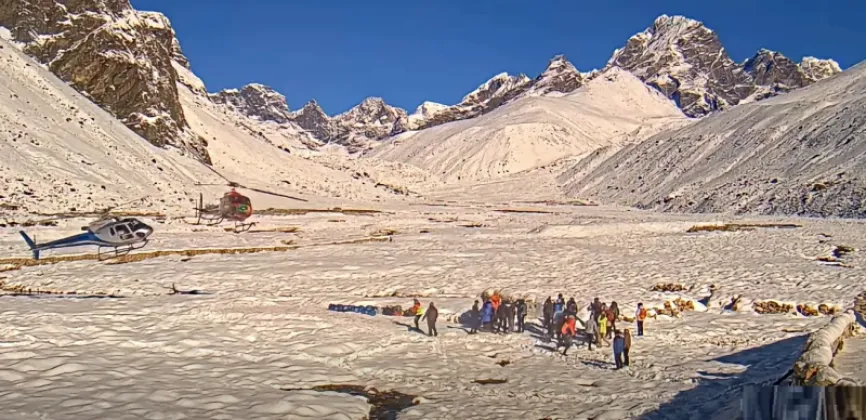
The Civil Aviation Authority of Nepal (CAAN) has formed a five-member investigation committee to determine the cause of a helicopter collision in Feriche, Solukhumbu district, in which a helicopter operated by Air Dynasty and another operated by Fishtail Air collided with each other on Tuesday. The announcement by the country's aviation regulator sets in motion the formal process of establishing how the two aircraft, registered 9N-AOD and 9N-AJR, came into contact in the Khumbu region, one of Nepal's busiest and most demanding areas for helicopter operations. The committee is to be headed by Director Prabhakar Chandra Mallik and will include pilots and aircraft engineers among its members.
A Five-Member Panel Headed by Director Mallik
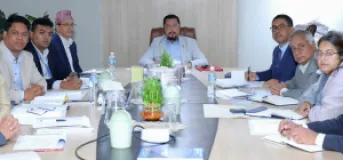
According to RatoPati, the committee formed to investigate the Feriche incident is led by Director Prabhakar Chandra Mallik. Khabarhub similarly reported that CAAN constituted the panel to probe the collision, which involved helicopters belonging to two of Nepal's established domestic helicopter operators.
The composition of the committee, as outlined in the initial announcements, is as follows:
- Chair: Director Prabhakar Chandra Mallik
- Members: Pilots and aircraft engineers included in the panel
- Total strength: Five members
The inclusion of pilots and aircraft engineers is a deliberate one. Determining why two helicopters collided requires expertise that spans flight operations, aircraft systems and the particular demands of flying in mountainous terrain, and the decision to staff the panel with technical specialists reflects that. CAAN, as the regulator responsible for overseeing civil aviation in Nepal, constitutes such committees following significant air incidents, and the panel's findings are expected to feed into safety recommendations and any regulatory measures that follow.
The Collision at Feriche
The incident occurred on Tuesday, when the Air Dynasty helicopter bearing registration 9N-AOD and the Fishtail Air helicopter registered 9N-AJR collided with each other in Feriche, in Solukhumbu district. Initial reports did not immediately detail the extent of the damage to the two machines or the status of those on board.
Key Facts Reported So Far
- Aircraft involved: Air Dynasty helicopter (9N-AOD) and Fishtail Air helicopter (9N-AJR)
- Nature of incident: The two helicopters collided with each other
- Location: Feriche, Solukhumbu district
- Day: Tuesday
Feriche lies in the Khumbu region of Solukhumbu, the district that is home to Mount Everest, the world's highest peak, and to some of the most heavily trekked routes in Nepal. In this roadless, high-altitude terrain, helicopters are not a luxury but a lifeline. They carry trekkers along the trail, ferry supplies to lodges and villages that no road can reach, and perform rescues and medical evacuations from the mountains. That constant demand makes helicopter traffic in the Everest region heavy, especially during peak trekking and climbing seasons.
Flying Where the Margins Are Narrow
Operating helicopters in the high Himalaya is among the most challenging work in civil aviation. Aircraft at extreme altitudes contend with thin air that reduces engine and rotor performance, valleys that restrict maneuvering room, and weather that can change within minutes. Pilots flying in the Khumbu must also negotiate approaches to landing zones scattered along trekking routes, often while other aircraft are servicing the same points.
When two helicopters come into contact in such an environment, investigators generally examine a broad set of factors, including visibility and weather at the time, communication between the flight crews and with ground stations, air traffic coordination, the flight paths of both machines, and the mechanical condition of each aircraft. Which, if any, of these elements contributed to the Feriche collision is precisely what the five-member committee has been formed to establish.
Nepal's aviation sector has long drawn scrutiny over its safety record, and incidents in the Everest region attract particular attention because of the volume of flights that support the trekking and mountaineering economy there. The conclusions of the Mallik-led panel will therefore be watched closely by operators, regulators and the international climbing and trekking community alike.
What Comes Next
The committee's core mandate is to determine the cause of the collision. Panels of this kind typically review the wreckage of both aircraft, interview pilots, company staff and witnesses, examine maintenance records, and analyze the weather and airspace conditions prevailing at the time of the incident. The authority's initial announcements did not specify how long the probe would take or when its findings would be made public.
For now, the formation of the committee represents the first formal step toward answers for the two operators and for Nepal's wider aviation community. As the investigation progresses, its conclusions are expected to inform safety measures governing helicopter operations in the Everest region, where demand for flights remains high and the terrain leaves little room for error.