
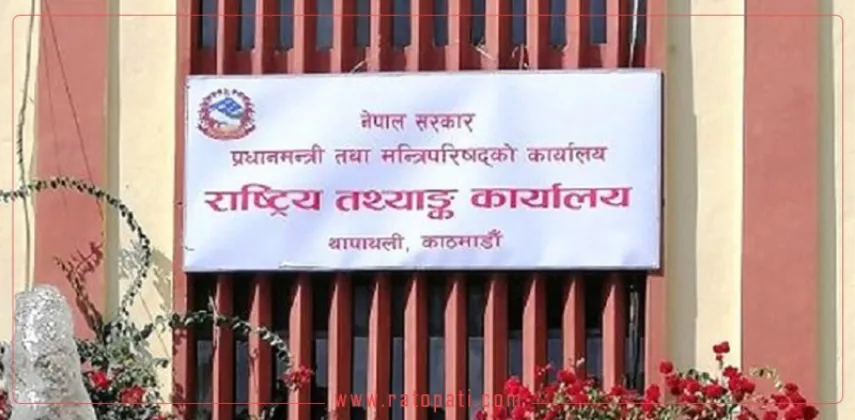
The National Statistics Office (NSO) on Friday released a statistical report presenting the status of water, sanitation and hygiene (WASH) across all 753 local units of Nepal. The report was made public at a programme held in Lalitpur, where Laxmi Basnet, chief statistics officer at the NSO, presented the report on the state of drinking water and sanitation in the country. By compiling indicator-based data for every municipality and rural municipality in the country, the publication offers one of the most detailed statistical pictures yet of the WASH situation at the grassroots level, according to reports published by RatoPati and Khabarhub.
A local-level snapshot of water and sanitation
The newly released report brings together statistical indicators that analyse the water, sanitation and hygiene situation of each of Nepal's 753 local units. Rather than presenting the WASH situation only at the national or provincial level, the report breaks the data down to the local level, allowing conditions in individual municipalities and rural municipalities to be compared and assessed.
The report was presented by Laxmi Basnet, the NSO's chief statistics officer, at the public programme in Lalitpur on Friday. The NSO is the country's apex statistical body, having succeeded the former Central Bureau of Statistics, and is responsible for conducting the national census as well as producing official statistics across economic and social sectors, including drinking water and sanitation.
WASH indicators of this kind are widely used to describe the state of the sector. They generally cover areas such as the sources from which households obtain drinking water, the availability and type of toilet facilities, and hygiene practices, all of which are central to public health, education and overall living standards. Compiling such indicators for all 753 local units means the report can serve as a statistical reference document for the WASH sector as a whole.
Why granular data matters in a federal set-up
The significance of the report lies in Nepal's federal structure. The Constitution of 2015 reorganised the country into three tiers of government - federal, provincial and local - with 753 local units comprising metropolitan cities, sub-metropolitan cities, urban municipalities and rural municipalities. These local governments hold direct responsibility for delivering many basic services, including drinking water, sanitation and local health services, and they prepare their own plans and budgets each fiscal year.
For local governments to plan effectively, they need reliable data that reflects conditions within their own boundaries. A report that provides WASH indicators for every local unit can help in this regard by making it possible to:
- Identify the localities where access to safe drinking water and sanitation remains weakest
- Support evidence-based planning and budget allocation by municipal and rural municipal authorities
- Allow comparisons across local units, districts and provinces to highlight regional disparities
- Provide a baseline for tracking progress in the water supply and sanitation sector over time
Conditions relating to water and sanitation vary considerably across Nepal, shaped by geography, settlement patterns and infrastructure. National averages can mask these differences, which is why statistical products that drill down to the local level are considered valuable tools for policymakers, researchers and development partners working in the sector.
Placing the report in Nepal's WASH commitments
The release of the report also comes against the backdrop of Nepal's broader commitments in the water and sanitation sector. Under the United Nations Sustainable Development Goals, Goal 6 calls for ensuring the availability and sustainable management of water and sanitation for all, a target Nepal has committed to working towards along with the international community. Monitoring progress toward such goals depends on the kind of regular, disaggregated data that statistical reports of this nature are designed to supply.
Nepal has recorded important milestones in the sector in recent years. The country was declared open defecation free in 2019 following nationwide campaigns to eliminate the practice, and sustaining those gains while expanding access to safe water and improved sanitation remains an ongoing task for all three tiers of government. Continued monitoring at the local level is regarded as essential for consolidating such achievements and for directing support to the areas that still lag behind.
The NSO has also been strengthening its statistical coverage of household living conditions. The most recent National Population and Housing Census, conducted in 2021, collected information on the drinking water sources and toilet facilities used by households across the country. A dedicated WASH report covering all 753 local units extends this statistical picture further, aligning the office's outputs more closely with the administrative units that actually plan and deliver water and sanitation services.
With its release on Friday in Lalitpur, the report is expected to function as a reference document for federal, provincial and local authorities, as well as for researchers and organisations engaged in the water supply and sanitation sector. By mapping the WASH situation of every local unit in a single statistical publication, the National Statistics Office has added a detailed evidentiary base to inform planning, monitoring and public debate on one of Nepal's most important service delivery sectors.


