
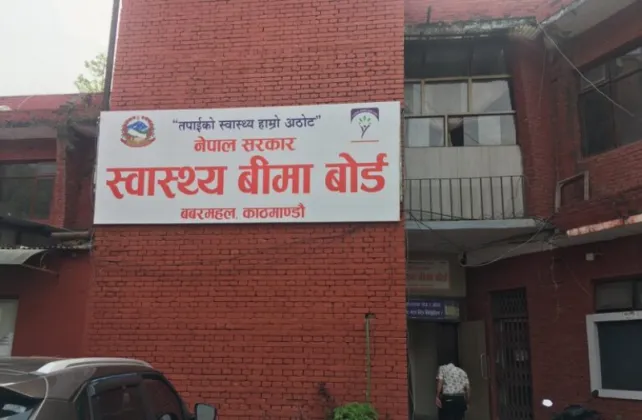
Nepal's health insurance programme will require a national identity card for all major transactions from Poush 1, 2083 BS (December 1). The Ministry of Health and Population has decided that citizens aged 16 and above must submit their national identity card number to enrol in the health insurance programme, to renew their membership and to receive services under the scheme. The ministry has issued a circular to local levels across the country, instructing them to coordinate the implementation of the new requirement, according to reports published by RatoPati and News of Nepal.
What the new requirement covers
Under the decision, the national identity card becomes the key document for the health insurance programme at three distinct stages:
- New enrolment: Citizens aged 16 and above joining the programme for the first time must provide their national identity card number.
- Renewal: Existing members who wish to continue their membership must also submit the number when renewing.
- Accessing services: The requirement does not end at registration. The identity card number must also be submitted to receive health insurance services.
In effect, the card will function as a gateway to the scheme from the first day of Poush. The age threshold of 16 means that all adults who wish to participate in the programme must first be in possession of a national identity card, the government-issued document that carries a unique number identifying an individual across official systems.
The decision aligns with the government's wider effort to link public services with the national identity system. By tying health insurance to the identity card number, the ministry expects each member of the programme to be verified against a single, official identity, both when they join the scheme and when they turn up to use it.
Local levels at the centre of implementation
The ministry has issued a circular to local levels, directing them to coordinate implementation of the requirement. These municipalities and rural municipalities form the tier of government closest to citizens and are now charged with ensuring the change is applied on the ground.
The circular places local governments in a frontline role for the rollout. They are the bodies through which residents typically engage with both identity documentation and social protection programmes, and they will be the practical points of contact for questions about the new rule, from confirming what documents are needed to helping resolve problems during enrolment or renewal. The ministry's move to route the directive through local levels signals that it wants the transition handled at the grassroots rather than through central offices alone.
For the ministry, the circular is the operational backbone of the change. Without coordinated action from municipalities and rural municipalities, a requirement that touches every new member, every renewal and every service delivery point would be difficult to enforce uniformly across the country.
What citizens need to do
For current and prospective health insurance members, the message from the ministry is straightforward: have a national identity card ready before Poush 1.
- Check whether you hold a national identity card. Anyone aged 16 or above who does not yet have one should apply for it ahead of the deadline.
- Keep the identity card number handy when visiting enrolment points, renewing membership or seeking services under the scheme.
- Approach your local level for help if there is confusion about the requirement, as municipalities and rural municipalities have been tasked with coordinating its implementation.
Citizens who are not prepared for the transition may find themselves unable to enrol, renew or receive services until they can present the required number. Early preparation, in other words, is the simplest way to avoid any disruption to coverage.
Background: the health insurance programme
Nepal's health insurance programme is a contribution-based scheme under which households pay premiums to receive coverage for treatment, protecting families against the high cost of medical care. The programme depends on accurate membership records, which is where the national identity card requirement fits in: a unique identity number for every member gives the scheme a consistent way to confirm who is entitled to what, at the time of enrolment and at the point of care.
The new rule means that identity verification will now be a precondition at every stage of the member journey. For someone joining the programme for the first time, submitting the identity card number will be part of signing up. For an existing member, the number will be needed to keep the membership active and to use the benefits the membership provides.
With the new rule taking effect from Poush 1, the coming weeks will show how smoothly the health insurance system and the national identity infrastructure work together in practice. For the ministry, the circular to local levels sets out the coordination needed to make that happen. For citizens, the practical step is simpler: make sure the national identity card is in hand before the December deadline.


