
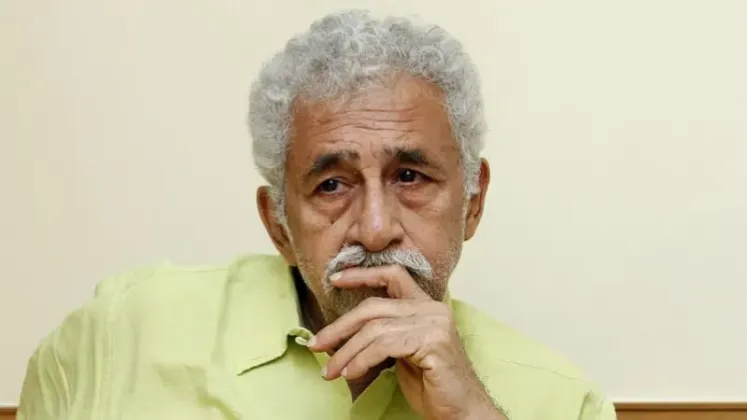
Veteran Indian actor Naseeruddin Shah has publicly backed the students protesting at Jamia Millia Islamia University in Delhi, releasing a video message in which he delivered a sharp critique of the government led by Prime Minister Narendra Modi and declared himself proud to be a "dimagi naxal". The message, reported by Nepali news portals NepalPress and Khabarhub in reports published in late October, features the actor accusing the government of trying to suppress the voices of young people and of working to weaken educational institutions. "I proudly say I am a brainy Naxalite," read the English rendering of his declaration carried by NepalPress, a striking statement from one of Indian cinema's most recognisable and respected figures.
'Proud to be a dimagi naxal'
At the centre of Shah's message was his open embrace of a label that has long been used as an accusation in Indian political debate. The phrase "dimagi naxal", often translated as "brainy Naxalite", is applied to those accused of intellectually or ideologically backing Naxalite thought, the Maoist-inspired ideology that the Indian state has treated as a serious internal security concern for decades. In mainstream political discourse, the term is rarely intended as a compliment: it is typically used to suggest that a critic's opposition amounts to sympathy for extremism.
Shah's response was to claim the term outright rather than deny it. By saying he was proud to call himself a dimagi naxal, the actor effectively stripped the label of its sting and wore it as a badge of honour, converting an accusation into a self-description. His choice of words gives the statement its force, since such labels have featured repeatedly in India's ongoing disputes over dissent, free expression and the space available for criticism of those in power.
A blunt message for the Modi government
The actor did not stop at wordplay. In the video message, he sharply criticised the government led by Prime Minister Narendra Modi, accusing it of attempting to silence the voices of the country's young people. According to the accounts of his remarks carried by the two Nepali portals, he further charged the government with seeking to weaken educational institutions, the very spaces from which the protesting students come.
That framing placed the campus protest in a much larger narrative. In Shah's telling, as reflected in the reports, the issue is not merely a dispute at a single university but a broader effort to suppress youth and hollow out the institutions that nurture them. Universities, in this view, are being targeted precisely because they encourage questioning minds, an argument the actor appeared to underline by choosing to stand publicly beside the Jamia students.
Key points from Shah's message
- He expressed public support for the students protesting at Jamia Millia Islamia University in Delhi.
- He sharply criticised the government led by Prime Minister Narendra Modi.
- He proudly described himself as a "dimagi naxal", or brainy Naxalite.
- He accused the government of trying to suppress the voices of young people.
- He charged the government with seeking to weaken educational institutions.
Standing with Jamia's students
The immediate occasion for the message was the protest by students at Jamia Millia Islamia, one of Delhi's prominent universities. Shah's decision to release a video message, rather than a written statement, gave his solidarity a direct and personal quality, allowing him to address the students and a wider public at the same time. The format also ensured that his words travelled quickly, with the clip picked up and reported by media outlets in Nepal and beyond.
For the students, support from a figure of Shah's standing carries undeniable symbolic weight. A leading voice of Indian cinema lending his name to their cause extends the reach of their protest well beyond the campus, and it signals that concern over the treatment of young protesters is not confined to student circles alone.
A charged word in Indian politics
The word "Naxalite" itself carries heavy historical baggage in India. It traces back to the Maoist-inspired movement that emerged in the late 1960s and that the Indian state has long regarded as an armed internal security challenge. When prefixed with "dimagi", meaning intellectual or of the mind, it becomes a term aimed at those accused of lending ideas, rather than arms, to that cause.
In Indian public life, such labels have frequently been used to paint critics of the establishment as adversaries of the state itself. That context is what makes Shah's declaration so notable. Rather than rejecting the accusation or offering a careful clarification, he accepted the term openly and with pride, effectively daring his critics to make of it what they will. The statement is likely to fuel further discussion about the language used in political debate and about the boundaries of dissent, particularly at a time when student protests remain a sensitive issue in India.
With the video message, Shah has added a prominent voice from Indian cinema to the side of the protesting students, and he has guaranteed that both the substance of his critique and the words he used to deliver it will remain part of the conversation well beyond the gates of Jamia Millia Islamia.


