
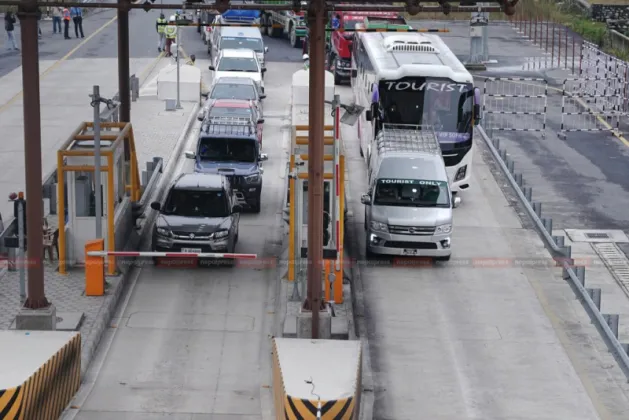
The Nagdhunga Tunnel collected around Rs 1.17 million in road tolls from approximately 7,500 vehicles on Sunday, its first day of paid operation, marking a significant milestone for the country's first vehicular tunnel on the main gateway into Kathmandu Valley. Toll collection began at midnight on Sunday, according to reports by Nepal Press and Nagarik News. The opening day's collection is being closely watched as an early indicator of whether the tunnel can meet the annual revenue target of Rs 400 million set by the Nagdhunga Tunnel Construction Project.
First-day collection ahead of daily benchmark
The first day's haul of about Rs 1.17 million works out to an average toll of roughly Rs 156 per vehicle, a figure that reflects the mix of vehicle classes passing through the toll plaza, each paying according to the category-based tariff structure. A flow of around 7,500 vehicles on the opening day represents steady usage for a route that handles a large share of the traffic entering and leaving the capital.
More significant for the project is how the figure stacks up against its yearly goal. The Rs 400 million annual target implies a daily average of about Rs 1.1 million. The opening day's collection came in comfortably above that benchmark, meaning that if the pace were sustained across the year, the tunnel would finish ahead of its target. Daily revenue will naturally fluctuate with traffic patterns, but the first full day has given the project a solid starting point.
Key figures from the opening day:
- Toll collected: about Rs 1.17 million
- Vehicles that used the tunnel: around 7,500
- Average toll per vehicle: roughly Rs 156
- Toll collection began: midnight on Sunday
- Annual revenue target: Rs 400 million
Prades Khabar also reported the first-day collection, underlining the attention the start of toll operations has drawn among Nepali media and the travelling public.
Nepal's first vehicular tunnel
The Nagdhunga Tunnel holds a special place in Nepal's infrastructure history as the country's first road tunnel open to vehicular traffic. It runs for about 2.7 kilometres beneath the Nagdhunga pass on the Tribhuvan Highway, linking Sisnekhola on the Kathmandu side with Naubise in Dhading district. The alignment bypasses the steep, winding and long-congested Nagdhunga-Naubise section, historically one of the most accident-prone and traffic-choked stretches on one of the main routes connecting the capital with the Terai plains and the western hills.
Built with Japanese loan assistance, the tunnel took years to complete, with construction beginning in 2019 and the structure opened to traffic only after an extended period of trial operation. It is expected to reduce travel time, cut fuel consumption and improve safety for the thousands of vehicles that move between Kathmandu and the rest of the country. For decades, the climb over the Nagdhunga ridge has been the first and often the most frustrating experience for drivers approaching the capital, and the tunnel is designed to remove that bottleneck altogether.
The start of toll collection now shifts the project from a construction story to an operational one. How consistently drivers choose the tunnel over the old highway, and how much they are willing to pay for the convenience, will determine whether the projected revenues materialise.
The road to Rs 400 million
The Rs 400 million annual target is the figure against which the tunnel's commercial performance will now be judged. Toll revenue from projects of this kind typically goes toward operation and maintenance costs and the repayment of construction loans, making sustained collections important not just for the project office but for the broader financing model of tunnel infrastructure in Nepal.
Several factors will shape the collections ahead. Traffic volumes are expected to rise during festivals, holidays and peak travel seasons, which could lift daily revenue well above the opening-day figure. On quieter days, the totals are likely to dip. The old road over the Nagdhunga pass remains open as an alternative route, giving travellers a choice and, in effect, making the tunnel's time savings something each commuter must weigh against the toll.
For the project, the immediate task will be to monitor whether vehicle numbers hold steady as drivers adjust to the new arrangement, and whether the daily average stays above the roughly Rs 1.1 million needed to reach the annual target. If the opening day is any guide, the tunnel has begun its toll-collection era on a promising note, with revenue arriving at a rate slightly ahead of what the project needs to meet its first-year goal.
For now, the first day's numbers offer the clearest early evidence yet of the tunnel's economic pull. Around 7,500 drivers chose to pay for the passage on day one, generating Rs 1.17 million in a single day and putting the Rs 400 million annual target within reach if the momentum continues.


