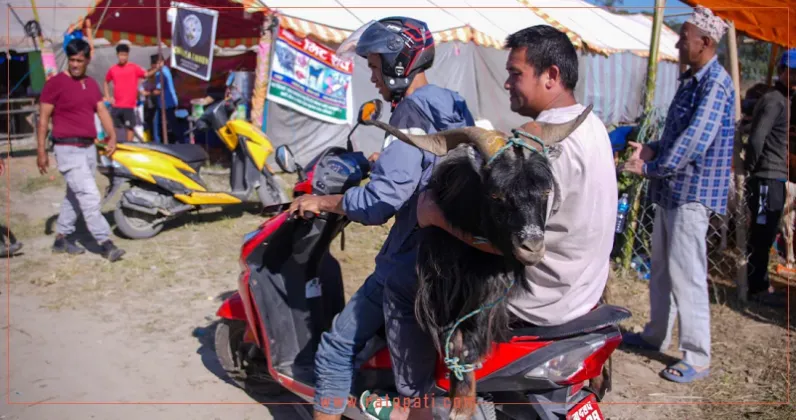
As Dashain approaches, traders have begun selling goats brought from Mustang at Sallaghari in Bhaktapur, where prices have risen to as much as Rs 1,300 per kilogram. The seasonal sales cater to the Dashain tradition of eating goat meat, while traders say purchasing and transporting the animals has been difficult this year. Among those involved is goat trader Mekh Bahadur, who is originally from Sindhupalchok and now lives in Duwakot, Bhaktapur.
Sales begin for the Dashain season
Goats from Mustang have started arriving for sale at Sallaghari as households prepare for Dashain. The animals are being offered to customers ahead of the festival, when eating goat meat is a longstanding tradition. The arrival of the livestock marks the start of seasonal trading at the Bhaktapur location, with traders bringing animals from Mustang to meet the festival-related demand.
The trade links Mustang, where the goats are sourced, with Sallaghari, where they are being sold. For customers seeking goats for Dashain, the market offers the animals in one of the areas where seasonal sales are under way. Reports on the Mustang goats arriving in Bhaktapur describe prices reaching up to Rs 1,300 per kilogram.
Traders report difficulty and higher prices
Traders say buying and transporting the goats has been difficult this year. They have also reported higher prices, with rates at Sallaghari reaching as much as Rs 1,300 per kilogram. That figure is the reported upper rate, rather than a stated price for every goat on sale. The information provided does not specify how many animals have arrived or give a single fixed price across the market.
The reported challenges affect the process before the animals reach customers: traders must first purchase the goats and then bring them to the Bhaktapur sales location. Traders have not provided a specific explanation for why those tasks have been harder this year. They have, however, linked the difficulty in buying and transporting the animals with the rise in prices.
Mekh Bahadur is among the traders involved in the sales. Originally from Sindhupalchok, he now lives in Duwakot, Bhaktapur. His background reflects the connections between traders and the places where the animals are sold, although no further details about his individual stock or prices have been provided. Reports from Khabarhub and Nepal Lead have also covered the seasonal sales.
A traditional festival purchase
The goats are being sold specifically ahead of Dashain, a period when eating goat meat forms part of the festival tradition. That makes the seasonal trade relevant to households planning their festival purchases as well as to the traders bringing livestock to market. The reported price of up to Rs 1,300 per kilogram gives customers an indication of the higher rates traders say they are seeing this year, but the available details do not state how prices vary by animal.
For now, sales are under way at Sallaghari as Dashain draws closer. Traders are bringing goats from Mustang despite the reported difficulties in purchasing and transporting them, while customers can buy the animals at rates that reach the stated upper limit. The market’s role in the seasonal trade is clear: it connects livestock brought from Mustang with people in Bhaktapur preparing to observe Dashain and its goat-meat tradition.