
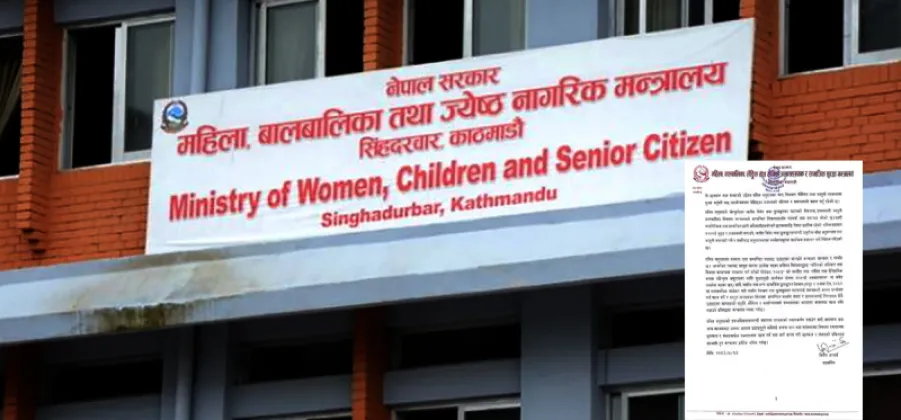
Kathmandu - The Ministry of Women, Children, Gender and Sexual Minorities and Social Security on Sunday, Kartik 15, appealed to members of the Dalit community staging a sit-in at Maitighar Mandala in Kathmandu to end their demonstration and come forward for dialogue. In a press statement issued the same day, the ministry said the government is serious and sensitive to the demands raised by the Dalit community and called for the issues to be resolved through constructive talks, framing negotiation rather than continued street protest as the way forward for both sides.
The appeal, reported by Nagarik News, RatoPati and Gorkhapatra Online, marks a formal effort by the government to bring the sitting protesters to the negotiating table.
What the ministry's statement said
The press statement, made public on Sunday, Kartik 15, carried two clear messages for the demonstrators gathered at Maitighar Mandala. First, the government wanted it known that it has not turned a deaf ear to the concerns of the Dalit community: the ministry described the state as "serious and sensitive" to the demands the community has raised. Second, it asked the protesters to wind up the sit-in and enter into dialogue, positioning talks as the mechanism through which the outstanding issues can be settled.
Key points of the appeal
- The government is serious and sensitive to the demands raised by the Dalit community.
- The protesters staging a sit-in at Maitighar Mandala have been urged to end their demonstration.
- The ministry wants the issues resolved through constructive talks rather than prolonged street protest.
By pairing an assurance of attentiveness with a request to vacate the streets, the ministry has sought to lower the temperature without committing itself to any specific concession in advance. The publicly reported text of the statement does not spell out when, where or in what format the proposed talks would take place, leaving those mechanics to be worked out once the protesters respond to the invitation.
Maitighar Mandala, the capital's standing stage for protest
Maitighar Mandala, the busy intersection where the Dalit community's sit-in has been concentrated, is one of Kathmandu's most recognizable venues for public demonstrations. Located a short distance from the heart of the capital's administration, it has long served as a default address for communities, workers and pressure groups seeking to place their grievances directly before the state. A sit-in at Maitighar keeps protesters visible to officials and passers-by alike, while allowing a sustained presence that a one-off rally cannot achieve.
For the Dalit community, the choice of venue reflects a familiar playbook: occupy a symbolic space, hold it continuously, and wait for the government to respond. The ministry's appeal on Sunday indicates that a response, at least in the form of an invitation to talk, has now arrived. How the protesters read that statement, whether as a genuine opening or simply as a request to disperse, will shape the next phase of the demonstration.
Why the appeal came from this ministry
The ministry that issued the appeal is the government's focal body for matters concerning women, children, gender and sexual minorities, and social security, portfolios that overlap directly with questions of social inclusion for historically marginalized communities such as Dalits. That the invitation to dialogue came from this line ministry signals that the government is treating the sit-in as a matter for policy engagement rather than mere crowd management. It also places responsibility for follow-through squarely within a ministry whose mandate touches the welfare of the very community on the streets.
Nepal's constitution prohibits caste-based discrimination and untouchability, and Dalit rights remain a recurring theme in the country's social and political agenda. Sit-ins of the kind staged at Maitighar Mandala are one way for communities to test how seriously state machinery responds when those commitments are perceived to lag on the ground. The ministry's language on Sunday, stressing seriousness and sensitivity, was an attempt to reassure the protesters on precisely that point.
The road ahead: from sit-in to the negotiating table
With the appeal now public, the immediate question is whether the Dalit community protesters will stand down. The ministry has asked them to end the sit-in and then come for dialogue, while the demonstrators have been pressing the demands that prompted them to occupy Maitighar Mandala in the first place. Sequencing matters in such stand-offs: protest movements are often reluctant to lift a sit-in before talks are firmly scheduled, while governments typically want the streets cleared before sitting down at the table.
What is clear from Sunday's statement is the government's stated preference. It wants the grievances of the Dalit community addressed through constructive talks rather than through a prolonged occupation of one of Kathmandu's most prominent intersections, and it has put on record that it considers itself serious and sensitive to the demands raised. The protesters now hold the next move, and the response they give to the ministry's appeal will determine whether the dispute shifts from Maitighar Mandala into a meeting room.


