
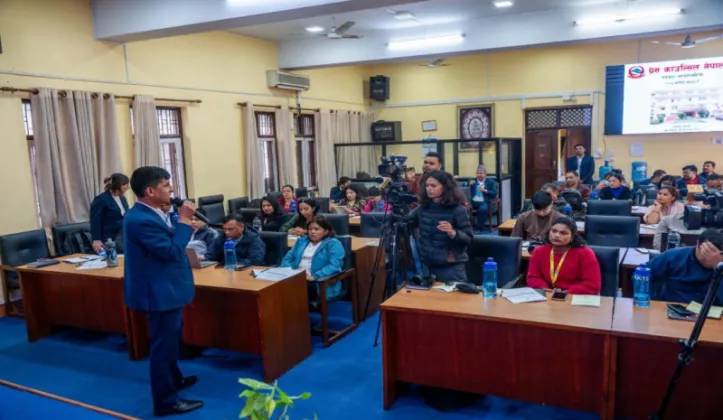
The Ministry of Health and Population has organised an orientation programme for journalists on the responsible reporting of suicide, in a move aimed at strengthening the media's role in suicide prevention in Nepal. The programme was held in Lalitpur and was carried out with the involvement of the National Health Education, Information and Communication Centre (NHEICC), which functions under the ministry. Mental health experts and stakeholders who took part in the session stressed that the media and journalists must play a responsible and sensitive role in reducing suicide risk, underlining that the manner in which suicide is covered can shape public attitudes toward the issue and affect people who may be vulnerable.
The orientation, reported by Gorkhapatra Online and RatoPati, brought journalists together with mental health specialists to discuss how news coverage of suicide can be handled with care, accuracy and empathy.
Ministry brings media into the prevention effort
The involvement of NHEICC, the ministry's body for health education, information and communication, signals that the government views the press as a partner in public health rather than a mere observer of it. Suicide prevention is typically approached through clinical services, crisis support and community programmes, but health authorities increasingly recognise that communication, including news coverage, forms a critical layer of that effort.
By orienting journalists directly, the ministry and its communication centre are seeking to ensure that reporting on suicide is accurate, avoids harm and supports those at risk. For a subject as sensitive as suicide, the difference between helpful and harmful coverage often lies in details: the prominence a story receives, the language used in headlines, and whether information on support services is included. The Lalitpur programme was built around exactly these considerations, giving media professionals a structured space to engage with experts on the subject.
Experts call for responsible and sensitive coverage
At the heart of the orientation was a clear message from the mental health experts and stakeholders present: journalists hold real influence over suicide risk, and that influence must be exercised responsibly. Participants stressed that the media should not sensationalise suicide or present it in a way that romanticises or oversimplifies it.
Safe reporting practices, reflected in widely promoted guidance on the subject, generally include:
- Avoiding sensational headlines and dramatic images that give suicide outsized prominence
- Not describing methods and means in detail, since such detail can invite imitation among vulnerable readers
- Avoiding the portrayal of suicide as a solution to personal difficulties or attributing it to a single cause
- Respecting the privacy of the deceased and showing restraint in interviewing bereaved families
- Presenting suicide as a preventable public health problem and carrying information about where to seek help
- Following up on recovery and prevention rather than treating an individual suicide as a closed story
Experts noted that sensitive reporting not only reduces the risk of harmful effects but can actively encourage people struggling with emotional distress to seek support. When the media highlight that suicide is preventable, describe how people overcome crises and point audiences toward services, coverage becomes a tool of prevention rather than merely a record of tragedy. That preventive potential was the central rationale for bringing journalists together in Lalitpur.
Why reporting style matters
Suicide is recognised globally as a serious public health issue, and the way it is discussed in public, including in the news, influences how societies understand and respond to it. International research on media and suicide has repeatedly pointed to two dynamics: extensive or sensationalised coverage can be associated with imitative behaviour among vulnerable people, while responsible stories that describe coping, treatment and recovery can foster hope and help-seeking.
For Nepal, where suicide is a matter of ongoing public health concern, the ministry's outreach to journalists reflects an effort to apply these lessons at home. NHEICC, which works at the intersection of health messaging and mass communication, is well placed to translate this orientation into everyday practice by supporting journalists who cover mental health and related subjects.
A shared responsibility going forward
The orientation in Lalitpur underlined a shared understanding that suicide prevention cannot rest on the health sector alone. Media professionals, who decide daily how such stories are framed, are central to how the public perceives mental distress and where it can turn for help.
Stakeholders at the programme emphasised that a continued, cooperative relationship between the health ministry, its communication bodies and the press is essential if reporting on suicide is to remain accurate, compassionate and prevention-oriented. For the journalists attending, the session served as both guidance and reminder: every story about suicide carries consequences, and reporting it with sensitivity is not a constraint on journalism but a fulfilment of its public service role.


