
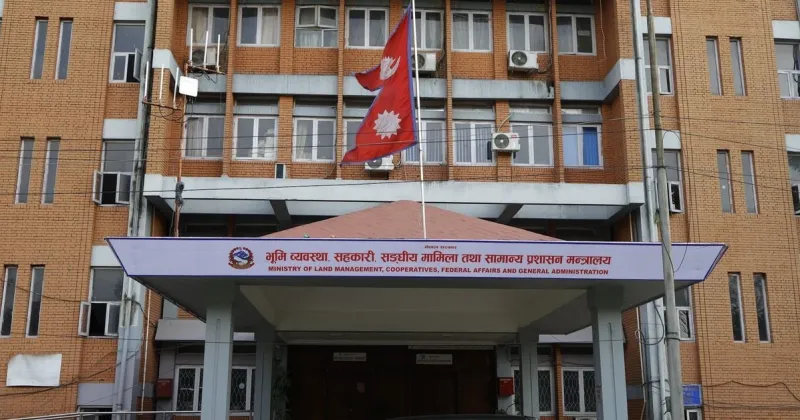
The Ministry of Land Management, Cooperatives and Federal Affairs has revoked the financial and administrative responsibilities of the chief administrative officers of three local governments after they refused to implement its transfer decisions, according to Nepali media reports. The affected local units are Kanakasundari Rural Municipality in Jumla, Jirabhawani Rural Municipality in Parsa and Budhanilkantha Municipality in Kathmandu. In a parallel move that sharpens the pressure on the defiant offices, the ministry has also frozen the accounts of all three local governments, leaving them unable to conduct normal financial transactions while the standoff over staff transfers continues.
Powers revoked, accounts frozen
The ministry's decision strips the chief administrative officers of the three local units of both their financial and administrative authority, as reported by RatoPati and Nagarik News. The action covers:
- Kanakasundari Rural Municipality in Jumla district
- Jirabhawani Rural Municipality in Parsa district
- Budhanilkantha Municipality in Kathmandu
The freezing of the local units' accounts is the more consequential of the two measures in immediate practical terms. With the accounts blocked, routine payments and expenditures cannot be processed in the ordinary way, affecting the day-to-day financial operations of the municipalities and rural municipalities concerned. The revocation of the chief administrative officers' responsibilities, meanwhile, removes the very officials who normally steer the administration of these local governments, compounding the disruption.
For local governments, whose budgets and administrative machinery run through the office of the chief administrative officer, the combined effect of the two measures is severe. The units remain formally in existence and their elected structures intact, but the officers who held the pen over spending and administration have been effectively sidelined by the ministry's order.
Defiance of transfer decisions at the heart of the action
The ministry took the step after transferred employees continued to stay at their old offices and did not allow the newly assigned chief administrative officers to report for duty, the reports state. In other words, the transfer decisions issued by the ministry were openly resisted on the ground: the outgoing officers remained in place, and their incoming replacements were prevented from assuming charge.
Transfer of civil servants, including chief administrative officers, is a standard instrument of administrative management, used periodically to reposition staff across local units. Compliance with such decisions is expected as a matter of course, and the ministry's intervention underscores that refusal to honour them carries consequences. In the three local units named, that refusal was not merely passive. The transferred staff physically stayed on at their old workplaces, and the newly posted chief administrative officers were blocked from reporting for duty, creating a direct confrontation between the local offices and the ministry's authority.
The standoff left the affected local governments in an unusual position: administrations operating in defiance of the ministry's orders, with officials in the chair who had, by the ministry's determination, no legitimate claim to remain there.
Why the chief administrative officer matters
The severity of the ministry's response reflects the centrality of the chief administrative officer in Nepal's local governments. The chief administrative officer is the senior-most civil servant in a municipality or rural municipality, responsible for implementing the decisions of the local council, executing the budget, managing staff and overseeing the day-to-day running of the office. Virtually every significant administrative and financial action of a local unit flows through this position.
That is precisely why the revocation of the officers' financial and administrative responsibilities amounts to a paralysis of the units' administration. Without an authorised chief administrative officer functioning in the role, decisions cannot be executed and spending cannot be authorised in the normal manner. The addition of the account freeze closes off the financial channel entirely, ensuring that the local units cannot function administratively or financially while the ministry's orders remain unimplemented.
The three units span a wide geographic range, from Jumla in the hills of Karnali to Parsa in the southern plains and Budhanilkantha on the outskirts of Kathmandu, indicating that the ministry's action was directed at the pattern of non-compliance rather than at any single region.
A firm message on compliance
By pairing the revocation of the officers' powers with the freezing of the local units' accounts, the ministry has applied both the administrative and financial levers available to it in a single action. The message conveyed by the decision is that transfer orders are not optional, and that local offices that resist them will find their capacity to operate curtailed.
As of the latest reports, the situation on the ground remains unchanged: the transferred employees have stayed at their old offices, the newly assigned chief administrative officers have been unable to take charge, and the financial and administrative restrictions imposed by the ministry on Kanakasundari Rural Municipality, Jirabhawani Rural Municipality and Budhanilkantha Municipality remain in force. The resolution of the standoff now rests with the local units, which would need to implement the transfer decisions for the restrictions to be lifted and for normal administration to resume.


