
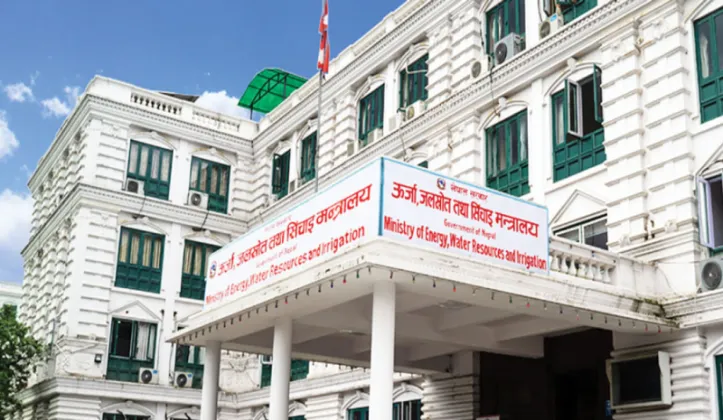
The Ministry of Energy, Water Resources and Irrigation reported 34.9 percent physical progress in river control work during the first quarter of the current fiscal year in Nepal, while recording expenditure of Rs 147 million against a quarterly allocation of Rs 620 million. The ministry has set aside Rs 5.209 billion for the programme for the full fiscal year, according to Ravindra Bahadur Thapa, chief of its River and Water-Induced Disaster Management Division.
Progress and expenditure figures
The reported 34.9 percent figure measures physical progress in river control work during the quarter. It is distinct from the spending figures, which describe how much of the programme’s allocated money had been used. The ministry provided both measures, but they should not be treated as interchangeable: progress in the work and expenditure of the budget are separate indicators.
For the first quarter, the ministry had set aside Rs 620 million. Of that amount, Rs 147 million was spent, leaving Rs 473 million of the quarterly allocation unspent at the end of the period, based on the figures reported. The expenditure represents about 23.7 percent of the quarterly allocation. This calculation gives a comparison between the reported spending and the amount set aside for the first three months; it does not indicate how physical progress was measured.
The full-year allocation of Rs 5.209 billion provides a wider budget context. The Rs 147 million spent in the first quarter is about 2.8 percent of that annual allocation. The quarterly allocation, meanwhile, is about 11.9 percent of the full-year amount. These comparisons are arithmetic calculations from the ministry’s reported figures and do not, on their own, explain the timing or distribution of planned work and expenditure over the rest of the fiscal year.
Reading the first-quarter result
The ministry’s update therefore presents two different views of implementation: 34.9 percent physical progress in river control work and Rs 147 million in expenditure. The progress figure describes the reported status of work, while the expenditure figure records the amount spent against the programme budget. Keeping those measures separate is important when interpreting the update, particularly because the 34.9 percent figure should not be read as the share of the annual budget spent.
Thapa, in his role as chief of the ministry’s River and Water-Induced Disaster Management Division, was the official identified in the report on the programme’s progress and budget. The figures supplied indicate the scale of the annual provision, the amount allocated for the first quarter and the spending recorded in that period. They do not, by themselves, provide a breakdown by river, project, location or type of control work, so no more detailed distribution can be established from the reported totals.
The first-quarter spending was below the full Rs 620 million set aside for that period. That comparison establishes the gap between the quarterly allocation and expenditure, but the figures alone do not identify its cause or show whether the unspent amount will be used in later quarters. Likewise, the reported physical progress does not specify which works account for the progress or how the percentage was calculated.
With Rs 5.209 billion allocated for the current fiscal year, the first-quarter figures offer an early snapshot of implementation rather than a full-year outcome. Further figures from later quarters would be needed to show how spending develops against the annual provision and how physical progress changes over time. For now, the ministry has reported 34.9 percent physical progress and Rs 147 million in first-quarter expenditure, alongside a quarterly allocation of Rs 620 million.


