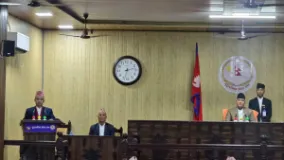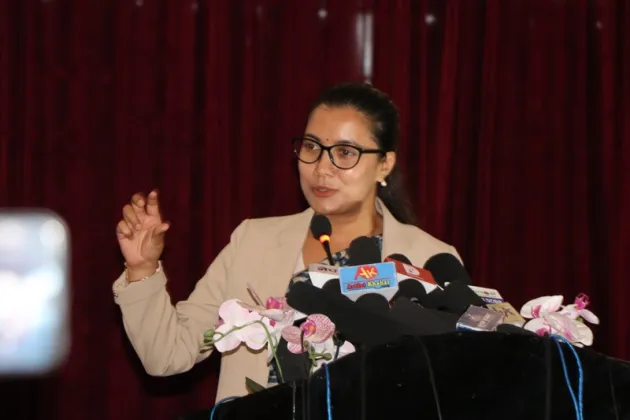
Minister for Law, Justice and Parliamentary Affairs Sobita Gautam has called for reforms to Nepal’s laws and policies to put disaster risk reduction at the centre of development, speaking at the opening session of the Fifth National Conference on Disaster Risk Reduction in Kathmandu. She said infrastructure should be safe and suited to the geography of the places where it is built, and warned that lessons from the country’s recent major floods must be taken seriously.
Flood warnings and the need for action
Gautam said experts had repeatedly warned about disaster risks over the past 15 years. The recent floods, she said, showed why those warnings could not be ignored. Her remarks linked the immediate experience of flooding with a longer-standing need to make disaster risk a central consideration in public policy and development decisions.
The minister’s call was not limited to responding once a disaster has occurred. She argued that existing laws and policies must be reformed with disasters in mind, pointing to the role of the legal and policy framework in shaping how development is planned. Her remarks placed prevention and risk reduction alongside the need to manage emergencies when they arise.
Gautam also stressed that infrastructure must be built according to local geography. The emphasis on geography-appropriate construction reflects her broader argument that development should account for the conditions of the places where projects are undertaken, rather than treating safety as separate from planning. She called for infrastructure that is both safe and suited to its setting.
Emergency preparedness under scrutiny
The minister acknowledged that emergency preparedness has been weak. She cited difficulties in managing bodies after the floods as one indication of the challenges faced during the response. The issue highlighted the practical demands that arise when authorities have to deal with the consequences of a major disaster, in addition to the wider questions of prevention and planning.
Her comments put preparedness within the same discussion as legal reform and safer development. Reforming rules and policies, building infrastructure with local geography in mind and improving the ability to manage emergencies were all part of the concerns she raised at the conference. The recent floods, in that context, served as a reminder of both the risks experts had identified and the difficulties exposed during the response.
Putting disaster risk at the centre of development
Gautam’s remarks at the conference called for a change in how disaster risk is considered in decisions about development. She said laws and policies should be amended with disasters at the centre, while infrastructure should be planned and built in a way that reflects geographical conditions. Together, those priorities would make safety a consideration in development as well as in emergency response.
Her reference to expert warnings over 15 years also underscored the importance she placed on acting on established concerns. The recent floods, she said, should prompt serious attention to those warnings. Acknowledging weaknesses in preparedness, including difficulties managing bodies after the floods, she pointed to the need to address the demands of emergency situations as well.
At the opening session in Kathmandu, the minister’s message was that disaster risk reduction requires attention before, during and after emergencies: laws and policies must be reviewed, infrastructure must be appropriate to local geography, and emergency preparedness must be strengthened. Her remarks brought these issues together as connected parts of a safer approach to development in Nepal.