
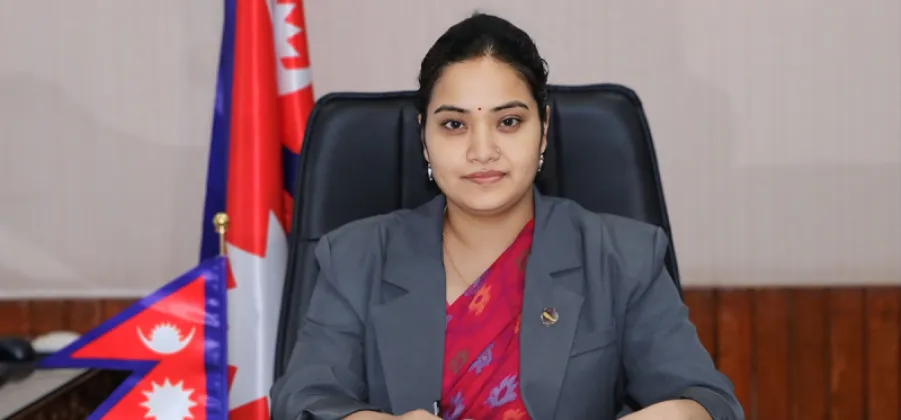
Minister for Land Management, Cooperatives and Federal Affairs Pratibha Rawal is scheduled to visit Jhapa on Monday, Kartik 16, for a series of discussions centred on land management and the grievances of cooperative victims. During the visit, she will hold talks with officials of the District Land Problem Resolution Committee and interact with cooperative victims as well as landless and squatter families of the district. The interaction is expected to cover the work the ministry has carried out so far, the problems seen in land management, and the issues raised by cooperative victims, as reported by Nagarik News and Khabarhub. The trip follows the minister's earlier visit to Chitwan and marks a continuation of her engagement with stakeholders at the district level.
What is on the agenda in Jhapa
The Jhapa programme is built around three main engagements, each involving a group with a direct stake in the ministry's work:
- A discussion with officials of the District Land Problem Resolution Committee, the district-level body that deals with land-related problems and their resolution.
- An interaction with cooperative victims, who are expected to place their grievances before the minister.
- A meeting with landless and squatter families, whose concerns over ownership and habitation fall within the ministry's remit.
According to reports, the interaction will cover the ministry's work so far, problems related to land management, and the grievances of cooperative victims. Bringing these groups together in a single visit gives the ministry a consolidated, ground-level picture of how its policies are being experienced in Jhapa, while giving local stakeholders a direct channel to the minister responsible for addressing their concerns.
Land management issues at the centre
The discussion with the District Land Problem Resolution Committee is expected to focus on the state of land management in the district and the problems encountered in resolving them. Such committees serve as the district-level mechanism through which land-related disputes and long-pending questions, including those concerning the landless and squatter populations, are identified and processed. Meetings of this kind allow the ministry to hear from the officials who deal with these issues day to day, and to assess where policy and implementation have fallen short.
For the landless and squatter families taking part in Monday's interaction, the meeting is an opportunity to raise questions that have often remained pending for long periods, such as uncertainty over ownership and the gap between commitments made at the central level and their delivery on the ground. Since the ministry's work so far will also be reviewed in the same interaction, participants will be able to weigh the progress reported against the problems they continue to face.
Cooperative victims to present grievances
A significant part of the visit concerns cooperative victims. Cooperatives hold the savings of large numbers of small depositors across Nepal, and where such institutions have run into difficulty, depositors have often struggled to recover their money and have pressed the authorities for redress. The interaction in Jhapa gives victims a chance to present their grievances directly to the minister whose portfolio includes cooperatives, and to seek clarity on the direction of the ministry's response to their demands.
While the outcome of Monday's discussion is not yet known, the scheduling of a meeting with the victims alongside land management issues indicates that their grievances are being treated as a priority within the ministry's current outreach.
A follow-up to the Chitwan visit
Monday's programme follows Rawal's earlier trip to Chitwan, making Jhapa the latest stop in a sequence of district-level engagements by the minister. The pattern of moving from one district to another suggests that the ministry is prioritizing direct consultation with officials, victims and affected families in person, rather than relying solely on formal reporting from the districts.
Jhapa, a Tarai district in Koshi Province, brings together both sets of stakeholders the ministry wants to hear from: communities of landless and squatter families on the land side, and cooperative victims on the cooperatives side. As Pradesh Khabar reported, the minister is leaving for Jhapa on Monday as part of this outreach.
What comes out of the discussions will be watched closely by those involved. For the cooperative victims and landless and squatter families of Jhapa, the visit is a chance to be heard directly by the minister; for the ministry, it is another step in testing whether field-level consultations can translate into concrete resolution of the problems brought before her.


