
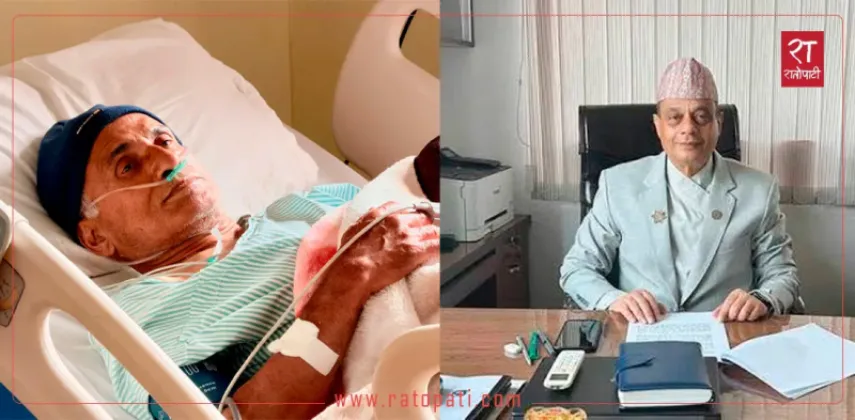
Prof. Dr. Devendra Bahadur Khatri, vice-chair of the Medical Education Commission (MEC), has landed at the centre of a growing controversy after serious allegations emerged that he abused his position by keeping his wife in a leadership role at the Commission and involving her in the highly sensitive process of determining medical college seats. According to the allegations, the Commission's director post was left vacant while the responsibility tied to that office was handed to his wife, an arrangement that has raised sharp questions about the impartiality of Nepal's apex medical education regulator. The controversy, reported by RatoPati, touches the very institution entrusted with safeguarding fairness in the country's medical education system.
Allegations of Abuse of Authority
The allegations against Khatri, who heads the statutory body that regulates and coordinates medical education across Nepal, revolve around two closely linked concerns. The first is that his wife was kept in a leadership position within the Commission despite the obvious conflict of interest created by her marital ties to its top official. The second, and more serious, is her alleged involvement in the process of determining medical college seats, a responsibility widely regarded as among the most consequential functions of the institution.
At the heart of the complaint is the manner in which the Commission's director post was handled. Rather than filling the position, the post was left vacant and the responsibilities attached to it were assigned to Khatri's wife, according to the allegations.
The key points of the accusation are as follows:
- Khatri's wife was retained in a leadership role at the Medical Education Commission despite being married to its vice-chair.
- The director's post was left vacant instead of being filled, creating the space for her to take on responsibilities that would ordinarily fall to the appointed director.
- She was allegedly drawn into the sensitive process of determining medical college seats, the very area where the vice-chair's own influence is strongest.
- Taken together, these arrangements are alleged to amount to an abuse of position and a breach of the impartiality expected of the Commission's leadership.
Why Seat Determination Is a Sensitive Mandate
The Medical Education Commission holds few responsibilities that attract as much scrutiny as seat determination. The number of seats a medical college is permitted to offer shapes everything from student enrollment and institutional revenue to the future supply of doctors in the country. For college operators, these decisions carry enormous financial and strategic stakes, which is precisely why the process is expected to be conducted with unquestionable integrity.
It is against this backdrop that the involvement of the vice-chair's wife in the seat allocation process has proven so contentious. The concern is not merely procedural. When a close family member of the Commission's top leadership participates in decisions that directly affect the fortunes of medical institutions, the independence of those decisions inevitably comes under question, regardless of the formal roles assigned on paper. Critics of the arrangement argue that public trust in the seat determination exercise depends not only on what is done, but on who is doing it.
Khatri Defends His Wife's Involvement
Khatri has moved to defend himself against the questions raised over his wife's role in the seat allocation process. According to him, the concerned department director had recommended her as an expert, and he claims that he played no role whatsoever in her involvement. In effect, his position is that the decision to engage his wife was made within the department through the normal recommendation process, and that as vice-chair he neither initiated it nor influenced it.
His defense directly addresses the question of how his wife came to participate in the process as an expert. What it does not resolve, however, is the broader cloud hanging over the Commission's internal arrangements during his tenure.
Questions That Remain
The allegations extend beyond his wife's engagement as an expert. Khatri's explanation does not appear to account for why the director's post was left vacant in the first place, or why the resulting vacuum was filled by his wife rather than by an appointed director. Nor does it fully answer the underlying conflict of interest concern, namely whether any family member of the vice-chair should be participating in the Commission's sensitive work at all. Until those questions are answered, doubts about the impartiality of the seat allocation process are likely to persist.
A Test of Credibility for the Commission
The Medical Education Commission occupies a unique place in Nepal's health and education governance. It was established to bring order, transparency and merit-based standards to medical education, and its decisions on seats and academic standards directly affect thousands of aspiring doctors and the quality of healthcare delivered across the country.
Allegations of nepotism at such an institution strike at the core of its mandate. Regulatory bodies must not only act impartially but must be seen to act impartially, and the conduct of their own leadership is the clearest signal of the standards they intend to enforce on others. When that conduct becomes the subject of serious allegations, the credibility of every decision the institution makes risks being called into question.
For now, the accusations against Khatri remain allegations, and his response makes clear that he denies any personal role in his wife's involvement. But the questions raised about the vacant director post, the leadership role given to his wife, and her participation in determining medical college seats will not be easily dismissed. How the Commission and the authorities concerned address this controversy will say much about the standards of accountability Nepal expects from the institutions that guard its medical education system.


