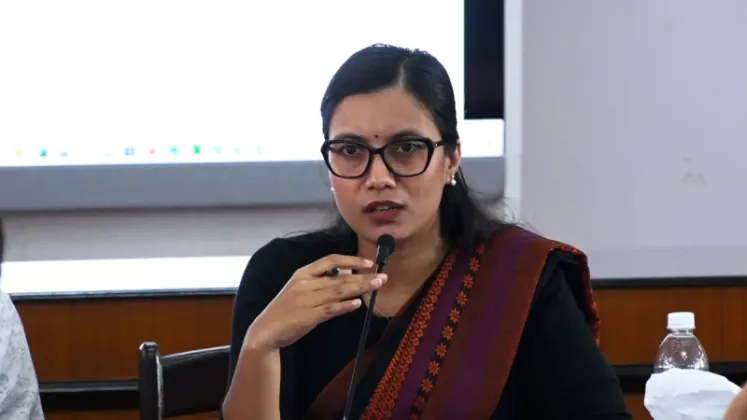
Law, Justice and Parliamentary Affairs Minister Sobita Gautam has said the government issued a land and forest-related ordinance in Nepal to address the decades-old problem of landlessness and fulfil its commitment to provide land to landless citizens. In a post on Facebook explaining the measure, Gautam said it is intended to make the process of providing land to genuinely landless people more orderly and to remove legal obstacles that have hindered the process.
Addressing a long-standing problem
Gautam described landlessness as a problem that has persisted for decades. She presented the ordinance as a government response to that enduring issue, linking it to the commitment to provide land to people who do not have land. Her explanation focused on the ordinance’s stated purpose rather than setting out a timetable or identifying the individuals and communities who would receive land.
The minister’s remarks put the emphasis on distinguishing genuinely landless citizens and creating a more streamlined way to provide land to them. That focus is central to the government’s stated rationale: the measure is intended to make the process more effective while ensuring that land is directed to people who meet the stated criterion of being landless.
The ordinance covers land and forest-related matters, according to the description of the measure. Gautam’s explanation, however, did not provide further details about particular provisions, the areas of land involved or how claims would be assessed. The available information also does not specify when the government expects the process to begin or how long it might take.
Removing legal obstacles
A key part of Gautam’s explanation was the need to remove existing legal barriers. She said the ordinance is meant to address obstacles that have complicated the process of providing land to landless citizens. The stated aim is therefore not only to reaffirm the government’s commitment, but also to make the process easier to carry out within the relevant legal framework.
Her comments connect the ordinance to two related objectives: streamlining the allocation process and resolving legal difficulties that stand in its way. The government’s explanation presents those changes as a means of moving forward on a problem that has remained unresolved for decades. Gautam did not, in the information available, identify specific laws or procedures that the ordinance changes.
What the minister has explained
The minister’s Facebook post outlines the government’s broad case for issuing the ordinance: to fulfil its commitment to landless citizens, identify those who are genuinely without land, and remove legal obstacles that have affected the process. It does not, in the available account, spell out eligibility rules, application requirements, implementation arrangements or the precise role of forest-related provisions.
Those details would be needed to understand how the stated goals will work in practice. Gautam’s explanation establishes the purpose the government attributes to the ordinance, but further information would be required to assess how landless citizens can demonstrate eligibility, how decisions will be made and what safeguards will govern the process. The minister’s remarks, as reported, do not provide those operational specifics.
For now, the government’s public explanation frames the ordinance as a measure aimed at resolving a decades-old landlessness problem by making the process of providing land more streamlined and addressing legal barriers. Its practical impact will depend on the provisions and procedures used to implement those aims, details not included in the minister’s explanation summarized here.