
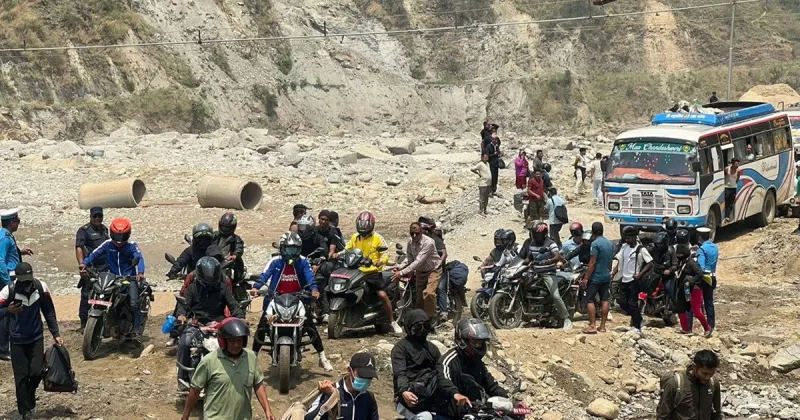
A landslide has blocked the BP Highway, disrupting traffic along one of Nepal's key road corridors, according to reports from Nepali news outlets. The obstruction has slowed or halted vehicular movement on the route, which links the Kathmandu Valley with the eastern Terai. No casualties have been reported so far, and details about the exact location of the landslide, the time it occurred and the volume of debris have not yet been made public.
Traffic Disrupted as Details Remain Limited
Reports published by Thaha Khabar and Nepal Views confirmed that a landslide has obstructed the highway and that traffic movement along it has been disrupted. The initial reports did not specify where along the corridor the slide took place, how much debris has fallen onto the roadway or how long the obstruction is expected to last. As a result, bus operators, freight drivers and private motorists who regularly use the route have been left waiting for confirmation on when they might be able to continue their journeys.
What Remains Unclear
Key pieces of information were still unconfirmed in the earliest reports:
- The exact location of the landslide along the highway
- The time the slide occurred
- Whether any vehicles or passengers are stranded at the site
- The volume of debris covering the roadway
- A timeline for clearing the road and resuming traffic
In similar incidents in the past, security personnel and crews from the relevant road division have been mobilized to clear debris and restore traffic, often allowing vehicles to pass in a single lane once initial clearance is complete. The scale of the response in this case will depend on the volume of debris and the stability of the slope above the affected stretch. Until then, travelers planning to use the highway are likely to face delays and may need to follow official updates or local news for the latest conditions.
A Vital Corridor Between the Valley and the Terai
The BP Highway, formally known as the B.P. Koirala Highway, is named after Bishweshwar Prasad Koirala, Nepal's first elected prime minister. Running approximately 160 kilometres, the road stretches from Dhulikhel in Kavrepalanchok district, on the eastern edge of the Kathmandu Valley, to Bardibas in Mahottari district in the Terai, cutting through the hilly terrain of Sindhuli along the way. Built with Japanese technical and financial cooperation, it was completed in phases during the 2000s and has since become a principal artery for the region.
The corridor carries considerable significance for both passengers and freight. It provides an alternative to the Araniko Highway axis for movement between the capital and the eastern plains, and it connects mid-hill communities to Terai markets and to Kathmandu. When the road is blocked, buses are held up, deliveries of goods are delayed and residents of districts along the route often find their access to the national road network sharply restricted.
The hilly sections of the highway, particularly those passing through Sindhuli, are known to be susceptible to landslide obstruction during heavy rain. Blockages of this kind have interrupted traffic on the route repeatedly in recent monsoon seasons, making disruptions along the corridor a familiar challenge for commuters and transport operators alike.
Monsoon Season Heightens Landslide Risk
Landslides are among the most frequent causes of highway blockades in Nepal. The country's steep slopes, young and fragile geology and intense seasonal rainfall leave its road network especially exposed, with the monsoon months from June to September carrying the greatest risk. During this period, highways across the hill regions are periodically obstructed, sometimes for only a few hours and at other times for days when large volumes of debris must be removed.
The effects of such blockades extend well beyond inconvenience for individual travelers. Nepal's economy relies on a limited number of highways to move people and essential supplies, so a single obstruction can force long detours through alternate routes or leave traffic idling until the road is cleared. Passengers on long-distance buses, drivers carrying perishable goods and daily commuters are typically among the hardest hit when a major route goes offline.
Given that pattern, the latest obstruction on the BP Highway is likely to remain a concern for travelers until authorities confirm that the road has been fully cleared and reopened. Further information about the landslide, including its precise location and the progress of clearance work, is expected as assessments at the site continue. This is a developing story, and updates will follow as more details are confirmed.


