
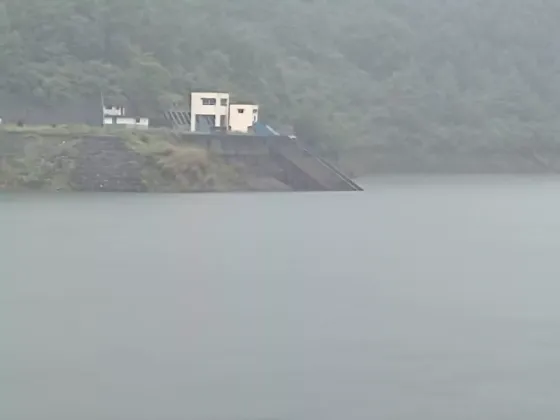
The rising water level of the Kulekhani Reservoir has forced authorities in Makwanpur district to shut down a key road section linking Hetauda with Kathmandu. The District Administration Office Makwanpur suspended the movement of all vehicles along the Bhimfedhi-Deurali-Kulekhani road section for 12 hours, from 5 pm Saturday to 5 am Sunday, after the water level in the reservoir climbed and the possibility of opening the dam's gates emerged. Chief District Officer Basanta Adhikari said the restriction was imposed in view of the potential flood and landslide risk along the road corridor, which runs close to the reservoir and the waterways below the dam.
12-Hour Ban on All Vehicles
The closure order issued by the District Administration Office Makwanpur applies to every category of vehicle using the Bhimfedhi-Deurali-Kulekhani road section, and it remained in force through the night. According to the administration and reports published by Rato Pati, the key points of the order are as follows:
- All vehicles have been barred from operating on the Bhimfedhi-Deurali-Kulekhani road section.
- The restriction came into effect at 5 pm Saturday and was scheduled to last until 5 am Sunday, a total of 12 hours.
- The decision was taken because the water level of the Kulekhani Reservoir has risen and the dam gates may need to be opened.
- Flooding and landslides were cited as the principal dangers that could follow the release of water.
The order effectively halts overnight traffic on one of the routes connecting Hetauda, the headquarters of Makwanpur district, with Kathmandu. Vehicles that would normally ply the stretch during the night hours were left to hold off their journeys until the restriction was due to expire early Sunday morning.
Officials Cite Flood and Landslide Risk
Speaking about the decision, Chief District Officer Basanta Adhikari said the measure was taken in view of the potential flood and landslide risk. The administration's concern centres on the possibility that the gates of the Kulekhani dam may be opened as the reservoir's water level continues to rise. When water is released through the dam, the flow downstream can rise sharply, and road sections that run alongside or near the water channel are exposed to inundation and to damage from debris.
Landslides are the second major hazard flagged by the district administration. The hillsides along the Bhimfedhi-Deurali-Kulekhani corridor can become unstable when water levels change suddenly, and a release of water from the dam heightens that danger. By suspending vehicular movement altogether, the administration aims to ensure that no travellers are caught on the road at a time when flooding or landslides could occur without warning.
Rising Reservoir Levels Behind the Decision
The trigger for the closure is the rising water level in the Kulekhani Reservoir, which serves the Kulekhani hydropower project in Makwanpur district. As the impounded water climbs toward its upper limits, the operator may open the dam's gates to let water out, a step that directly affects the low-lying areas downstream. Because the Bhimfedhi-Deurali-Kulekhani road runs through the same corridor, the district administration treats any prospective release of water as a threat to traffic safety on the route.
It is this combination of circumstances, a swollen reservoir and the possibility of a gate opening, that led the District Administration Office Makwanpur to act preemptively rather than wait for conditions to deteriorate. As reported by Gorkhapatra Online and News of Nepal, the administration chose to bar vehicles for a fixed 12-hour window rather than impose an open-ended closure, keeping the restriction aligned with the hours in which the dam operation and its after-effects were anticipated.
What the Closure Means for Travellers
For passengers and freight operators who use the Bhimfedhi-Deurali-Kulekhani road section to travel between Hetauda and Kathmandu, the 12-hour ban meant a complete halt on the movement of vehicles from Saturday evening into the early hours of Sunday. The timing of the closure, spanning the night, meant that travellers had to postpone or rearrange journeys that would normally pass along the corridor during those hours.
The restriction was set to lapse at 5 am Sunday, after which vehicular movement on the section was expected to operate as usual under the terms of the district administration's order. Until then, the road remained closed to all traffic, in line with the administration's assessment that the possibility of the dam gates opening, and the resulting risk of flooding and landslides, made travel along the stretch unsafe. The decision stands as the latest example of how fluctuations in the Kulekhani Reservoir's water level can directly shape road connectivity between Makwanpur and the capital, with the district administration moving to prioritise the safety of travellers ahead of uninterrupted traffic flow.


