
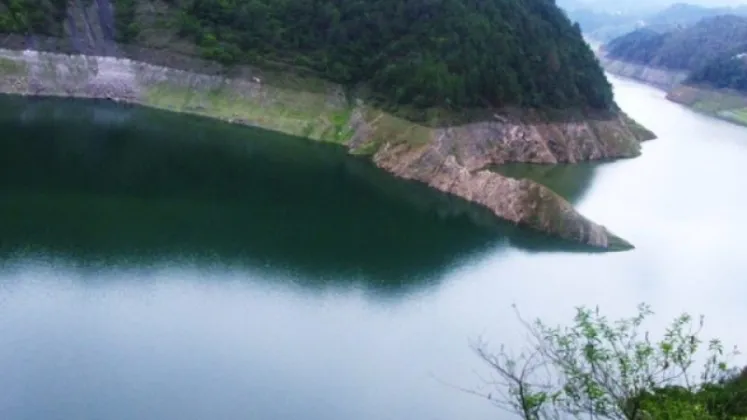
The water level of the Kulekhani reservoir has climbed to within roughly two metres of its maximum storage capacity after continuous rainfall, prompting the Kulekhani-I Hydropower Project to issue a first warning and urge residents of downstream areas to exercise caution. Prahlad Raut, chief of the Kulekhani-I Hydropower Project, said the reservoir has reached 1,527.93 metres against the maximum level of 1,530 metres, and that the water level continues to rise. With sustained rain still feeding the reservoir, officials and downstream communities are watching the water line closely as it edges toward the top.
Reservoir Stands More Than 99 Per Cent Full
Figures shared by Raut show that the reservoir, which stores water for the Kulekhani-I Hydropower Project, now stands at 1,527.93 metres. Against the maximum storage level of 1,530 metres, that leaves a gap of just 2.07 metres between the current water surface and full capacity, meaning the impoundment is effectively more than 99 per cent full.
At a glance, the key figures are:
- Current water level: 1,527.93 metres
- Maximum storage level: 1,530 metres
- Remaining gap to full capacity: about 2.07 metres
- Alert status: First warning issued as the level continues to rise
- Key driver: Continuous rainfall pushing inflows into the reservoir
Raut confirmed that the water level is rising, indicating that the water flowing into the reservoir from the ongoing rain is outpacing the amount leaving it. The near-full status is significant because a reservoir with so little remaining storage has limited room to absorb fresh inflows, so even continued moderate rain can produce a further rise in the water level.
When a reservoir of this kind approaches its maximum level, managing it becomes more demanding. Operators typically track levels closely during wet spells and prepare for the possibility of passing excess water downstream if the storage fills to the brim. That is precisely the situation now developing at Kulekhani, where the first warning has been issued even before the reservoir has reached its maximum mark.
First Warning Sounded for Downstream Communities
Alongside confirming the rising water level, the project has issued the first warning for people living downstream. According to reports by Khabarhub and RatoPati, Raut said residents in downstream areas have been urged to exercise caution as the reservoir continues to fill.
The announcement of a "first" warning points to the staged system of alerts commonly used around large dams, in which successive warnings are issued as conditions develop. A first warning functions as an early signal, giving people along the river time to prepare before conditions potentially change.
The reason such alerts matter is straightforward: when a reservoir nears full capacity, operators may need to allow excess water to move downstream through spillways or gates. Releases of that kind can raise flows in the river below within a short time, and the people most exposed are those who live, farm, cross or otherwise work close to the water. It is for this reason that the project has asked downstream residents to remain cautious for as long as the reservoir keeps filling.
Continuous Rainfall Drives the Rise
The immediate cause of the rising water level is continuous rainfall over the area that feeds the reservoir. Rain falling across the catchment drains into the impoundment, and with the water already more than 99 per cent of the way to full capacity, there is very little room left to absorb the incoming flow. Each further spell of rain therefore translates into a higher water surface rather than additional storage space.
If the rain persists, the level could reach the maximum mark of 1,530 metres. Reaching full capacity does not in itself spell danger, but it leaves operators with a minimal margin. At that point, any additional inflow must be matched by outflow, whether through power generation or managed releases, to keep the reservoir within safe limits. That balancing act is what makes the coming period of rain so important for the project's engineers.
What to Watch in the Days Ahead
For now, the message from the Kulekhani-I Hydropower Project is one of vigilance rather than alarm. The first warning has been issued, the water level is rising, and downstream residents have been urged to exercise caution. Project officials, led by Raut, are expected to keep monitoring the reservoir as the rain continues, with further alerts possible if the water keeps climbing toward the 1,530-metre mark.
For downstream households, the practical meaning of the caution advisory is to treat the first warning seriously: stay informed about announcements from the project, remain alert while the advisory stands, and be ready to respond to any subsequent warnings. Exercising caution in such situations generally means avoiding unnecessary exposure to the river until the water level stabilises.
As long as the reservoir remains near capacity and the rain continues, the situation will be closely watched both at the dam and along the river below it. The rainfall of the coming days will determine whether the water peaks just short of the brim or rises to the full 1,530 metres, and whether further warnings follow the first.


