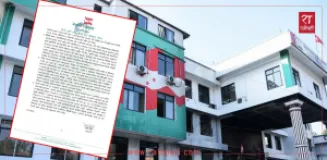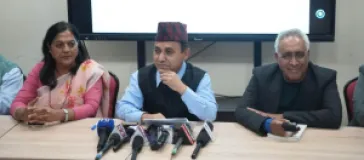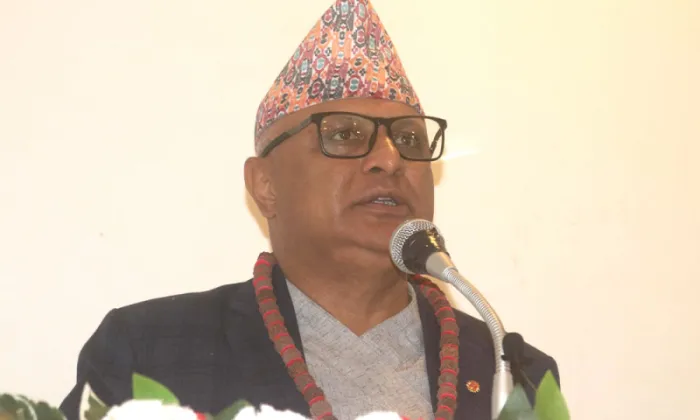
Koshi Province Chief Minister Hikmat Kumar Karki has said the provincial government will move ahead with major development projects through the public-private partnership (PPP) model, signalling a push to draw private-sector investment into large infrastructure and service-oriented schemes across the province. Karki made the announcement on Wednesday while inaugurating a newly built 13-room building of the Transport Management Service Office at Jaljale in Triyuga Municipality-6, Udayapur. His remarks were reported by Nepal Press, Khabarhub and Prades Khabar.
Private investment to power big projects
Speaking at the inauguration ceremony, Chief Minister Karki said the provincial government plans to bring in private-sector investment to run large infrastructure and service-oriented projects. By adopting the PPP model, the Koshi Provincial Government intends to prepare and deliver its bigger development schemes jointly with the private sector rather than relying solely on its own resources.
Under a PPP arrangement, a government and private partners typically share responsibilities across a project's life cycle. In practice, this can include:
- Financing, where private parties contribute capital alongside public funds
- Construction, with private firms often building roads, buildings or other infrastructure
- Operation and maintenance, where services are run under agreed terms for a set period
According to the Chief Minister's remarks as reported by multiple outlets, the provincial government is preparing to apply this approach to its upcoming large projects. The statement positions the PPP model as the vehicle through which Koshi Province intends to plan, finance and operate its major development initiatives going forward.
A new home for transport services in Udayapur
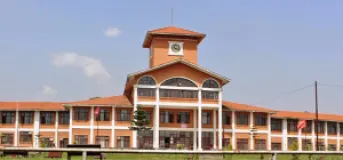
The announcement came on the sidelines of a public event in Udayapur district. Karki inaugurated the newly constructed building of the Transport Management Service Office at Jaljale in Triyuga Municipality-6. The building comprises 13 rooms, giving the office expanded space to house its operations.
Transport management offices are the frontline points of contact between citizens and the state for a range of everyday services, including driving licences, vehicle registration and related renewals. A larger, purpose-built facility of 13 rooms allows such an office to accommodate more service counters and staff, and to handle the flow of people who depend on these services across the district and surrounding areas.
For Udayapur, a district within Koshi Province where Triyuga Municipality serves as a key urban centre, the new building represents a tangible upgrade in the physical infrastructure available for public service delivery. The Chief Minister's presence at the inauguration also underlined the provincial government's attention to administrative infrastructure even as it talks up larger development ambitions.
What the PPP model could mean for Koshi
Koshi Province, in Nepal's east, is one of the country's seven provinces and, like other provincial governments, carries responsibility for a range of development functions within its borders. Provincial governments routinely face the challenge of funding infrastructure and service projects from limited provincial budgets, which is where partnership models such as PPP become relevant.
Public-private partnerships are widely used around the world to deliver projects that a government might struggle to finance and manage alone. When structured well, such partnerships allow governments to tap private capital and expertise while spreading risk between the public and private sides. For a province like Koshi, Karki's stated intention is that private-sector investment will be brought in to run large infrastructure and service-oriented projects under this model.
The PPP approach is generally applied to projects that can attract private participation, such as transport infrastructure, buildings and service facilities. The Chief Minister's announcement, delivered while opening a new government service building, linked the province's immediate investments in public offices with its broader plan to partner with the private sector on a larger scale.
The success of PPP initiatives typically depends on careful preparation: clearly defined agreements, realistic financing plans and projects that are attractive to investors. These are the practical considerations any provincial government adopting the model must work through, and Karki's announcement indicates that Koshi Province intends to frame its future large projects with this partnership approach in mind.
Widespread coverage of the announcement
The Chief Minister's remarks drew coverage from multiple news outlets, with Nepal Press reporting that the Koshi government is preparing to build large projects through the PPP model, and Khabarhub and Prades Khabar also filing reports on the statements made at the Udayapur event.
Taken together, the twin messages from Wednesday's event in Jaljale were clear: the provincial government is investing in the buildings and offices that deliver daily services to citizens, and it is looking to private-sector partnership as the means to carry its larger development agenda forward. How the PPP commitments translate into specific projects on the ground will become clear as the provincial government brings forward its plans for large infrastructure and service schemes in the period ahead.