
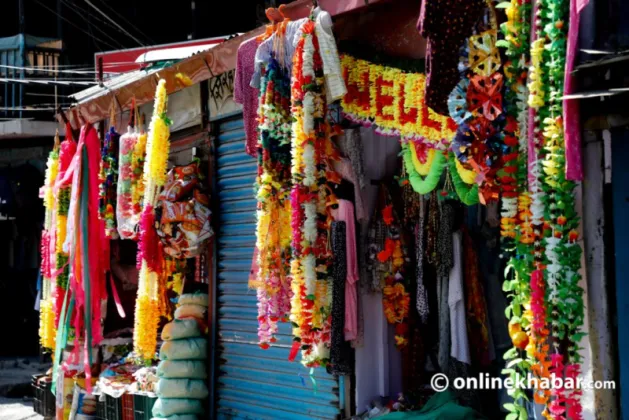
Kathmandu Metropolitan City announced on November 3 that it has completely banned the sale and distribution of plastic flowers, garlands and plastic decorative items within its jurisdiction ahead of Tihar. The metropolis urged businesses, traders and the general public to prioritise locally produced flowers and garlands for the festival.
Ban covers sales and distribution
The restriction applies to plastic flowers and garlands as well as plastic decorative items. The metropolis described the ban as complete within its jurisdiction, covering both the sale and distribution of the listed products. Its announcement places the measure ahead of Tihar, when residents are being asked to choose locally produced floral alternatives.
The order’s stated scope is the city’s jurisdiction. The information available about the announcement does not specify a separate list of affected markets or businesses, nor does it identify any exemptions. It also does not state whether the restriction is limited to the Tihar period or how it will be enforced. Traders and customers have therefore been urged to follow the stated ban and the city’s call to prioritise local flowers and garlands.
The announcement concerns more than retail shops alone: the metropolis directed its appeal to businesses, traders and the general public. That places the requested change across the supply and purchasing chain, from those distributing decorative products to people choosing what to use during the festival. The city’s message is to favour locally produced flowers and garlands instead of the prohibited plastic alternatives.
Local flower sales ahead of Tihar
The ban comes alongside the metropolis’s attention to flower sales during the festival period. A separate report by Ratopati says Kathmandu Metropolitan City designated a location for flower sales during Tihar. The available information does not identify that location, so buyers and sellers should consult the metropolis for details about where the designated sales are taking place.
The two measures point to a city effort focused on the products sold and the arrangements for flower sales ahead of the festival: plastic flowers and garlands are banned, while locally produced flowers and garlands are being encouraged. For traders, the immediate direction is to avoid distributing the prohibited plastic items and prioritise local floral products. For members of the public, the metropolis has made the same preference clear in its appeal.
What the announcement says
The ban was announced on November 3, before Tihar. Onlinekhabar reported the prohibition on plastic flowers and garlands, while the city’s stated restriction also covers plastic decorative items. The announcement does not provide details about penalties, inspection procedures or the duration of the ban.
For now, the central instruction from Kathmandu Metropolitan City is straightforward: plastic flowers, garlands and decorative items may not be sold or distributed within the metropolis, and locally produced flowers and garlands should be prioritised for Tihar. The city’s separate arrangements for flower sales are intended to be relevant to the festival period, though details of the designated location are not included in the available report.


