
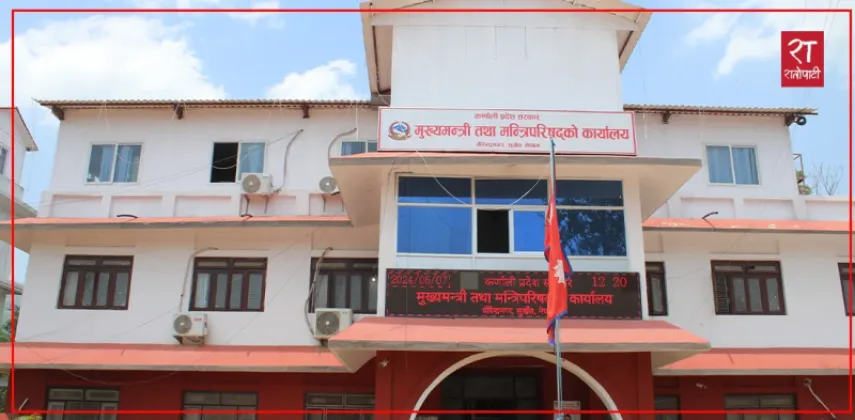
The Karnali Province Council of Ministers took five decisions at its meeting held on Tuesday in Surkhet, including approval to send a bill on the establishment and operation of a contribution-based pension fund to the Provincial Assembly. The provincial cabinet, which convened in Surkhet, the capital of Karnali Province, also reached decisions related to legislation on land management, agriculture and drinking water, according to a report published by RatoPati.
Taken together, the five decisions sketch the provincial government's current legislative priorities: a social security measure in the form of the pension fund bill, and laws in three further areas, land management, agriculture and drinking water, that speak directly to the daily needs of households across the province.
The meeting at a glance
- Meeting: Karnali Province Council of Ministers, held on Tuesday in Surkhet
- Decisions taken: five
- Key decision: a bill on the establishment and operation of a contribution-based pension fund, to be submitted to the Provincial Assembly
- Other areas covered: legislation related to land management, agriculture and drinking water
Pension fund bill set to enter the Provincial Assembly
The most prominent of the five decisions concerns retirement and social security. The Council of Ministers decided that a bill on the establishment and operation of a contribution-based pension fund will be submitted to the Provincial Assembly, the province's lawmaking body. Tabling the bill is the first formal step in turning the proposal into provincial law.
In general terms, a contribution-based pension fund is one that is built up through contributions made by its members during their working years, with benefits later drawn from that accumulated pool rather than paid directly out of the government's annual budget. The model links future benefits to savings made in advance, which is its defining feature, and it is commonly used in social security systems as a way of spreading the cost of retirement income more predictably over time.
The specific shape of Karnali's fund, including who would be covered, how contributions would be determined and how the fund would be administered, will be set out in the text of the bill that goes before the assembly. Until the draft is tabled and made public, the provincial government's decision confirms the fund's contribution-based design and its stated purpose: establishment and operation as a provincial institution. Social security is a subject of growing attention across Nepal's provincial governments, and Karnali's move to legislate on a pension fund places it among the provinces pursuing their own frameworks in this field.
Land, agriculture and drinking water legislation
The remaining decisions taken on Tuesday relate to legislation in three other areas: land management, agriculture and drinking water. The available information about the meeting did not spell out the full titles or detailed contents of those bills, but the subjects themselves are among the core responsibilities that provinces have carried since Nepal adopted its federal structure, when many functions once handled by the centre, including aspects of agricultural development, land administration and local infrastructure, came under provincial purview.
The choice of subjects reflects the practical realities of governing Karnali, a predominantly hill and mountain province where agriculture remains central to household livelihoods and where scattered settlements and difficult terrain have long made the delivery of basic services, including drinking water, a persistent challenge. Land management legislation, meanwhile, touches on how land is used, recorded and planned for, matters that bear on farming, settlement and infrastructure alike in a province that ranks among the country's largest by area.
Because all three subjects are being pursued through legislation rather than executive order, each will follow the same procedural path as the pension fund bill: preparation in bill form, submission to the Provincial Assembly, deliberation and, if approved, enactment.
From cabinet decision to provincial law
Under Nepal's federal system, a provincial council of ministers takes executive decisions, but laws are made by the provincial legislature. Bills introduced in the Provincial Assembly go through the assembly's procedural stages, which generally include debate on the floor, review by the relevant committee and a final vote, before a passed bill can be authenticated as law and implemented by the provincial government. The decisions taken on Tuesday therefore mark the beginning of that legislative journey rather than its end.
For the pension fund bill, the next visible step will be its introduction in the Provincial Assembly, where members will examine its provisions and where scrutiny of the fund's design will take place. For the land management, agriculture and drinking water legislation, the contents of the drafts will become clearer as they are tabled in the house.
For now, the five decisions from the Tuesday meeting in Surkhet give a clear indication of where the Karnali provincial government is directing its legislative attention: a contribution-based pension fund to address retirement security, and laws on land, agriculture and drinking water that speak to the province's everyday development priorities. Further details on the bills and their progress through the assembly are expected as the legislative process moves forward.


