
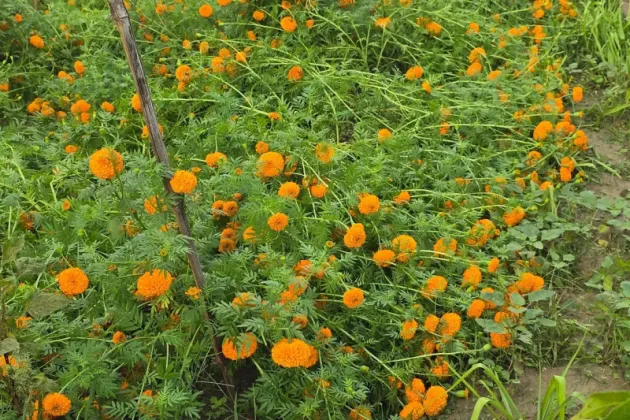
The District Administration Office in Jhapa has directed security agencies to crack down on the illegal import of flowers and to act against artificial flowers made of plastic, in a move intended to prioritise domestic production during the festival season. Chief District Officer Shrawan Kumar Pokharel issued a public notice announcing the directive, stating that illegal flower imports have been restricted in order to encourage domestic creativity and entrepreneurship. According to the notice, the administration moved because traders have been taking advantage of the open border to bring flowers into the country during major festivals, including Tihar and Chhath, when demand for fresh and decorative flowers rises sharply across the district.
What the directive says
The public notice, issued through the office of the Chief District Officer, lays out a clear set of instructions for agencies working under the District Administration Office. Security agencies deployed in Jhapa have been directed to control illegally imported flowers, while sellers of artificial plastic flowers have been put on notice that they will face action.
The key elements of the directive can be summarised as follows:
- Security agencies have been instructed to control and prevent the illegal import of flowers into the district.
- Flowers brought in illegally, particularly during festival periods, are the specific target of the restriction.
- Artificial flowers made of plastic fall within the scope of the crackdown, and those selling plastic flowers will face action.
- The stated objective is to prioritise domestic production and to encourage creativity and entrepreneurship among local producers.
Because the notice restricts illegal flower imports specifically, the measure is aimed at goods brought in without following legal procedures rather than at the flower trade as a whole. The administration has nonetheless paired the import controls with a direct warning to the artificial flower market, giving the directive two distinct targets: illegally imported blooms and domestically sold plastic alternatives.
Festival demand and the open border
Jhapa lies in Koshi Province in eastern Nepal and shares an open border with India, a geography that makes the district a regular conduit for cross-border trade of all kinds. During festivals, when demand for flowers, garlands and decorative items spikes within days, that openness becomes attractive to traders looking to bring in goods quickly and cheaply. According to the public notice, this is precisely the pattern the administration wants to break: the open border has been used to bring in flowers during festivals such as Tihar and Chhath, undercutting local producers at the moment when their sales matter most.
Both Tihar and Chhath are celebrated with heavy use of flowers. Garlands, offerings and decorations create some of the year's biggest surges in demand for flower sellers, and markets fill with seasonal blooms in the days leading up to the festivals. It is during this window, the notice indicates, that illegally imported flowers flow in, and it is this window that the crackdown is designed to cover.
Reports by RatoPati and Pradeskhabar highlight that the instructions to control imported flowers were issued alongside a specific warning to those dealing in plastic flowers, underlining that the directive addresses both the flow of illegal imports and the sale of artificial alternatives.
A push for local growers and entrepreneurship
The reasoning set out in the public notice links the crackdown directly to the promotion of domestic production. By restricting illegal imports, the administration intends to channel festival demand toward flowers grown and produced within the country, giving local growers a fairer market during the most important selling season of the year.
The notice issued by CDO Pokharel explicitly ties the restriction to encouraging domestic creativity and entrepreneurship. In effect, the administration is treating the festival season as an opportunity for local flower farmers and small entrepreneurs, with the enforcement of import controls serving as the means to secure that opportunity. If illegally imported flowers are kept out of Jhapa's markets, the argument runs, buyers will turn to domestic producers instead.
Action against plastic flowers
Alongside the controls on imports, the notice carries a warning aimed squarely at the artificial flower trade: those found selling plastic flowers will face action. This places sellers of plastic flowers on clear notice as the festival season approaches, and adds a second front to the administration's campaign, one that targets products rather than borders. Traders and sellers in the district now have a public, written warning of the consequences of continuing to deal in such items.
The directive, issued through a public notice, functions both as an instruction to security agencies and as a message to the trading community in Jhapa. As Tihar and Chhath approach, enforcement along the border and in local markets will show how far the administration's attempt to protect domestic flower production succeeds, and whether local growers receive the boost the office intends for them.


