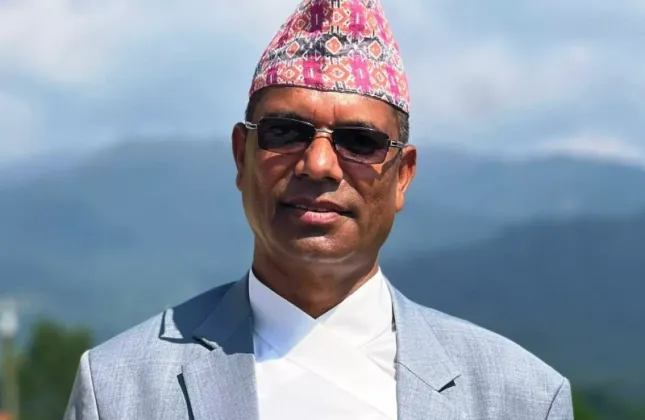
Jeevan Bahadur Shahi has been elected joint general secretary of the Nepali Congress under the backward region category, winning 3,906 votes in an election held in Kathmandu. He defeated his nearest rival, Janakraj Giri, who received 1,376 votes, and finished ahead of four other competitors. Shahi is also the leader of the Nepali Congress parliamentary party in Karnali Province.
Shahi wins the backward region category
The result gives Shahi the joint general secretary post in the party’s backward region category. His 3,906 votes put him well ahead of Giri, the second-place candidate. The gap between the two was 2,530 votes, while Shahi received more than twice as many votes as his nearest rival.
The contest included Shahi, Giri and four other competitors. The available result identifies Giri as Shahi’s nearest rival and places Shahi ahead of all four other candidates. It does not provide vote totals for those remaining competitors, so the reported figures establish the margin between the top two without setting out the complete distribution of votes.
The election took place in Kathmandu. Shahi’s victory concerns the joint general secretary position allocated to the backward region category; the result does not change the separate role he already holds as leader of the Nepali Congress parliamentary party in Karnali Province.
A party role alongside his Karnali leadership
Shahi now holds two distinct positions within the party: the joint general secretary role at the Nepali Congress level and leadership of the party’s parliamentary group in Karnali Province. The first is the outcome of the Kathmandu election, while the second is the provincial parliamentary leadership role stated alongside the election result.
The result places Shahi in the party’s central leadership as a joint general secretary representing the backward region category. His strong lead over Giri is the central feature of the announced vote count. The reported totals show a clear difference between the two leading candidates, although no overall turnout figure or full candidate-by-candidate tally has been provided.
Shahi’s election was decided in a field of six candidates: himself, Giri and four other competitors. With 3,906 votes, he finished first, while Giri’s 1,376 votes were the next-highest total identified in the result. The election’s location in Kathmandu and its backward region category were both specified in the announcement.
The outcome adds a party-level office to Shahi’s stated leadership responsibilities in Karnali. Beyond the vote totals, the available information does not include details on the campaign, the selection process, or the responsibilities attached to the joint general secretary post. The confirmed result is that Shahi won the category, with Giri second and four other candidates trailing him.