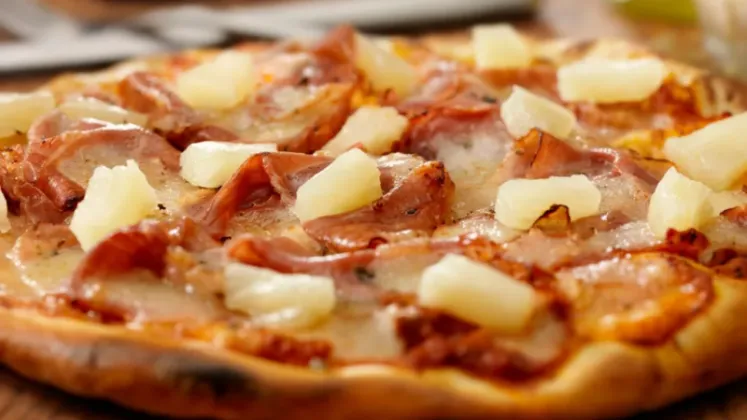
An Italian chef has been dismissed from a restaurant in Brisbane, Australia, after he refused a customer's order to add pineapple to a pizza, saying the request insulted his culture. Davide Tamburela was fired by the management of La Costa in May, and the restaurant has since closed its doors. Management has indicated that the decision did not rest on the pineapple dispute alone: the business had received various complaints about his behaviour in the period before he was let go.
An Order the Chef Would Not Fill
The confrontation began with one of the most contested requests in the food world. When a diner at La Costa asked for pineapple on a pizza, Tamburela refused outright, telling the customer that complying would amount to an insult to his culture. For the Italian chef, pizza was not a dish to be customised at will but an expression of a culinary heritage he felt bound to defend, even at the cost of a sale.
Rather than soften his position, Tamburela stood firm, and the standoff cost him his job. Management dismissed him in May, ending his time at the Brisbane restaurant. What might otherwise have remained a modest disagreement over toppings became a pointed example of how seriously some cooks take the traditions behind their food.
The episode highlights a tension familiar to professional kitchens everywhere. Chefs often see themselves as custodians of a craft, with firm views about what belongs on a plate. Hospitality businesses, by contrast, are built around giving customers what they ask for. When a request touches something as symbolically charged as pizza in an Italian kitchen, the gap between those two outlooks can open quickly.
Management Points to Earlier Complaints
As reported by Rato Pati, the pineapple refusal was the immediate trigger, but La Costa's management framed the dismissal in broader terms. According to the restaurant, it had received various complaints about Tamburela's behaviour in the period before the decision was taken to dismiss him in May. In that account, the topping dispute was less an isolated offence than the latest of several concerns about the chef's conduct at work.
The story took a further turn after the dismissal: the restaurant has since closed. No further details about the closure were given, and it is not known whether the events surrounding the chef's departure played any part in the decision. What is clear is that both parties have now left the stage, with the chef out of work and the Brisbane establishment no longer trading.
For hospitality workers, the case is a reminder of how quickly a disagreement on the floor can become an employment matter. Businesses generally expect staff to handle awkward requests professionally or pass them up the chain, while employees with deep cultural attachments to their work can find such expectations hard to square with their convictions.
Pineapple, Pizza and Cultural Pride
The topping at the centre of the dispute carries unusual symbolic weight. Pineapple as a pizza ingredient, most famously on the Hawaiian pizza, has divided diners for decades, and few foods attract as much argument, sometimes good-humoured and sometimes anything but.
- In Italy, where pizza is a point of national pride, unconventional toppings have repeatedly drawn strong reactions from cooks and food purists.
- The country's pizza-making traditions are formally celebrated, with the art of the Neapolitan pizzaiuolo inscribed on UNESCO's list of intangible cultural heritage.
- In Australia, decades of Italian migration have left a lasting mark on the national diet, making pizza at once an everyday favourite and a link to migrant heritage.
Against that backdrop, Tamburela's reaction, however unusual in its consequences, becomes easier to understand. For many Italian cooks, pineapple on pizza is not simply a matter of taste but a question of identity. At the same time, most pizzerias around the world treat pineapple as a standard option and fill such requests without hesitation, which makes the outcome in Brisbane all the more striking.
Where Duty Ends and Conviction Begins
The case ultimately turns on a question that reaches beyond pizza: how far should an employee's personal convictions shape their professional conduct? Those sympathetic to the chef will see a craftsman standing up for his culture in the face of a request he found demeaning. Others will take a plainer view, arguing that a customer's order is a customer's order and that a restaurant's job is to serve it.
Management's reference to earlier complaints suggests the restaurant judged the matter on conduct rather than cuisine alone, an important distinction given how the story has been framed around a single fruit. As so often, the most vivid detail has tended to overshadow the more routine concern about workplace behaviour.
With La Costa now shut and Tamburela out of a job, the episode stands as a small but vivid illustration of how food, identity and workplace expectations can collide over a single order. It is a reminder that in the restaurant trade even a slice of fruit can carry the weight of a culture, and that the cost of defending it can be measured in more than toppings.