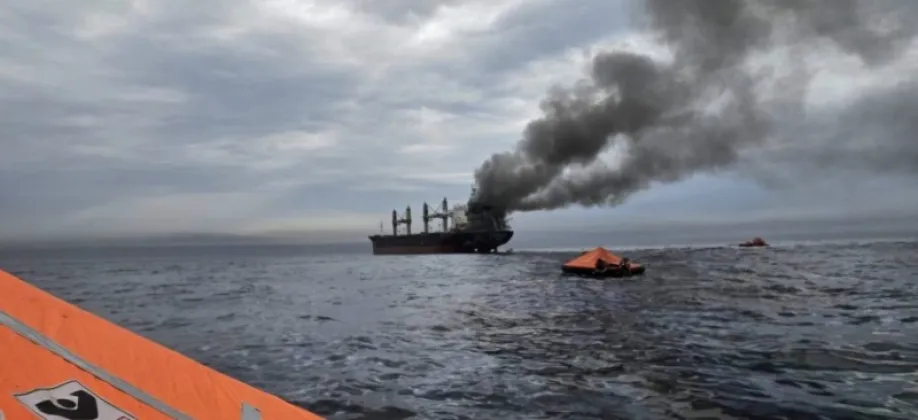
Iran’s Islamic Revolutionary Guard Corps (IRGC) navy said on Saturday that an oil tanker exploded after colliding with a sea tunnel while attempting to leave the Strait of Hormuz by an unauthorized route, according to reports published on October 11, 2026. In a statement carried by the force’s official media outlet, Sepah News, the navy said the vessel was carrying crude oil and had switched off its navigation and GPS systems while travelling.
What Iran’s navy claims
The IRGC navy’s account links the reported explosion to the tanker’s route and its alleged loss of navigation signals. The force said the vessel was trying to exit the Strait of Hormuz through a route that had not been authorized, rather than using an approved passage. It further claimed that the ship struck a sea tunnel and exploded.
The statement, as reported, presented the incident as the result of the tanker’s collision with the tunnel. It did not provide details in the supplied reports about the vessel’s name, its flag, its operator or the precise time and location of the collision. The reports also did not describe the size of the explosion or explain what happened to the ship after it was said to have exploded.
Iran’s navy said the tanker was carrying crude oil and had turned off both its navigation and GPS systems during its journey. Those details form part of the Iranian force’s account of how the vessel was travelling. The statement did not explain why the systems were allegedly switched off, or whether the tanker’s crew had communicated with Iranian authorities before the reported collision.
Details remain limited
The reports published by Nepali outlets on October 11 attribute the account to the IRGC navy and Sepah News. The information available in those reports does not include a response from the tanker’s owner, operator or crew, nor does it provide a separate account from another maritime authority. As a result, the reported cause and circumstances remain claims made by Iran’s navy in the information provided.
The available account also does not say whether anyone was injured or killed, whether the vessel sank, or whether the incident caused an oil spill. It offers no information about possible damage to the sea tunnel or any effect on other vessels using the strait. These details would be important to assessing the human, environmental and maritime consequences of the reported explosion, but they were not specified in the reports.
The key points in the Iranian statement are:
- The tanker was allegedly carrying crude oil.
- Iran’s navy said it was attempting to leave the Strait of Hormuz by an unauthorized route.
- The force claimed the vessel had switched off its navigation and GPS systems.
- The navy said the tanker collided with a sea tunnel and exploded.
The claim and the information reported
The distinction between the navy’s claim and independently established details is important. The reports describe what Iran’s IRGC navy said; they do not provide additional evidence confirming the alleged collision, the ship’s navigation status or the cause of the explosion. Nor do they identify the tanker or give enough information to establish the event’s full impact.
The Strait of Hormuz is the setting identified in the statement, and the alleged attempted exit through an unauthorized route is central to Iran’s explanation. Beyond that, the supplied reporting leaves basic questions unanswered, including the exact location, the condition of the vessel and whether authorities have taken any further action. No additional account or response was included in the reports published on October 11.