
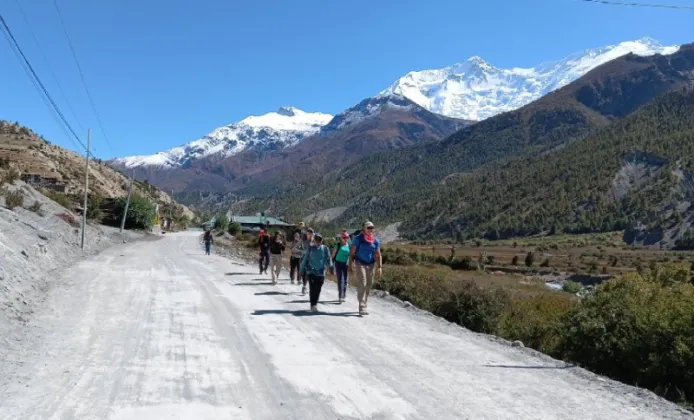
Indian tourist arrivals on the Annapurna trail and in Manang are increasing, with 5,049 visitors from India recorded by October 2026, according to figures from the Annapurna Conservation Area Project’s Manang unit. The unit’s chief, Dhak Bahadur Bhujel, said Manang received 30,662 foreign tourists in total during the period. The figures were reported by Khabarhub and Ratopati.
Manang records more than 30,000 foreign visitors
The total of 30,662 foreign visitors places Indian arrivals within a broader flow of international tourists to Manang. The reported Indian count is 5,049 through October 2026. Bhujel’s figures also include 19,140 men and more than 11,000 women among the foreign visitors recorded in the area.
The gender figures are reported as rounded or approximate for women, while the overall visitor total is stated as an exact number. The reports do not provide a more detailed breakdown of the remaining visitors, nor do they say how many of the recorded tourists came from each other country. The available figures therefore give an overall picture of foreign arrivals and a separate count for Indian visitors, rather than a full nationality-by-nationality account.
The reported increase in Indian arrivals is notable within the tourism activity described for both the Annapurna trail and Manang. However, the figures provided do not include an earlier comparison period, monthly totals or a percentage change. They confirm the number of Indian visitors recorded by October, but do not specify how much arrivals have risen from a previous year or season.
Visitor figures cover the period through October
The total is a count recorded by October 2026, not a final figure for the whole year. The reports do not state whether arrivals continued to be counted after that point or provide a year-end total. They also do not outline how visitors were distributed across individual months, so the information does not show when arrivals were highest.
Bhujel, as chief of the Annapurna Conservation Area Project’s Manang unit, is the named source for the figures. His account provides the principal numerical detail in the reports: the overall foreign visitor total, the counts for men and women, and the number of Indian tourists. The reports identify the Annapurna trail and Manang as destinations attracting growing Indian interest, but do not break down the Indian arrivals between those locations.
That distinction matters when reading the figures. The 5,049 count is presented as the number of Indian visitors recorded in the context of the trail and Manang, while the 30,662 figure refers to foreign tourists visiting Manang. The information does not state whether every Indian visitor included in the first count is also included in the Manang total, or provide separate counts for visitors to the trail and the area more broadly.
What the available figures show
The data establish that Indian tourists formed a measurable part of the international visitor numbers reported for Manang by October 2026. They also indicate that the total number of foreign visitors was substantially larger than the Indian count. But the reports do not provide details about visitors’ reasons for travelling, the routes they took, how long they stayed, or the services they used. No specific explanation for the increase is given.
For now, the reported figures offer a snapshot of arrivals rather than a complete account of the tourism season. Further comparisons with earlier periods, or more detailed figures by nationality, month and destination, would be needed to describe the scale and timing of the increase more precisely. The figures reported by Bhujel nevertheless place the rise in Indian arrivals in the context of more than 30,000 foreign tourists recorded in Manang by October.


