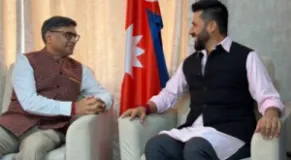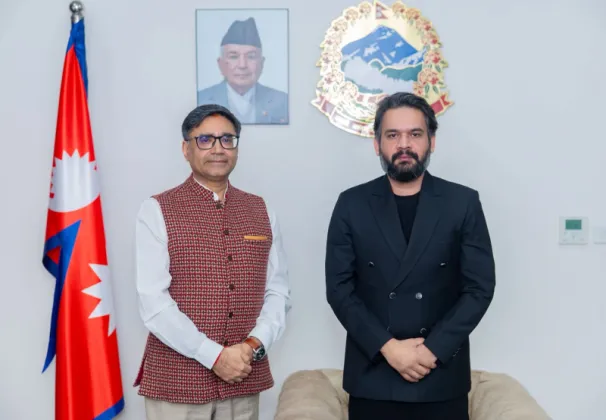
Indian Foreign Secretary held a meeting with Nepal's Prime Minister and paid a courtesy call on the country's Foreign Minister during a diplomatic visit to Kathmandu, in the latest round of high-level engagement between the two close South Asian neighbours. According to reports, the Foreign Secretary's courtesy call on Nepal's Foreign Minister took place on November 4, 2026, and was followed a day later, on November 5, 2026, by the meeting with Prime Minister at the Prime Minister's official residence in the capital. The back-to-back meetings underscored the steady rhythm of political and diplomatic contact that New Delhi and Kathmandu have long maintained, even as neither side immediately released a detailed account of the discussions.
A Two-Day Diplomatic Schedule
The Indian Foreign Secretary's Kathmandu engagements unfolded across two consecutive days, following the customary format of a senior diplomatic visit to Nepal. On November 4, 2026, the visiting diplomat made a courtesy call on Nepal's Foreign Minister, a meeting described in reports as a courtesy encounter between the two sides. The following day, November 5, 2026, the Foreign Secretary met the Prime Minister, elevating the visit from protocol-level contact to the highest level of Nepal's executive leadership.
The two meetings can be summarised as follows:
- November 4, 2026 - Courtesy call by the Indian Foreign Secretary on Nepal's Foreign Minister, held in Kathmandu.
- November 5, 2026 - Meeting between the Indian Foreign Secretary and Nepal's Prime Minister, also held in Kathmandu.
In diplomatic practice, a courtesy call serves as a formal introductory or relationship-sustaining meeting, allowing senior officials to exchange views without the pressure of a formal negotiating agenda. A meeting with the head of government, by contrast, signals a heavier political weight, as prime ministerial audiences are typically reserved for visiting dignitaries of significant standing. That the Indian Foreign Secretary secured both engagements within a single visit reflected the established ease of access between the two capitals. While detailed readouts of either conversation were not made available in the reports, the meetings themselves formed part of the broader diplomatic engagements regularly conducted between Nepal and India.
The Role of the Foreign Secretary in India-Nepal Diplomacy
The Foreign Secretary is the senior-most diplomat in India's Ministry of External Affairs and functions as the central coordinator of the country's foreign policy implementation. Visits by an Indian Foreign Secretary to Kathmandu are therefore closely watched, as they often precede or follow important developments in bilateral relations and provide an opportunity for direct, candid exchanges at the administrative apex of Indian diplomacy.
For Nepal, hosting the Indian Foreign Secretary offered the chance for its top leadership, the Prime Minister and the Foreign Minister, to engage directly with a key counterpart from its largest and most influential neighbour. Such face-to-face contact allows both governments to take stock of the state of ties, convey priorities, and sustain the personal relationships that often shape how bilateral issues are managed. The fact that the visit included a courtesy call on the Foreign Minister as well as a meeting with the Prime Minister gave the visiting diplomat access to both the political and diplomatic leadership of Nepal in a compact, two-day window.
Context: The Depth of Nepal-India Relations
The meetings took place against the backdrop of one of the most extensive bilateral relationships in South Asia. Nepal and India share a long and open border, deep cultural and religious links, and centuries of people-to-people contact that bind the two countries in ways few neighbours anywhere in the world can match. India is among Nepal's most important economic partners, with trade, investment, energy cooperation and cross-border connectivity forming core pillars of the relationship.
Regular high-level exchanges have long been a hallmark of this relationship. Leaders, ministers and senior officials from both countries travel between Kathmandu and New Delhi with frequency, and established bilateral mechanisms exist to address matters spanning trade and transit, water resources, energy, security and connectivity. In this context, the Indian Foreign Secretary's meetings with Nepal's Prime Minister and Foreign Minister fit within an ongoing pattern of engagement rather than standing apart as an exceptional event. As reported by Nepal Views, the visits were part of the diplomatic engagements between Nepal and India.
What the Visit Signals
While the available reports did not disclose the specific agenda or outcomes of the discussions, the very fact of the visit carried its own message. Senior diplomatic engagements of this kind typically serve to maintain open channels of communication, review the state of bilateral cooperation, and reaffirm commitment to the relationship at a time when both countries continue to navigate a changing regional environment.
For Kathmandu, the meetings provided an opportunity for its top leadership to engage New Delhi's most senior serving diplomat directly. For New Delhi, the visit reaffirmed India's consistent attention to Nepal within its neighbourhood diplomacy. With the courtesy call on the Foreign Minister completed on November 4 and the prime ministerial meeting held on November 5, the visit concluded with both sides having demonstrated, through protocol and substance alike, the importance each attaches to the Nepal-India relationship.
Further details of the discussions held during the meetings are expected to emerge through official channels, and any subsequent announcements from either government will shed more light on the substance behind this week's engagements in Kathmandu.