
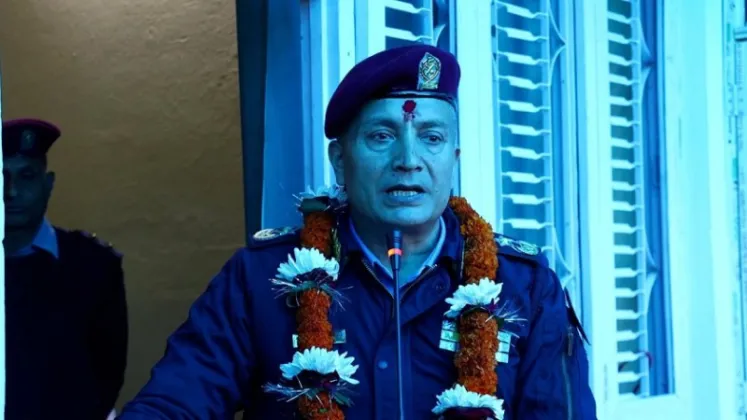
Inspector General of Nepal Police Dan Bahadur Karki has said the police organisation always expects impartial, factual and courageous reporting from journalists, while reaffirming the force's commitment to creating an environment in which the press can carry out its work without hindrance. The police chief made the remarks in a social media post published a day after police arrested journalists working for various media outlets in Kathmandu, a sequence of events that has focused public attention on the relationship between the country's police force and the media that reports on it.
'Committed to an enabling environment': Karki's message
In his post, the IGP said Nepal Police is committed to creating an environment where journalists can report impartially, factually and courageously, including during disasters. As RatoPati reported, the statement came precisely one day after reporters from different media outlets were taken into custody by police in the capital.
Read closely, Karki's message contains two distinct but connected parts, one addressed to the police organisation and the other to the country's journalists:
- A commitment to journalists: the police organisation, according to its chief, is dedicated to building the conditions in which reporters can do their work freely and safely, with that assurance explicitly covering emergencies and disasters as well as ordinary circumstances.
- An expectation of the press: at the same time, the IGP stated that the police always expect reporting that is impartial, factual and courageous, placing the responsibility for the quality of journalism on the media itself.
The pairing of the two messages is notable. Rather than only defending the press or only counselling it, the police chief chose language that speaks to both sides of the relationship: the force pledges an enabling environment, while journalists are reminded of the professional standards their work is expected to meet.
Arrests in Kathmandu form the immediate backdrop
The assurance from the head of the Nepal Police followed, within a single day, the arrest of journalists working for various media outlets in Kathmandu. The journalists detained were associated with more than one media organisation, and the arrests were carried out by police in the capital. Within twenty-four hours, the country's top police officer was publicly addressing the conditions under which journalists operate and the force's role in protecting them.
That sequence gives the statement its context. A general expression of support for the press, issued at any other time, would have read as routine. Coming as it did immediately after journalists were arrested by the very organisation Karki leads, the statement carries a different weight: it is a direct acknowledgment, from the highest office in the Nepal Police, of the media's role and of the force's responsibility toward it.
Why the timing matters
In relations between security agencies and the press, timing often shapes how a statement is received. Issued a day after the arrests, Karki's assurance functions as a public effort to reassure journalists that the police value their work and intend to create room for it, whatever has happened in individual cases.
The choice of channel is also significant. By publishing the message on social media in his own name, the IGP communicated directly with the public and the press corps rather than through a formal statement alone, suggesting that the police leadership considered the message important enough to deliver personally and promptly.
A specific assurance for disaster reporting
Among the most significant elements of the statement was its explicit reference to disasters. Karki said journalists should be able to report impartially, factually and courageously including during disasters, language that extends the force's stated commitment beyond routine, everyday conditions to the most difficult situations the country faces.
The reference carries particular weight in Nepal's context, where reporters are regularly called upon to cover floods, landslides, earthquakes and other emergencies, often alongside police and security personnel deployed to the same areas. By naming disasters specifically, the IGP acknowledged that the working relationship between police and journalists is tested most severely during emergencies, when access, safety and the flow of information all come under pressure.
What impartial, factual and courageous reporting means
The three qualities named by the police chief each point to a concrete demand on the press:
- Impartial: coverage that takes no side, including when the subject of the reporting is the police organisation itself.
- Factual: reporting anchored in verifiable information, a standard that matters most when events are unfolding quickly or under confused circumstances.
- Courageous: journalism that continues to ask difficult questions and report without fear, even when conditions are hostile or dangerous.
Taken together, the phrase describes a demanding model of journalism, and Karki's formulation positions the Nepal Police as an institution that not only tolerates such reporting but says it expects it.
From statement to practice
With the social media post, Karki has placed a public commitment on record from the highest office of the Nepal Police: that the force will work to create an environment in which journalists can report freely, fairly and bravely, including during disasters. The expectation he attached to that commitment, that journalists will respond with impartial, factual and courageous work, now sits alongside it as part of the same public statement.
The measure of the assurance will inevitably lie in how it translates into day-to-day conduct by police personnel across the country, from routine coverage to emergencies and from the streets of Kathmandu to disaster zones. For now, the statement stands as a clear declaration of intent from the police chief, issued at a moment when the arrest of journalists in the capital had put the relationship between the force and the press squarely in the spotlight. The Nepal Police has put its position on record: it expects strong journalism, and it says it will make room for it, even in the hardest conditions.


