
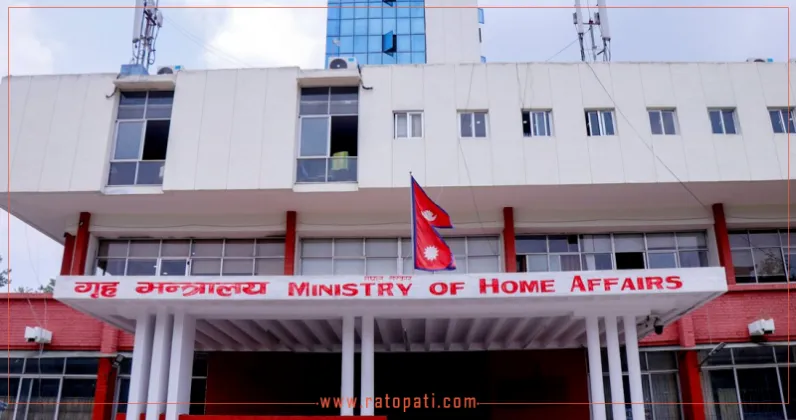
Nepal's Ministry of Home Affairs on Friday suspended the National Private and Residential Schools Association Nepal (EPN), the national umbrella body of private and residential schools referred to in media reports as N-PABSON, accusing the organisation of repeatedly failing to follow government directives. The action was announced through a public notice issued under Section 6(2) of the National Directives Act, 2018, and it bars all activities of the association until a further decision is taken.
The suspension places a national-level organisation in Nepal's private education sector under formal government action and immediately freezes its operations as an association. It also sets up a direct dispute between the ministry and the association's leadership, which insists that the body has broken no law and is being penalised for reasons that lie elsewhere.
Why the ministry acted
According to the notice, the ministry suspended EPN after concluding that the association had, on repeated occasions, failed to comply with directives issued under Section 5 of the National Directives Act, 2018. The ministry further said that officials of the association had acted against the government-approved statute and against the core objectives for which the organisation was established. In other words, the notice frames the suspension as the outcome of sustained non-compliance rather than a single incident.
The grounds cited by the ministry can be summarised as follows:
- Repeated failure to comply with directives issued under Section 5 of the National Directives Act, 2018
- Actions by the association's officials that went against the statute approved by the government
- Conduct inconsistent with the organisation's own core objectives
The allegations extend beyond administrative non-compliance. According to Nepal Press, the government has accused the association of violating directives and engaging in activities contrary to the constitution. Rato Pati and Nagarik News also reported the suspension, describing it as a consequence of the association not following instructions issued by the authorities.
The legal framework behind the move
The National Directives Act, 2018 is the law under which organisations such as EPN are registered and regulated. Section 5 of the Act allows the government to issue directives to such organisations, while Section 6(2) provides the mechanism for suspending an organisation that fails to comply. By invoking that provision, the ministry has positioned the suspension as a regulatory measure rather than a judicial one.
The effect of the notice is immediate and sweeping. As of Friday, EPN cannot carry out any activity in its name, and the suspension will remain in force until the ministry issues a further decision. The government has not indicated when that decision will come or what form it will take, leaving the association in a state of uncertainty. For an organisation that operates nationally and represents private and residential schools across the country, the loss of the ability to function officially is a significant blow, regardless of how the dispute is ultimately resolved.
Chairman rejects the allegations
The suspension drew an immediate pushback from EPN Chairman Subas Neupane, who rejected the ministry's characterisation of the association. Neupane said EPN is legally registered and has been operating under the National Directives Act, the very law the ministry cited while suspending the organisation.
According to the chairman, the current situation has arisen not from any legal lapse but from internal disputes within the association and a breach of what he described as a gentlemen's agreement. His comments point to an organisational rift at the heart of the standoff, even as the ministry's notice frames the action as a matter of compliance with state directives. The competing narratives, one centred on regulatory enforcement and the other on internal conflict, now define a dispute that has escalated all the way to a formal government suspension.
What happens next
For now, the immediate consequence is clear: the association's activities stand barred, and no programmes, meetings or decisions can be conducted in EPN's name until the ministry speaks again. Member schools and office bearers will be watching closely for the government's follow-up decision, which will determine whether the suspension is lifted or remains in place.
Beyond the fate of the association itself, the case underscores the considerable power the state holds over registered organisations under the National Directives Act, and the tension that can emerge when ministry directives and an association's internal politics collide. For Nepal's private and residential school sector, the suspension of its national umbrella body marks an unusual and consequential intervention, and its resolution now rests entirely with the Ministry of Home Affairs.


