
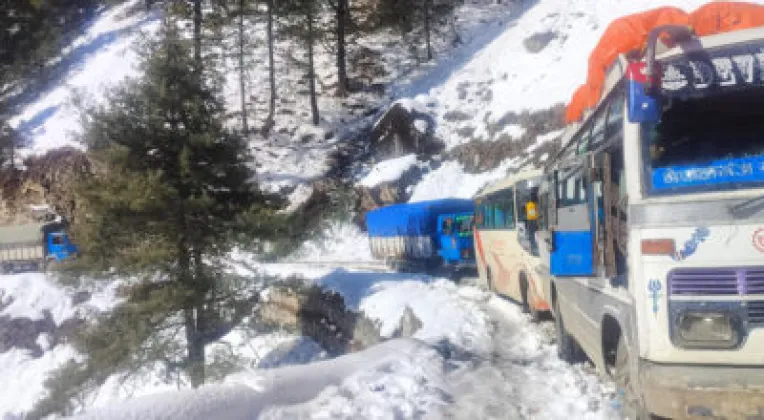
Heavy rainfall accompanied by snowfall since Friday evening has sharply intensified the cold in Mugu district, disrupting daily life across the remote mountain district in Karnali Province. According to the Gamgadhi weather measurement centre, 39.8 millimetres of rain fell in the 24 hours from 8:45 am on Friday, and by Saturday morning temperatures in Gamgadhi Bazaar were barely climbing out of the single digits. The combined effect of steady rain, fresh snowfall and a deepening chill has made routine activities difficult for residents, with the wet spell turning what should be mild late-autumn days into something far closer to winter. The deteriorating conditions in the district were reported by Khabarhub, Ratopati and Nepal Press.
Nearly 40 millimetres of rain in a single day
The Gamgadhi weather measurement centre, which records weather conditions from the district headquarters area, measured 39.8 millimetres of rainfall within the 24-hour window that began at 8:45 am on Friday. The rain, which set in from Friday evening, arrived alongside snowfall, meaning much of the district spent the night under a mix of wet weather and fresh snow rather than a single, simple shower.
For a high mountain district such as Mugu, nearly 40 millimetres of precipitation in one day is a substantial amount, and the fact that it fell as both rain and snow has compounded its impact. Rain leaves the ground and the settlements soaked, while snow adds a layer of cold that lingers well after it stops falling. Together, they have produced the kind of damp, penetrating chill that is difficult to endure when it arrives suddenly.
The key figures recorded at the Gamgadhi station capture the scale of the event:
- Rainfall: 39.8 millimetres in the 24 hours from 8:45 am on Friday
- Maximum temperature in Gamgadhi Bazaar: 9.2 degrees Celsius, recorded by 8:45 am on Saturday
- Minimum temperature in Gamgadhi Bazaar: 7.5 degrees Celsius over the same period
Because the station sits in Gamgadhi Bazaar, the centre of the district's administrative and commercial activity, its readings offer a close picture of the conditions residents in the headquarters area have been facing on the ground.
Temperatures pinned in the single digits
By 8:45 am on Saturday, the maximum temperature in Gamgadhi Bazaar stood at just 9.2 degrees Celsius, with the minimum recorded at 7.5 degrees Celsius. Both readings sit well below what most people would consider comfortable, and the narrow gap of under two degrees between the high and the low points to persistent cloud cover and moisture-laden air holding temperatures down around the clock.
When the difference between night-time and daytime readings shrinks this far, the cold does not lift during the day; it simply hangs on. That unrelenting chill, layered on top of rain and snowfall, is what makes the current spell so taxing for the district's residents. At Mugu's elevation, single-digit daytime temperatures at the end of October are a clear indication that the window of mild autumn weather is closing fast.
Life made difficult across the district
The disruption reported from Mugu reflects a simple reality: when heavy rain and snowfall arrive together and temperatures hover around nine degrees, the routines of a mountain district grind down. Stepping outside means braving wet and cold conditions, keeping warm means burning more fuel, and for those whose daily work takes them outdoors, the weather leaves little room to operate. As Ratopati's report described it, snowfall along with rain has made life difficult in the district.
Cold of this intensity is felt most acutely by the most vulnerable, including children and the elderly, for whom prolonged exposure to a damp chill carries real health risks. With the cold intensified since Friday evening and the wet conditions continuing into Saturday, households across the district have been left to manage daily essentials, from movement and errands to heating and shelter, under unusually harsh circumstances for the time of year.
A district settling into winter
Mugu, in the western reaches of Karnali Province, is among Nepal's most remote and high-lying districts. Winters arrive early and bite hard across the Karnali highlands, and precipitation at this time of year can readily fall as snow over the district's settlements. Friday evening's weather, in which heavy rain and snowfall arrived together, has effectively announced the change of season, pushing the district into winter-like conditions on the final day of October.
For now, the district remains under grey, wet skies, with the instruments at the Gamgadhi weather measurement centre recording the story in plain numbers: 39.8 millimetres of rain, a high of 9.2 degrees Celsius and a low of 7.5 degrees Celsius. Until conditions ease, the people of Mugu will continue to feel the weight of a cold that is wet, persistent and, by all accounts from the district, making everyday life difficult.


