KATHMANDU - The government has removed sitting Inspector General of Police (IGP) Karki from office with one and a half years still remaining in his term, a decision that has immediately raised questions about its legality and revived memories of the most contested episode in the modern history of Nepal Police. According to reports in Nepali media, this is the first time in three decades that a sitting police chief has been removed before the end of his tenure, and only the second time in the institution's history that the top post has been emptied by government decision rather than by the expiry of a fixed term.
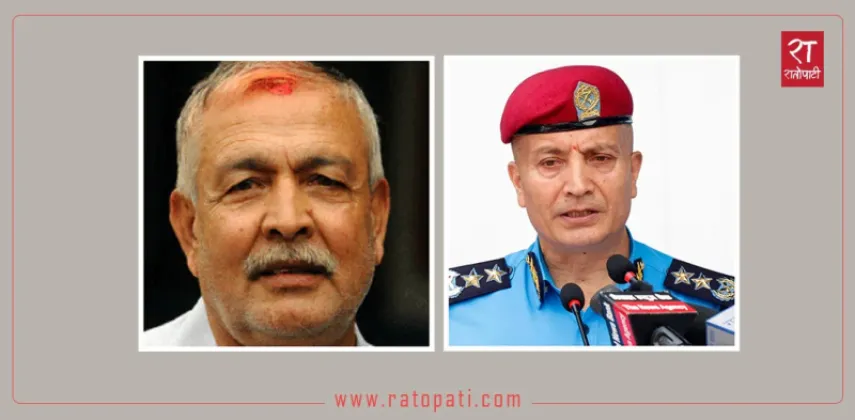
The move carries a striking historical echo. In 2053 BS, then home minister Bamdev Gautam had removed IGP Achut Krishna Kharel just 36 days after his appointment, transferring him to the National Investigation Department. For thirty years, that episode stood alone as an instance of a sitting IGP being pushed out mid-tenure. With Karki's removal, the government has broken that three-decade gap, and commentators are already drawing direct lines between the two cases.
The 2053 BS precedent
The removal of Kharel remains one of the most frequently cited examples of political interference in Nepal's police institution. Kharel had barely taken charge of the force when Gautam, as home minister, moved against him, ending his command of Nepal Police just 36 days into the job and shifting him to the National Investigation Department. For an officer at the very summit of the police service, the transfer amounted to an effective removal from the post he had been appointed to, and the episode has been remembered ever since as an extraordinary assertion of executive control over the police.
The two cases, separated by roughly thirty years, follow a similar pattern:
- 2053 BS: IGP Achut Krishna Kharel is removed by then home minister Bamdev Gautam only 36 days after his appointment and transferred to the National Investigation Department.
- Three decades: No sitting IGP is removed mid-term in the period that follows, making the Kharel case a one-off in the force's history.
- 2026: IGP Karki is removed with one and a half years still left in his term, ending the long gap and repeating a step that successive governments had avoided.
For three decades, the Kharel episode served as a reference point in debates over the autonomy of the police and the limits of executive power over the force's leadership. The removal of a police chief mid-tenure was widely treated as an exceptional measure that should not become a habit. As a report by RatoPati notes, the incident of 2053 BS has now effectively been repeated, with the incumbent IGP removed after 30 years.
A question of legality
The most immediate reaction to the government's decision has centered on its legal basis. A separate analysis published by Nepal Press frames the issue directly, asking how legal the government's decision is when Karki had one and a half years remaining in his term.
The question matters because the IGP is not an ordinary appointee. The officer holds the highest post in Nepal Police, serves a defined term, and commands the country's principal law enforcement agency. Removing such an officer before the term has run its course is an exceptional step, which is precisely why it has happened only twice in the force's history. The central issue raised by the reports is under what legal provision a government can cut short the tenure of a police chief, and whether the protections attached to the post allow a mid-term removal at all.
The parallel with 2053 BS sharpens those questions. In the Kharel case, the government of the day used a transfer to the National Investigation Department to push out a sitting IGP within weeks of his appointment. Whatever mechanism has been applied in the present case, the essential problem identified by the two reports is the same: the tenure of the country's top police officer has been brought to an end by government decision before the term had expired.
What the parallel means
The significance of the decision extends beyond one officer's fate. Both episodes involve the highest police post being treated as subject to the will of the government of the day, and both leave the removed officer with a substantial part of the term unspent. The Kharel removal, carried out when he had served only 36 days, became a lasting symbol of how vulnerable the leadership of the police is to political decision-making. Karki's removal, with roughly eighteen months left in his term, now raises the same concern in a new generation.
The fact that both news reports questioning the decision reach back to 2053 BS underlines how rare and how consequential such a step is considered to be. A gap of thirty years separated the two cases, and the removal of a sitting IGP had come to be seen as an aberration rather than a precedent. The current decision revives the unresolved debate over whether the government holds the authority to dismiss a police chief mid-term, or whether such a removal sits outside the legal framework governing the post.
For now, the government's decision stands, and the questions surrounding it remain unanswered. Nepal Police has, for the second time in its history, seen its chief removed before the end of his term, three decades after the first such episode, and the legality of the move is set to remain at the center of public discussion.