
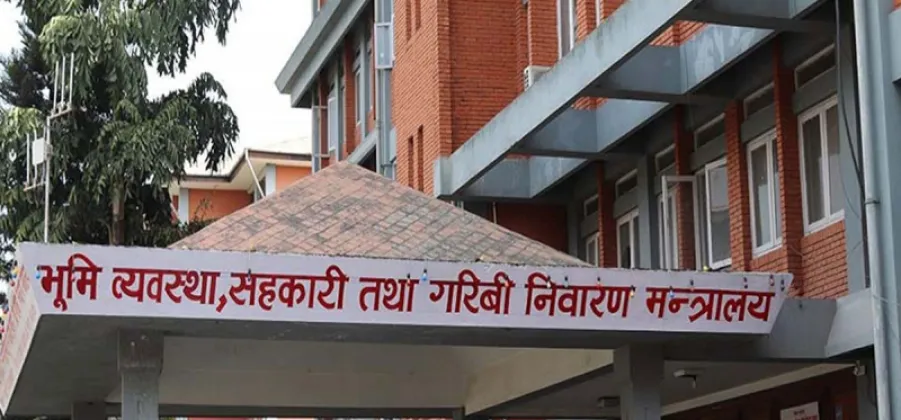
The Government of Nepal has registered 302 ropani of land in Kathmandu Metropolitan City in its name as it begins implementing the 2052 BS report of the High-Level Commission on Investigation and Protection of Government and Public Land, commonly known as the Rawal Commission. The land is spread across wards 4, 5, 8, 9, 10, 12 and 29, according to the Minister for Land Management, Cooperatives and Federal Affairs. The commission’s report identified public land that had been registered in the names of individuals, and 1,557 ropani remains to be returned.
Implementation of the Rawal Commission report
The registration marks a step in carrying out recommendations made by the Rawal Commission more than three decades ago. Its report, prepared in 2052 BS, identified public land recorded under private individuals’ names. The government has now begun acting on that report by placing 302 ropani in Kathmandu under the name of the Nepal Government.
The announcement indicates that the process is under way, rather than complete. The minister said that 1,557 ropani still remains to be returned. The 302 ropani registered so far is therefore one part of a larger effort linked to the commission’s findings. The available information does not identify the specific plots or explain the administrative steps taken for each parcel.
Reports by Nagarik News and Ratopati also describe the move as part of the implementation of the Rawal Commission report. The stated basis for the registration is the commission’s identification of public land that had been recorded in individual names.
Seven Kathmandu wards included
The land brought into the government’s name lies in seven wards of Kathmandu Metropolitan City:
- Ward 4
- Ward 5
- Ward 8
- Ward 9
- Ward 10
- Ward 12
- Ward 29
The minister’s statement identifies the wards but does not provide a ward-by-ward breakdown of the 302 ropani. It also does not specify how much land in each ward was registered, or give details about the individual parcels. The total announced covers land across the listed areas of the metropolitan city.
The reported action concerns the legal registration of land in the government’s name. The information provided does not state whether every parcel identified by the commission has been processed, or set out a timetable for dealing with the remaining land. The outstanding figure of 1,557 ropani shows that further work is still pending under the effort described by the minister.
More land remains to be returned
The Rawal Commission’s findings focused on public land registered under individual names. The current registration of 302 ropani brings part of that land into the name of the Nepal Government, while the minister said another 1,557 ropani remains to be returned. No further details were provided about the locations or ownership records of that remaining land.
The implementation of the report now places renewed attention on the commission’s longstanding findings and the government’s work to act on them. The figures announced provide two measures of the process: 302 ropani has been registered in Kathmandu, and 1,557 ropani is still awaiting return. Nepal Press also reported the registration as part of the Rawal Commission report’s implementation.


