
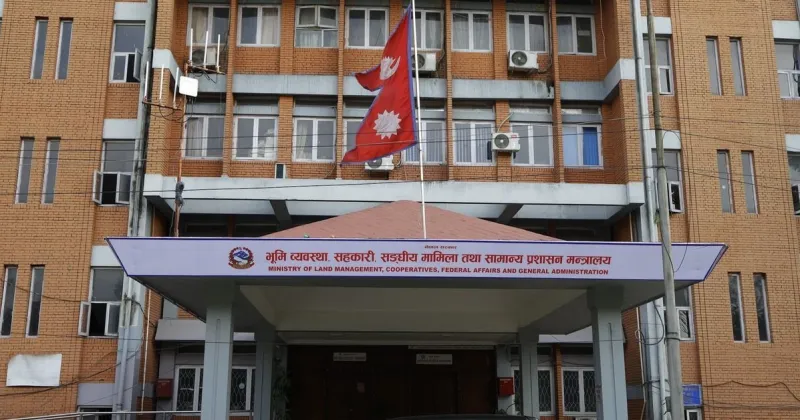
The Government of Nepal has distributed land ownership certificates to 135 families during the first quarter of the current fiscal year 2083/84, in a formal handover that took place in Kathmandu. The distribution was carried out by the Land Problem Resolution Committee (Tahachal) and falls under the Ministry of Land Management, Cooperatives and Federal Affairs, the federal ministry that oversees land administration in the country. The certificates issued in the quarter were described in reports by RatoPati and Global Aawaj as red certificates, the ownership documents issued to families whose land problems have been formally taken up for resolution.
Key details at a glance:
- Beneficiaries: 135 families
- Documents issued: Land ownership certificates, referred to as red certificates
- Period: First quarter of fiscal year 2083/84
- Venue: Kathmandu
- Implementing body: Land Problem Resolution Committee (Tahachal)
- Responsible ministry: Ministry of Land Management, Cooperatives and Federal Affairs
Certificates Handed Over in Kathmandu
The Ministry of Land Management, Cooperatives and Federal Affairs distributed the certificates across the opening months of the fiscal year. On the Nepali calendar, the first quarter of a fiscal year runs from mid-July to mid-October, which places the handover of all 135 certificates within that window. The distribution event itself was held in Kathmandu, where the documents were formally handed to the beneficiary families.
The Land Problem Resolution Committee (Tahachal) carried out the distribution process. The committee's role is significant in the context of how land problems are addressed in Nepal: rather than families securing ownership through the routine land registration system, the committee handles cases that have been channelled through the land problem resolution process, in which a family's claim to land is examined and confirmed before an ownership certificate can be issued. Its involvement in this quarter's distribution indicates that the 135 families received their certificates through that dedicated channel.
Both media reports covering the development identified the documents as red certificates. The reporting by RatoPati and Global Aawaj placed the distribution firmly within the ministry's ongoing land problem resolution agenda, noting that the handovers covered a three-month period at the start of the fiscal year.
What the Red Certificate Means for Recipients
For the families who received them, the certificates carry legal and practical weight that goes well beyond paperwork. A land ownership certificate establishes the holder as the legally recognised owner of the land recorded in the document. That recognition opens access to rights and protections that families holding no formal papers cannot easily exercise, including the ability to register the property in future transactions, to use the land as collateral when seeking credit, and to defend their occupation of the plot if ownership is ever disputed.
Insecure tenure has long been one of Nepal's most persistent land-related challenges. Families across the country, including in and around the Kathmandu Valley where this quarter's handover took place, have in many cases lived on land for years or even generations without formal ownership documents. Programs aimed at resolving these land problems, of which the distribution of red certificates is a visible part, are designed to convert long-standing informal occupation into documented, legally secure ownership.
Measured against that objective, the distribution of certificates to 135 families in a single quarter marks a concrete step forward for the households concerned. Each certificate converts a contested or unresolved claim into recognised ownership, giving the family legal standing over land that it previously held only informally.
Tracking Progress Through the Fiscal Year
The Ministry of Land Management, Cooperatives and Federal Affairs sits at the centre of Nepal's land governance framework, responsible for land administration and for the policies that guide how land problems are resolved nationwide. The Land Problem Resolution Committee (Tahachal) operates within this institutional setup, carrying out the case-by-case work of confirming claims and issuing certificates to eligible families.
Because the figure of 135 families covers only the first quarter of fiscal year 2083/84, it represents an early snapshot of the committee's distribution activity for the year. The Nepali fiscal year runs from mid-July to mid-July, and reporting distribution figures quarter by quarter makes it possible to track how the resolution process is progressing over time. The ministry's disclosure that 135 families received certificates in the opening quarter sets a benchmark against which the performance of the remaining quarters can be compared.
The handover in Kathmandu also highlights the continued role of the capital as the focal point of the resolution process, with the committee operating from Tahachal and the ministry headquartered in the city. For now, the confirmed outcome of the first quarter stands at 135 families with new certificates in hand, a result that gives those households formal ownership of land they can finally call their own in the eyes of the law.


