
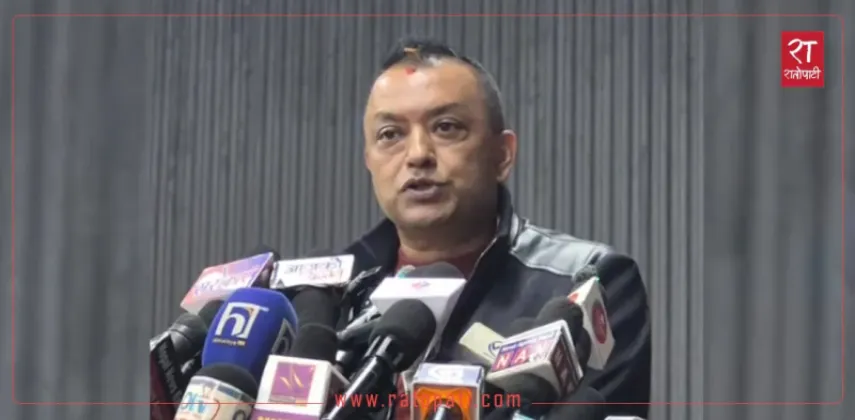
Nepali Congress President Gagan Thapa said on Monday evening that he was not intimidated by attempts to frighten him, responding after Prime Minister Balen Shah shared a cryptic message on social media that many interpreted as aimed at the opposition leader. Thapa made his remarks in a Facebook post, saying that many people had tried to scare him but that he had not developed the habit of being afraid. The exchange has drawn public attention amid an ongoing political and economic debate.
Social media posts prompt speculation
Shah’s post said that everyone’s “wrong time” comes when the “right time” arrives. The message did not settle the question of whom it was addressing, but it prompted speculation that it was directed at Thapa. Thapa’s response followed on Monday evening and was widely read in the context of Shah’s statement.
Thapa’s post conveyed a defiant message: he would not be frightened by people seeking to intimidate him. The remarks did not, on the information available, spell out who he believed was trying to scare him or identify a specific threat. Nor did Shah’s message, as described in the reports, explicitly name Thapa. The connection between the two posts has therefore been based on public interpretation rather than a direct exchange in which either man clearly identified the other.
That distinction is important in understanding the episode. The posts have been discussed as part of a wider political conversation, but the available details do not establish that Shah directly threatened Thapa or that Thapa’s post was a formal reply to a named accusation. What is clear is that the timing and wording of the messages brought the two politicians into the same public discussion.
Earlier objection over authenticity dispute
The social media exchange came after Thapa’s secretariat had objected to a statement linking an authenticity dispute to middlemen. The secretariat’s objection forms part of the immediate backdrop to the latest posts, although the available information does not provide further details about the dispute, the statement in question or the people described as middlemen.
The sequence has added another point of attention to an already active political and economic debate. Thapa’s office had raised concern about how the authenticity issue was being characterized, and Shah later shared a message that readers interpreted as directed at Thapa. Thapa then posted that he was not accustomed to being frightened. The reports do not establish whether the authenticity dispute and Shah’s message were directly connected, so the relationship between those matters remains unclear.
Political reaction and unanswered questions
The episode illustrates how brief social media posts can generate political speculation when their intended target is not stated. Shah’s wording about the arrival of the “right time” was open to interpretation, while Thapa’s response focused on his unwillingness to be intimidated. Their posts have consequently become part of public discussion beyond the immediate wording of either message.
For now, the available information leaves key questions unresolved: Shah did not explicitly identify the person addressed in the post as described in the reports, and Thapa did not name the people he said had tried to frighten him. No additional details have been provided about the authenticity dispute or the reference to middlemen. The exchange is therefore best understood as a public war of words shaped by interpretation, rather than as confirmation of a specific threat or a fully explained dispute.
The remarks have nevertheless attracted attention because they come amid broader political and economic debate. Thapa’s statement presents him as unwilling to be deterred, while the reaction to Shah’s post shows that its audience saw a possible political target in its wording. Whether either politician will clarify the meaning of the posts was not indicated in the available reports.


