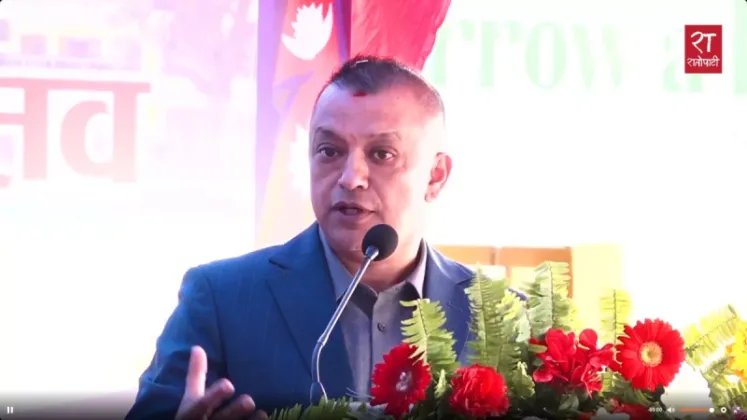
Nepali Congress President Gagan Kumar Thapa on Monday urged leaders and cadres who have drifted away from the party to return, speaking at a memorial assembly in Pokhara marking the 13th death anniversary of former assistant minister Prakash Bahadur Gurung. Thapa said many party leaders and workers had distanced themselves because they were dissatisfied, and called for them to be brought back into the Nepali Congress.
Appeal to reconnect with former party members
Thapa’s remarks focused on restoring links with people who had moved away from the party. He said the Nepali Congress should make an effort to bring back leaders and cadres who had become distant, identifying dissatisfaction as a reason for their departure. His appeal addressed both leaders and grassroots workers, rather than limiting the call to one group within the party.
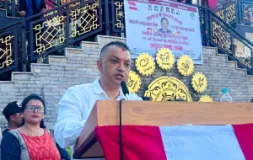
The president made the comments at a memorial gathering organized by the Nepali Congress Annapurna Rural Municipality in Pokhara. The assembly was held in remembrance of Gurung, a former assistant minister, on the 13th anniversary of his death. The occasion brought Thapa’s call for renewed connection within the party together with a tribute to a figure associated with its political history.
The remarks were covered by Ratopati and Thaha Khabar.
Dissatisfaction and party distance
Thapa’s acknowledgement that dissatisfaction had led many leaders and workers to distance themselves puts the reasons for their departure at the center of his appeal. Rather than treating their absence only as a loss of party membership, his remarks recognized that discontent had played a role in weakening their connection with the organization.
His call was for those who had drifted away to be brought back. The remarks did not identify particular leaders or cadres, describe specific grievances, or outline a process for their return. Instead, Thapa emphasized the broader need to reconnect with people who had become dissatisfied and distant from the party.
That message makes party cohesion a central theme of the appeal. Bringing back former or disengaged members would mean addressing the relationship between the organization and people who had previously been part of it. Thapa’s comments indicate that the party should seek to restore those ties, although he did not set out specific steps at the assembly.
Memorial gathering in Pokhara
The event was organized by the Nepali Congress Annapurna Rural Municipality to mark 13 years since Gurung’s death. Thapa spoke at the gathering as party president, linking the memorial occasion with a call to strengthen the party by reconnecting with leaders and workers who had become distant.
Gurung was identified at the assembly as a former assistant minister. The gathering’s purpose was to remember him, while Thapa used the occasion to address the state of the party’s relationships with dissatisfied members. His appeal was directed at those who had left or drifted away, with a clear message that they should be welcomed back into the Nepali Congress.
Thapa’s remarks put the responsibility for reconnecting on the party as well as underscoring the importance of those who had become distant. The central point was that dissatisfaction should not permanently separate leaders and cadres from the organization. He urged the party to bring them back, making renewed participation a focus of his address in Pokhara.