
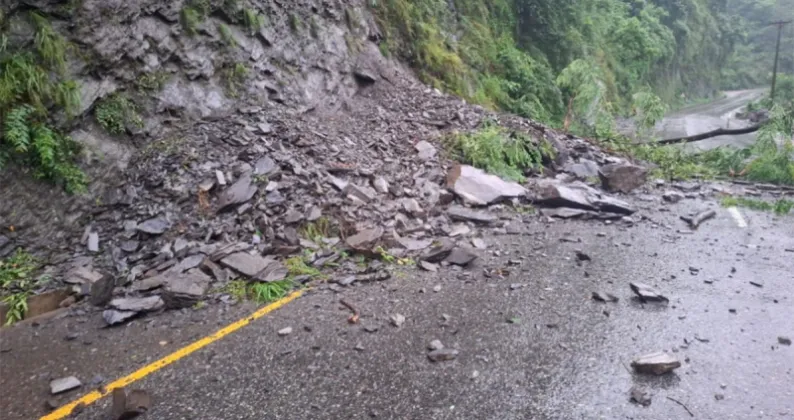
Floods and landslides have blocked roads at five locations, and night-time traffic on the Kanti Lokpath has been barred as a result of the disasters, according to reports published on October 31, 2026. The closures have disrupted road travel along the affected routes, upending the plans of passengers and transport operators who now face impassable road sections and a daylight-only window for crossing the restricted route.
Five road sections rendered impassable
The reports describe floodwaters and landslide debris washing onto and across roads at five separate points, leaving those sections impassable until the material can be removed and the routes checked for safety. For travellers, a blocked road section is more than an inconvenience: it halts buses, trucks, motorcycles and ambulances alike, and forces people to wait for clearance crews or to seek alternative routes that may be longer and more expensive.
Key details reported so far:
- Floods and landslides have blocked roads at five locations.
- Traffic on the Kanti Lokpath (also spelled Kantilokpath) has been barred from operating at night.
- The disruptions were reported on October 31, 2026.
- Road travel along the affected routes has been disrupted by the closures.
Initial reports did not specify the exact locations of the five blockages, the scale of the damage, or a timeline for reopening the closed sections. Information on injuries or damage to property was likewise not included in the available reporting. Travellers planning to use these roads are therefore advised to treat any journey plan as tentative until fresh confirmation of a section's condition is available.
Why the Kanti Lokpath is closed at night
The most consequential measure for long-distance travellers is the night-time bar on the Kanti Lokpath, which restricts all movement on the road to daylight hours while the disaster situation continues. Vehicles that would normally travel through the evening and early morning must now be timed so that they cross the affected stretch between sunrise and sunset.
Night-time closures of this kind are a standard precaution on hill roads after floods and landslides. Darkness sharply reduces a driver's ability to spot fresh cracks, lodged boulders or continuing slope movement, and any accident or rescue after dark becomes far more difficult in terrain where help may be hours away. By confining traffic to daylight, the restriction lowers the chance of vehicles being caught on a compromised section and gives clearance crews a safer window to work.
For travellers, the practical effect is simple but significant: anyone who reaches the restricted stretch too late in the day must wait until the following morning to proceed. Journeys that would normally be completed in a single day can stretch into two, and freight moving along the corridor arrives late at both ends.
A familiar challenge on Nepal's hill roads
Blockages caused by floods and landslides are a recurring feature of road travel across Nepal's hilly and mountainous districts. Steep slopes, fragile geology and highways carved into mountainsides leave many routes exposed whenever intense rain falls, and even roads that remain open in the dry months can fail quickly after heavy downpours. While the monsoon season produces the highest number of such incidents, powerful post-monsoon rain events have repeatedly shown that hill roads stay vulnerable well beyond the rainy season, a reality underscored by these disruptions at the end of October.
The cost of a blocked road extends far beyond delayed journeys. Closures interrupt the movement of food, fuel and other essentials to settlements along the route, complicate travel for patients seeking treatment and students reaching schools, and can leave workers stranded away from home. Clearance work itself often has to proceed under the threat of further slides, which is why routes that are reopened are sometimes blocked again shortly afterwards.
When five sections are affected at the same time, these pressures multiply. Alternative routes, where they exist, absorb heavier traffic and longer detours, while the lack of alternatives forces some travellers simply to wait for the debris to be cleared.
What travellers should keep in mind
With five road points blocked and the Kanti Lokpath restricted to daytime movement, anyone planning to travel on the affected routes should build extra time into their plans and keep track of the latest road conditions through local administration and traffic sources. Crossing restricted sections during daylight, confirming that a route has reopened before setting out, and preparing for the possibility of an overnight wait are the basic precautions travellers on such roads are normally urged to follow.
The reports published on October 31, 2026 did not indicate when the blocked sections would be cleared or how long the night-time restriction would remain in force. Further updates are expected as damage assessment and debris-clearance work progress; readers can follow the original reporting via Thahakhabar. Until the affected sections are declared safe and the night-time bar is lifted, the rhythm of travel along these routes will continue to be dictated by daylight, weather and the slow work of restoring the road.


