
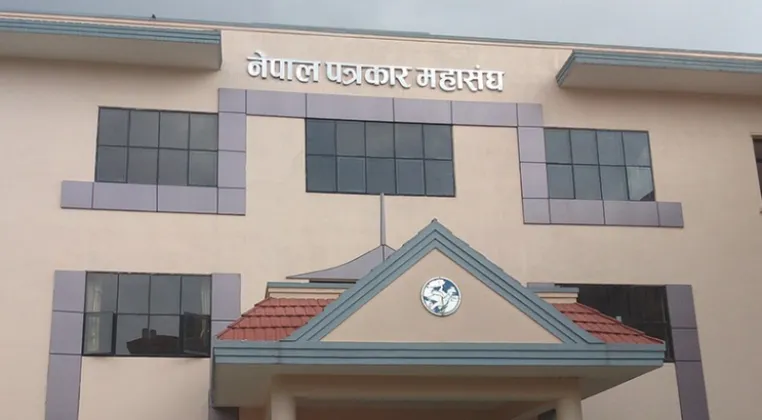
The Federation of Nepali Journalists (FNJ) has demanded legal action against those responsible for threatening a journalist in Siraha over a news report he had published. In a press statement issued by FNJ General Secretary Ram Prasad Dahal, the federation expressed serious concern over what it described as anti-press acts, after Shyam Kumar Yadav, a journalist working with the daily Apana Daily, was threatened at his office and at his home. According to the statement, the intimidation came in direct response to a report Yadav had published concerning smuggling, and the federation has called the incident both condemnable and an assault on press freedom.
Threats Followed a Report on Smuggling
Yadav, a journalist associated with Apana Daily, was threatened at two locations: his office and his own residence. The FNJ statement made clear that the threats were linked to his journalism, coming after the publication of a news report on smuggling that he had produced in the course of his professional work. The statement, as reported, did not identify those behind the threats, but the FNJ has directed its demand for legal action squarely at the individuals responsible.
The fact that the threats were delivered not only at his workplace but also at his home has drawn particular attention. RatoPati, which reported the federation's response, framed the issue in its headline by noting that threatening journalists at their homes is condemnable and against press freedom. Khabarhub also carried the FNJ's reaction to the Siraha incident.
Journalist organizations in Nepal have repeatedly pointed out that reporting on issues such as smuggling, corruption and organized wrongdoing can expose media workers to pressure from those who want such matters kept out of the public eye. The FNJ's statement places the Siraha episode within this pattern of anti-press activity, treating the threats not as a private dispute but as an attack on the press as an institution.
"Condemnable and Against Press Freedom": The FNJ Statement
The press statement, issued in the name of the federation by General Secretary Ram Prasad Dahal, voiced serious concern over the incident and set out the FNJ's position clearly. The federation demanded that legal action be taken against the individuals who threatened the journalist over his published reporting, and it urged that the safety and freedom of journalists be protected.
The core of the federation's response can be summarized as follows:
What the FNJ Is Demanding
- Legal action against those who threatened the journalist over his published news report
- Condemnation of the anti-press acts, which the federation described as condemnable and against press freedom
- Protection of journalists' safety, so that media personnel are not intimidated at their workplaces or their homes
- Safeguarding of professional freedom, so that journalists can report on matters of public interest without fear of reprisal
By framing the threats as an offense against press freedom rather than a matter affecting one individual alone, the FNJ has effectively placed the responsibility for a response on the authorities and the legal system. The federation's demand for legal action signals that it expects the matter to be pursued through formal channels rather than left to fade without accountability.
A Recurring Concern for Nepal's Media
Press freedom enjoys constitutional protection in Nepal, and the country has a large community of working journalists spread across its provinces and districts. In practice, however, journalists reporting from outside the capital frequently operate in circumstances where they can face direct pressure, threats and obstruction, particularly when their reporting touches on illegal activities such as smuggling. The incident in Siraha, a district in Madhesh Province, has once again underlined those risks. Reports on smuggling and similar issues are widely seen as serving the public interest, which is why journalist bodies treat attempts to punish or silence such reporting with particular seriousness.
The FNJ, the largest professional organization of journalists in the country, regularly speaks out when media workers are threatened, attacked or obstructed, and statements such as this serve as the federation's formal record of protest. In this case, the emphasis on threats made at a journalist's home carries added weight, because such intimidation extends beyond the professional sphere and into a journalist's personal and family life. It is this dimension of the Siraha incident that the federation's language addresses most directly.
For now, the federation's statement stands as its formal position on the matter: the threats against Yadav were condemnable, they ran against the principle of press freedom, and those responsible must face legal action. The FNJ has urged that the safety and professional freedom of journalists be protected so that reporting on issues of public concern, including smuggling, can continue without fear of intimidation.


