
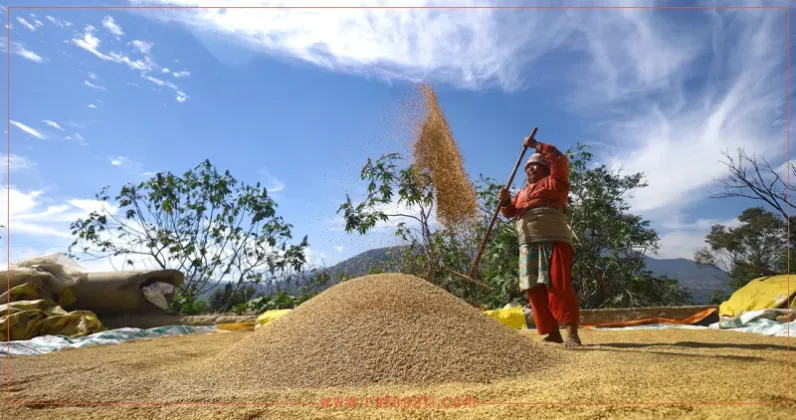
Farmers in Bungmati, Lalitpur, are working against the clock to cut, thresh and dry their paddy as rainfall is expected in Nepal under the influence of Cyclone Arnab, the weather system that has developed in the Bay of Bengal. With ripened paddy still standing in fields around the settlement, growers fear that rain could damage a crop that has taken an entire season to mature, and they have intensified harvesting work to bring the grain to safety before the weather turns.
A Rush to Beat the Rain
The steady rhythm of the harvest season has turned into a race in Bungmati, where farmers are cutting paddy stalks, threshing them and spreading the grain out to dry at every opportunity. The urgency reflects a simple calculation: paddy that is harvested and properly dried can be stored safely, but the same crop left standing in wet fields is exposed to the full force of the coming rain.
According to reports in RatoPati and Gorkhapatra Online, the push to harvest and dry rice is aimed squarely at protecting the crop from the effects of the cyclone. Farmers in the area are treating the time before the expected rainfall as their window to secure the grain, and harvesting activity has visibly quickened as a result.
Why wet weather threatens ripe paddy
Harvest-season paddy is especially vulnerable to rain, and growers in Bungmati are aware of the chain of risks they are working to avoid:
- Ripened paddy still standing in the field can be soaked and damaged by rain before it is ever cut.
- Cut stalks awaiting threshing can be scattered and left unusable if they are drenched in the open.
- Threshed grain that has not dried properly can discolour, heat up or rot in storage, erasing weeks of careful work.
It is this combination of threats that has farmers rushing to complete cutting, threshing and drying in quick succession, rather than letting the work stretch out over days as it might in fair weather.
The Cyclone Behind the Warning
The weather system driving the rush is Cyclone Arnab, which developed in the Bay of Bengal. Although the storm formed far from Nepal's hills and valleys, its influence is expected to reach the country, raising the likelihood of rain and putting farmers on alert well beyond the areas closest to the cyclone's path.
For farmers, the practical meaning of the forecasts is straightforward: rain is likely at precisely the moment when paddy needs dry weather most. Work that would normally proceed at a measured pace has instead been compressed, with growers devoting every available hour to bringing in as much grain as possible before conditions deteriorate.
The worries are not limited to paddy alone. Nagarik News has reported that rain linked to the cyclone has damaged vegetable and rice crops, leaving farmers worried about their losses. That experience elsewhere has added weight to the warnings reaching growers in Lalitpur and strengthened their resolve to finish the harvest before the rain arrives.
Protecting a Season's Work
Drying is as important as cutting in the current rush. Farmers in Bungmati are spreading harvested paddy on open ground to reduce its moisture before storage, turning the grain and gathering it quickly whenever the skies darken. Threshed paddy left damp is at risk of spoiling, which is why the drying operation has become the centrepiece of the effort to protect the crop from the effects of Arnab.
The urgency in the fields underlines how much is at stake. For farming households in the area, the paddy harvest represents the payoff for months of labour, from planting and tending the crop through to the final cutting. A rain-soaked harvest would mean losses not only of grain but of the food and income that depend on it, a prospect farmers are working hard to avoid.
Growers are watching the sky as closely as the forecasts, aware that the timing of the cyclone's influence will decide how much of the crop they can bring in safely. Those who finish cutting and drying in time stand to store their paddy without loss, while late harvests risk damage from rain they can do little to stop.
For now, the response in Bungmati is determined and practical. The rush to harvest and dry rice before the effects of Cyclone Arnab arrive is a reminder of how tightly farming livelihoods are bound to the weather, and of how quickly a routine harvest can become a race to save a season's work.


